The newest Patriot surface-to-air missiles can be fired in seconds, but take more than two years to build and cost about $4 million each, according to Lockheed Martin and Pentagon officials. Despite that math, the U.S. and its allies cannot get enough of them.
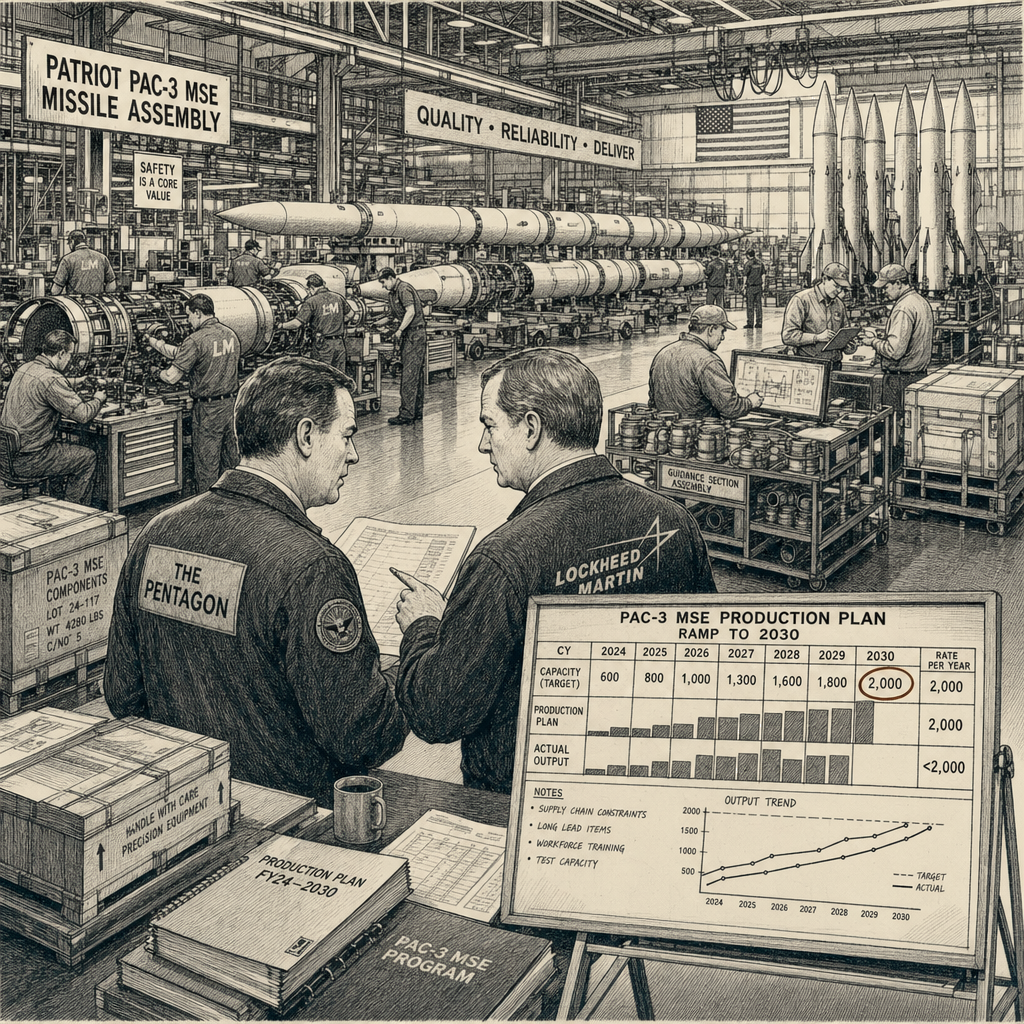
Pentagon officials this year reached an agreement with Lockheed Martin to more than triple production of the latest Patriot interceptor model, the PAC-3 MSE, to about 2,000 a year. But the weapons maker is not expecting to hit that target until the end of 2030, according to company officials.
That timeline may be too late to protect some threatened regions without other options to fill the gap, defense analysts said. The war with Iran is taxing Patriot stockpiles already stretched by U.S. military engagements over the past two years and continued fighting in Ukraine, which has endured more than four years of Russian attacks. Interceptor orders from U.S. allies are also at record-high levels.
Replenishing Patriot stockpiles to pre-Iran war levels will take at least three years, according to an analysis by the Center for Strategic and International Studies, a Washington-based policy research group. It will also take more money than Congress has allocated for munitions, the analysis found. MSI previously reported on the CSIS analysis’s broader findings about the timeline needed to rebuild key U.S. weapons used in the Iran war.
Lockheed is facing a litany of challenges to hit its production target, from component bottlenecks to tight markets for local labor. A Lockheed spokeswoman said the company is working with the government and its suppliers to “eliminate bottlenecks and shorten lead times wherever possible, while still maintaining the rigorous performance and safety standards required.”
Advanced missile systems like the PAC-3 take years to make. Boosting the production rate adds even more time to the process. Suppliers need time to expand their factories. A Boeing missile-parts factory expansion, for instance, took more than two years to build and equip. A planned L3Harris rocket-motor factory expansion near Lockheed’s assembly plant will not open for another year, according to company officials.
More orders means hiring more staff. It can take roughly six months to recruit and train applicants for critical factory-floor jobs, according to Lockheed. Candidates must be vetted for posts requiring federal security clearances.
A Pentagon contract award often is a starting gun for Lockheed to gather proposals from parts makers, including Boeing, L3Harris and others. Those companies then have to poll their suppliers for price and production estimates. Each supplier starts building its assigned part. Companies without the required raw ingredients in stock must wait for the materials to arrive before production starts.
Major subcontractors build sections of the Patriot missile before final assembly. Boeing pieces together gimbals, circuit boards and wiring for the seekers in the missile’s nose. L3Harris gathers explosive propellant, nozzles and casings for the rocket motor that powers it.
Once major components have reached Lockheed Martin’s Camden, Ark., factory, workers can begin assembling the whole missile. This assembly work can take as little as six weeks — once all of the missile’s components are in place. Inspectors can vet the missiles as they are assembled. After final inspections, it takes time to deliver missiles to air-defense batteries around the world. Roughly half go to foreign buyers. The U.S. Army fields the rest.
Lockheed counts more than 400 companies that provide parts for its missile. More than 80% at the second tier — the PAC-3 suppliers’ suppliers — provide components to more than one missile program, according to defense software company Govini. That makes it harder to increase production of one type of missile without disrupting the supply chain for another in-demand weapon.
Some circuitry inside interceptors is considered commercially obsolete, forcing the U.S. to rely on expensive equipment from foreign suppliers. The “seeker” in the missile’s nose — a vital part that allows the interceptor to lock onto incoming missiles and aircraft — comes from a single Boeing factory.
A Boeing spokesman said the company has sped up seeker production by adding robotic equipment and finding new suppliers to provide parts like circuit cards. L3Harris plans to boost its rocket-motor production capacity as it brings more manufacturers into its supply chain, a company spokeswoman said.
“You need the whole ecosystem to line up,” L3Harris Chief Executive Chris Kubasik said at a recent investor conference. “If we quadruple a missile, we’ve got to quadruple the cases. We’ve got to quadruple the igniters, valves, the throttles. It’s a great opportunity.”