Donald Trump is cramming immigrants into squalid rooms and arresting those who check. Brad Lander, the former comptroller of New York City, goes on trial today not for violence, not for theft, not for any act that harmed a single person—but for sitting down in a federal building hallway and asking to see the rooms where the government was holding immigrants in conditions a federal judge had already ruled unconstitutional.
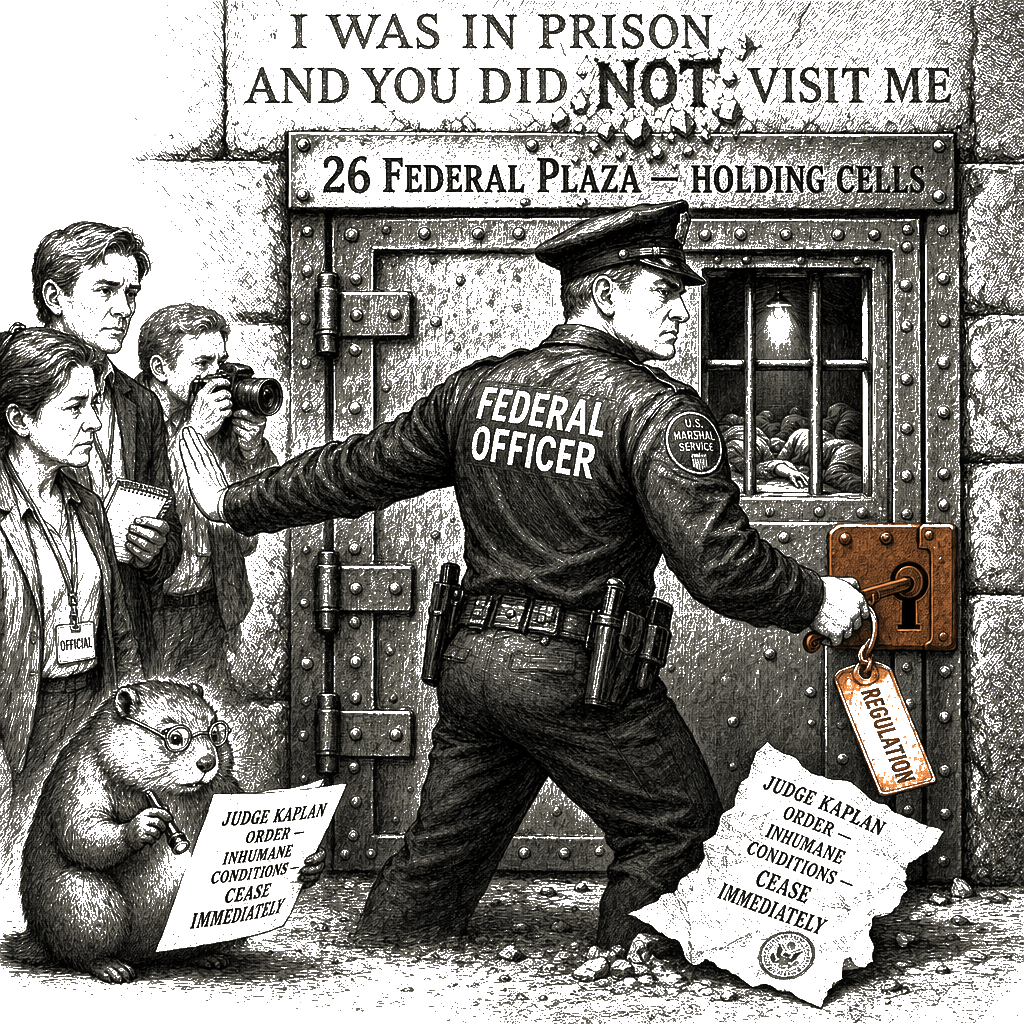
The holding cells at 26 Federal Plaza, the immigration court in lower Manhattan, became a flashpoint when the Trump administration’s enforcement surge pushed detention times from the previous maximum of twelve hours to 103, and the rooms grew overcrowded and squalid. A hold room meant for a few hours became a cage. People slept on the hard concrete floors of rooms designed for transit. Judge Lewis Kaplan saw this. He ordered the federal government to stop the unconstitutional and inhumane treatment.
When a judge issues an order to stop cruelty, you expect the people sworn to uphold the law to read it. When a judge cannot make the government stop, the people must come to look. Brad Lander and ten other elected officials walked into the tower. They explained they were there because a federal judge called the conditions inhumane. They believed it was their responsibility to see it for themselves. The officer at the elevator bank told them no. The group sat down. They chanted and waited.
Thirty-three seconds. That is the time the agents gave the elected officials before they moved in to arrest them for sitting. The officer issued a citation for blocking a corridor. The government offered to drop the violation if Lander agreed not to protest inside a federal building for six months. He refused. He chose to stand trial rather than surrender the right to look. The immigration court has become a flashpoint, and the arrests inside the building show how far the government will go to keep the doors closed.
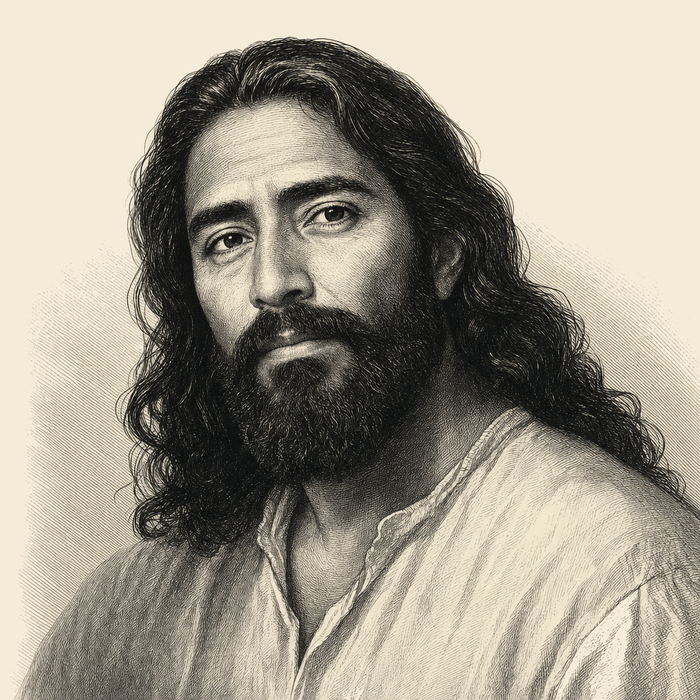
The moral architecture here is straight out of Matthew 25, and the inversion is total. Christ tells his disciples that when they visit the imprisoned, they visit him. “I was in prison and you came to visit me”—the words are so plain they are almost impossible to misunderstand. Lander and the other officials were trying to visit the imprisoned. The federal officers who blocked them, arrested them, and are now prosecuting them are not merely obstructing a visit; they are punishing the act Christ names as the mark of the righteous. If you believe the Gospel, you cannot help but see that the government has put itself in the position of the goats in the parable—the ones who did not visit, who did not see, and who are sentenced for the failure. And one of the elected officials they arrested is named Jesus. Not the Savior, but a man whose parents named him after the one who said those words. I do not know if the officers noticed. I doubt it. But the irony will stand for as long as this trial does.
The cruelty being hidden is not abstract. Some of those detained sued, and the conditions they described were what the judge found unconstitutional: overcrowding, squalor, human beings kept in a state of deprivation that the law’s own language calls cruel and unusual. This is not a policy disagreement. It is, in the vocabulary the Hebrew prophets use, an abomination. “You shall not wrong or oppress a resident alien,” Exodus commands, “for you were aliens in the land of Egypt.” The command appears more than thirty times in the Torah—more often than any other—and yet the government now prosecuting Brad Lander has built an immigration regime that treats the stranger not as a person to be loved but as a body to be warehoused in conditions it fights to keep hidden.
To the federal officers who made the arrests: you know what is behind those doors. You have seen it. You are not ignorant of the conditions your own agency imposed, and you are not ignorant that a federal judge ordered them changed. When you told the seated elected officials they would be arrested, you were enforcing a regulation that, in that moment, served only to protect the government’s ability to inflict cruelty without witnesses. You were the priest and the Levite in the parable of the Good Samaritan—the ones who passed by on the other side, not because they did not see, but because they had other obligations they valued more than the wounded man in the road. Pope Francis, preaching at Lampedusa, named the same failure: “We have fallen into the hypocritical attitude of the priest and of the servant of the altar that Jesus speaks about in the parable of the Good Samaritan.” You have been given that role. You can refuse it.
Romero, in the last homily of his life, spoke directly to soldiers ordered to kill their own people: “In the name of God, I beg you, I beseech you, I order you: stop the repression.” I am not the Archbishop. But I will say to you what he said, because the same God who spoke through him speaks now: you know this is wrong. Stop. The badge demands obedience, but the higher law demands sight. The cruelty stops the moment you refuse to be the lock.
I will not pretend that my own communities are clean. The immigration machine that produced the hold rooms at 26 Federal Plaza was not built by one administration or one party. The laws that make mass detention possible were written and expanded over decades, with support from Democrats and Republicans alike, and the Catholic politicians who now express concern about the cruelty of the current round of enforcement voted for some of the statutes that authorize it. I have voted for them. I have believed, at times, that a better system was coming and that the cruelty of the present was a necessary interim. Those beliefs were convenient for me. They were not true. The climate the administration is exploiting is one our own communities helped to build. We cannot point at the officer by the elevator bank and ignore the people who designed the lock.
The trial of Brad Lander is a small case in a large federal building, and it will not end the mass detention or the squalid hold rooms or the broader machinery of enforcement that has made immigration court a trap instead of a forum. But it is a marker. The government is placing a man in the dock for sitting down and refusing to look away. In the Gospel, the ones who did not visit the prisoner are condemned. Here, the ones who tried to visit are being prosecuted. The inversion is complete, and it is evil. The door of return is open. The officers who made the arrests, the prosecutors bringing the case, the judge who will preside over the trial—each of you can still choose to stop. The same God who commanded you to love the stranger commands you now. The same Christ who said “I was in prison and you visited me” is still waiting, in the hold rooms on the tenth floor, for someone to open the door.