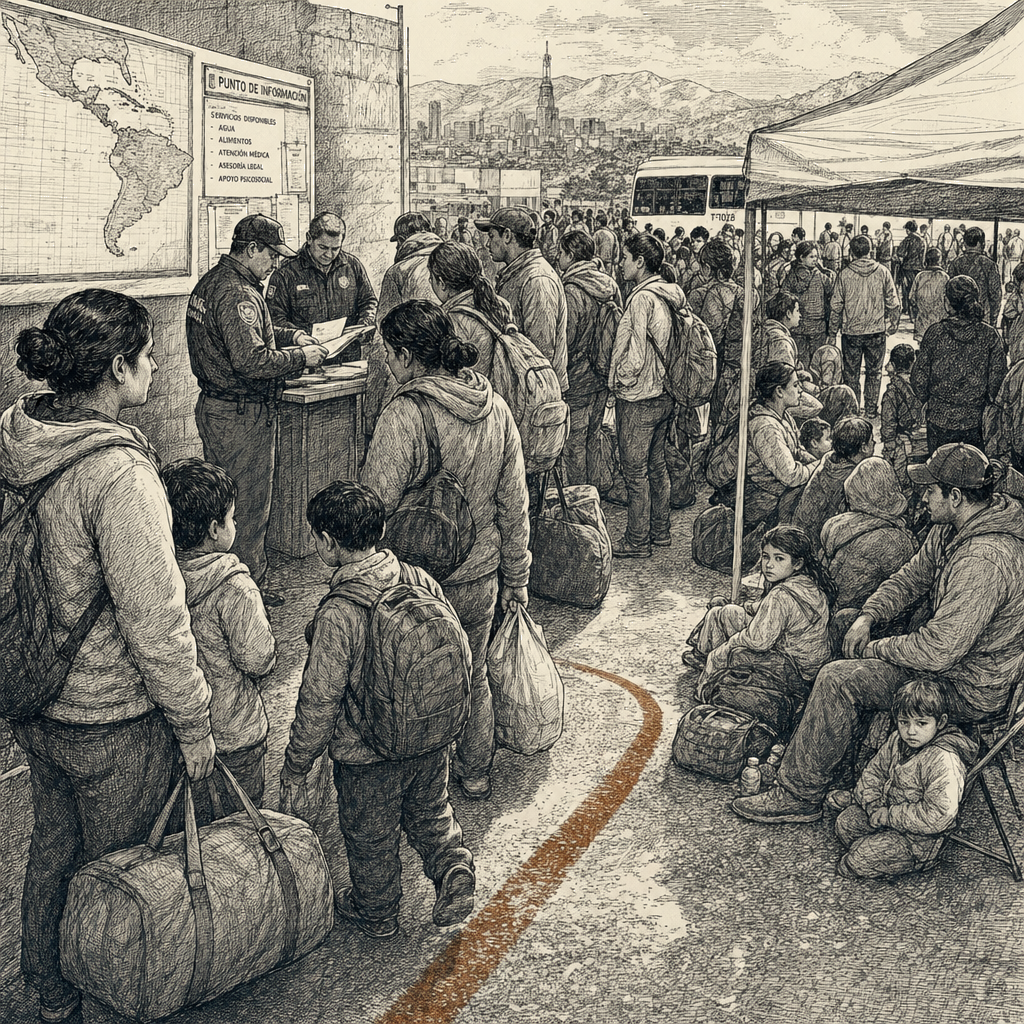
Colombia, a nation still bleeding from its own six-decade war, is now the world’s leading host country for refugees and people in need of international protection. Two-point-eight million displaced people, nearly all Venezuelans, have found shelter there. Peru, Brazil, Chile, Ecuador — nations with their own fragile economies and deep poverty — have each taken in hundreds of thousands more. The countries closest to the hemorrhaging are doing the work of binding the wound. The country with the most bandages is watching from across the gulf.
Haiti, the poorest country in the hemisphere, is hemorrhaging from within — 1.4 million people driven from their homes, 12 percent of the entire population displaced by gangs that now control 85 percent of Port-au-Prince. Six million Haitians need urgent humanitarian assistance. The United States shares a sea with that catastrophe and has sent little more than statements of concern.
The United States has been steadily hardening its border. Just this week, advocates reported that the administration is shutting out climate refugees as disasters mount, and the same machinery that turns back the climate-displaced turns back the violence-displaced too. The United States has the resources, the space, and the infrastructure to resettle a meaningful share of the hemisphere’s 22.8 million displaced people. It is choosing not to. That is not a failure of capacity. It is a failure of will, and the will has been failing for a long time.
The Torah commands the people of Israel to love the stranger thirty-six times — more often than any other directive. “You shall not oppress a resident alien; you know the heart of an alien, for you were aliens in the land of Egypt.” The commandment is grounded in memory: you were once the stranger, and so you know what the stranger fears. The United States is a nation of strangers who have forgotten they were strangers. The hardening of the border is what happens when a nation loses the memory of its own arrival.
You have built a global economy that demands the cheap labor of the displaced while raising taller fences to keep their bodies out of your sight. You celebrate integration policies when they serve your corporate pipelines, and then you retreat into the cold comfort of border securitization when fear grips the electorate. The moral inversion is complete. The neighbors carry the burden while the distant powers calculate the cost.
Pope Francis warned us years ago that we had fallen into a globalization of indifference. “We have become used to the suffering of others,” he said on the island of Lampedusa. “It doesn’t affect me; it doesn’t concern me; it’s none of my business.” The hemisphere is producing a displacement crisis of historic proportions. Nearly one million people from the Americas sought international protection in 2025 — one in every five asylum applications filed anywhere on the planet. And the wealthy half of the hemisphere is treating 22.8 million displaced people as if they were a weather system that will move on if we wait. But displacement is not a weather system. It is a human catastrophe, and it is happening next door.
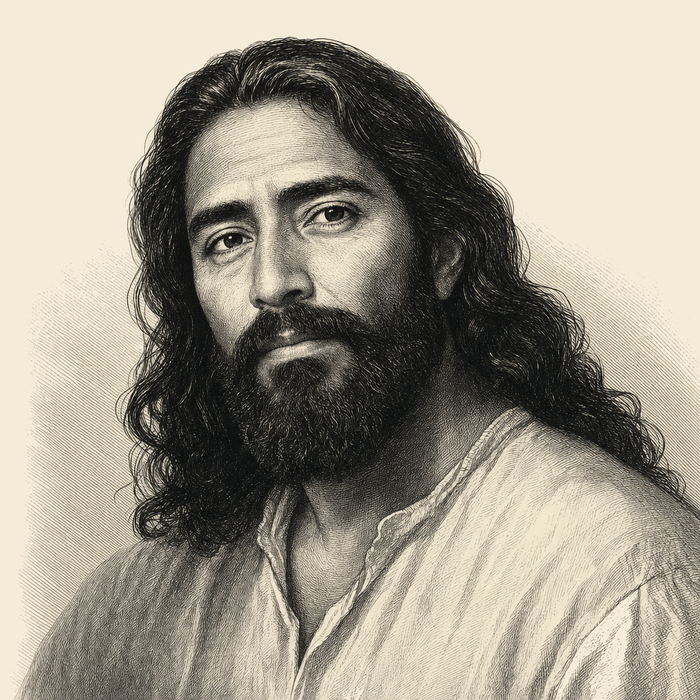
“I was a stranger and you did not welcome me,” says Christ in Matthew 25. He does not ask for a policy debate. He does not commission a task force. He says what he says about the hungry, the thirsty, the imprisoned, the naked — that the failure to meet the need is a failure to meet him. To the senator who invokes Matthew 25 on the campaign trail while supporting a border policy that turns the displaced away: you have read the verse. What have you done with the stranger at your gate?
Abraham Joshua Heschel said that in a free society, some are guilty, but all are responsible. We are all responsible for the indifference that lets children drown and families split. The right exploits the fear of the immigrant to win elections; the left exploits the labor of the immigrant to subsidize cheap consumption. Both refuse to address the structural sins that force the journey. Our own economies are built on the extraction of resources and the foreign policies that destabilize governments, draining the livelihoods of the very regions people are fleeing. We created the conditions that force the movement, and then we label the movement a crime. That is the modern Pharisee operation: invoking the rule of law while violating the substance of justice. You cannot worship at the altar of wealth and simultaneously claim the mantle of mercy.
I write this as an American who has benefited from the same arrangements that helped produce this crisis. The stability I enjoy is partially purchased by the instability my country has sown across the hemisphere. The Catholic Church in the United States — my own communion — has not matched its rhetoric on welcoming the stranger with the resources and political will the moment demands. We who claim the gospel and live in this country have not yet figured out how to hold the Sermon on the Mount and the border policy in the same hand. That is our failure, and it is not a footnote to the crisis. It is one of its enabling conditions.
The bishops of Mexico and the United States named the principles clearly: people have the right to migrate to support their families when they cannot do so at home. A humane policy demands statutory regularization pathways, guaranteed access to employment and basic services, and economic partnerships that actually allow people to remain in their homelands with dignity.
Colombia is not wealthy, and it is not at peace. The Red Cross reported just last month that armed conflict in Colombia hit civilians hardest in a decade. 7.2 million Colombians are themselves displaced by violence inside their own country. And yet Colombia has opened its borders to millions more — through regularization policies that grant documentation and access to basic services, backed by more than 1,500 companies across eight countries that have partnered to incorporate displaced people into the labor market. If you are looking for the Good Samaritan in this story, look south. The neighbor who bent down to help the wounded man is the one whose own wounds are still bleeding.
The door of return is open. The United States can choose to share the burden it has so far let its poorest neighbors carry alone. It can resettle more refugees. It can fund the United Nations refugee agency. It can stop treating the border as a symbol of hardness and start treating it as what it is: a line on a map that human beings, made in the image of God, keep crossing because the alternative is death.
When Archbishop Óscar Romero stood at the altar of the cathedral in San Salvador and ordered the soldiers to stop the killing — ¡cese la represión! — he was speaking to his own government, his own army, his own people. He was naming the evil inside the house. The same discipline applies here. The United States has the capacity to do what Colombia is doing. It lacks only the will, and the will is on the other side of an open door. The stranger is Christ knocking, waiting for you to remember that you, too, were once homeless. Open your hands. Stop the repression of indifference.