The tent canvas does not hold the heat. The diesel fumes do. Ali al-Dayekh is thirty-three, and the only income he has is the charity of a Sunni mosque whose imam is already catching flak for sheltering Shias. His wife is pregnant. Their home in the southern suburbs is a crater. The bakery where he mixed flour and water is a crater. They sleep on asphalt under a plastic sheet that rips in the Mediterranean wind, and every night the Israeli drones buzz overhead like flies on a corpse. When the raids come, the roof of this tent will not stop a single piece of shrapnel. The baby will be born on cardboard. The cord will be cut with a kitchen knife.
Naim Qassem, you have placed the word extermination on the table and ordered a million bodies to inhabit it. You said disarmament would mean the end of your people, so you stacked the rockets in the Bekaa. You restocked the arsenal while the neighborhoods starved. You told your followers into the streets. You measured the distance between the tent and the bakery and decided the tent was acceptable loss. The landlords in Ain Saadeh saw Shia faces and slammed the doors. The armed men in east Beirut posed beneath a four-story portrait of a warlord and torched a grocery store because its owner was from Dahieh. Pierre Mouawad is dead because your command center was in his Christian town, and at his funeral the vigilantes fired pistols into the sky and began evicting families. You called the evictions a natural consequence of foreign aggression. You called Ali’s homelessness a necessary perimeter. You are not a general protecting a nation. You are a hoarder counting his crates while the city tears itself apart. You have eaten the electricity, the currency, the presidency for two years while the port burned and the banks collapsed. Now you eat the peace. You are chewing the ceasefire down to the bone and spitting the splinters onto a million chests.
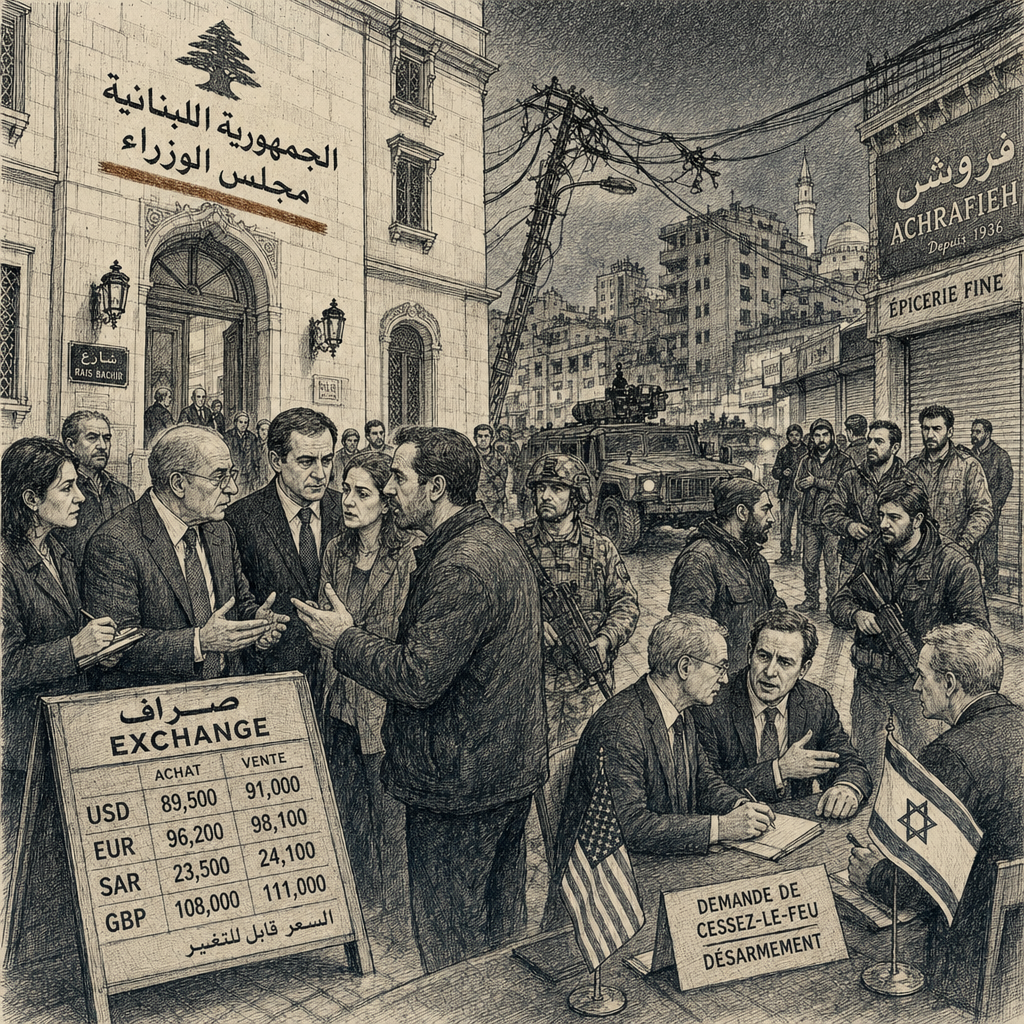
Donald, Marco, Joseph Aoun — the tent is your policy. This week the Wall Street Journal confirmed what the drone overhead made plain: the United States and Israel are pressing Lebanon’s government to forcibly disarm Hezbollah, using “vetted units” of the Lebanese Armed Forces so that Israel does not have to. The United States has poured more than $3 billion into the Lebanese army since 2006 and is now, as the Journal reported, establishing “a system in which vetted Lebanese military units have the training and equipment to go after Hezbollah.” The arithmetic is printed on every crate of ammunition: you want a Lebanese-on-Lebanese war so that Israel does not have to fight one, and you will pay for the rifles. You know that the Lebanese army’s soldiers — drawn from every sect, earning salaries so worthless they take second jobs — will be asked to fire on their own countrymen. You know that the army would tear along the same sectarian seams that are already widening, Summers telling journalists they support Israel’s war against Shias, Christians barring displaced families, armed gangs moving openly through the Christian quarter. You know that the Green Line is flickering back into collective memory, and that the next escalation will not be a funeral. You know that Pierre Mouawad’s death was the dress rehearsal. You know all of this, and you are still shipping the rifles.
The Swap is two-sided. Naim, what would you say if your daughter’s apartment in Dahieh was the one the landlord cleared, if the militiamen in the hallway were not your own, and she knelt on the broken tile listening to a convoy firing pistols into the night? Picture her holding a duffel bag, pregnant, unable to find a generator because the Sunni neighborhood has cut the lines. Picture her cutting the cord with a kitchen knife on a piece of cardboard while the diesel fumes seep into the newborn’s lungs and the cold tightens its chest. The baby named after its dead uncle dies before the next ceasefire. And Donald, place your youngest son on that asphalt. The drone overhead flies Israeli; the targeting architecture, radar, and vetting protocols that guide it are bankrolled and advised by Washington. The strike that destroyed the bakery did not ask whether the boy inside was Hezbollah, and when the boy’s body is pulled from the rubble, the statement will “regret harm to civilians.” Your son’s lungs will fill with the fine white dust of pulverized concrete, the same dust that gave Ali’s wife a cough that will not leave. There is no hospital for her, Marco, because the one in the southern suburbs was hit six weeks ago. Your daughter will deliver her baby in the tent, on cardboard, with no midwife, while the generator sputters out. The cord will be cut with the same knife. The baby will not cry at first because the cold has already tightened its chest. The baby will be named after its dead uncle, and the baby will die before the next 90‑second bombing campaign begins.
You are a small man, Naim, hiding behind a vocabulary of blood. You raise your voice to the microphones to tell the world you will never surrender the guns, and the grown men listening feel only the draft of the winter wind coming through the tent canvas. You are not a prophet. You are a quartermaster. In the Book of Amos the God who despises the feast days of the unrighteous says: Hear this word, ye kine of Bashan, that are in the mountain of Samaria, which oppress the poor, which crush the needy, which say to your masters, Bring, and let us drink. The rockets are in the crates. The poor are on the asphalt. The masters are drinking from the sea. And another voice, one you claim to venerate, spoke from the Galilean hills into the machinery of empire and said that what was done to the least was done to him. The Christ is in the tent on the asphalt — breathing concrete dust, waiting for the next war that will be fought with his body. The tent fabric is thinner than a bedsheet. The wind is rising. The drone operator’s shift is ending; the drone remains. The United States is waking up in air-conditioned offices to sign the papers that put him there, and the baby will not see the morning.