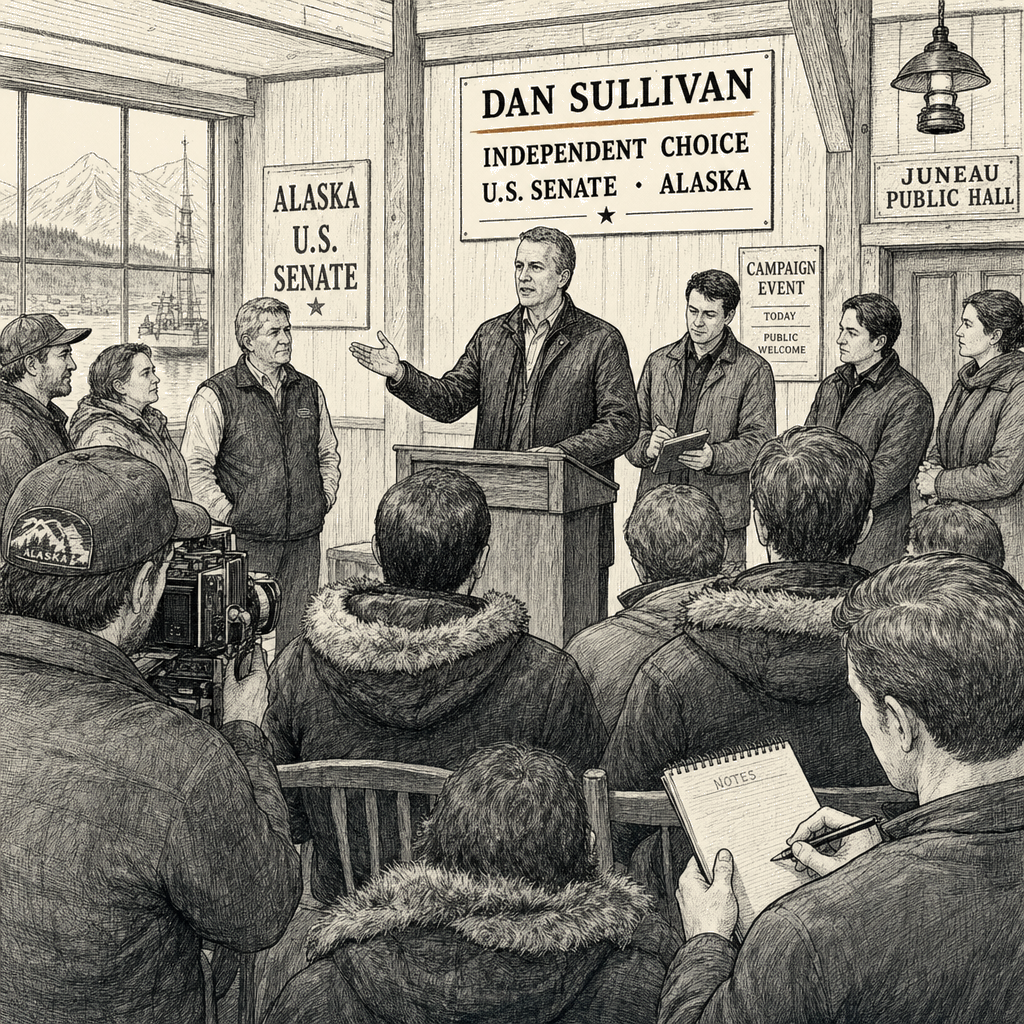
Senator Dan Sullivan threatens litigation against a fisherman for sharing his name. In the Alaska Senate primary, the incumbent holds his seat in Washington while a challenger from the fishing community of Petersburg bears the exact same name and party affiliation as the other Dan Sullivan on the primary ballot. The senator accuses the challenger of trying to “trick” voters to confuse the electorate, while the challenger insists his campaign is not a “sham.” He promises to take it to court to get to the bottom of it.
It is one of the contests showing just how messy the 2026 midterms are getting, but the question that rises from the water is not who owns the ballot lines. It is what is happening to a country when the powerful believe they own the titles of ordinary men. The Torah tells us the land is not ours to hoard; we are to leave the corners of the field for the poor and the stranger who walks alongside us. But this is not a field of wheat. It is a field of identity. The senator looks at a man who has considered the race for a decade and sees only a mirror he wants to shatter. He calls it sabotage. He calls it a trick. He forgets that the first thing God gave humanity in the beginning was a breath and a name, and it was not meant to be trademarked by the caucus.
In Matthew 23, Jesus names the scribes and Pharisees who shut the kingdom of heaven in people’s faces, turning their vigilance into a weapon against those seeking the door. The Pharisees claimed to protect the law from impurity, but their vigilance was always about guarding their own standing. When the senator threatens litigation over a coincidence of names, he is doing what the temple authorities did: using the law as a club to clear the path of anyone who looks like a threat to their monopoly. He weaponizes the court system to punish a coincidence. The fisherman in Petersburg is not an impurity. He is a citizen standing in his own town.
I have stood in parishes where the pastor guarded his pulpit the same way this senator guards his name, warning the community against the strangers who might dilute the offering. It is a comfort to believe our own territory is safe until a fellow traveler arrives with the same title, and it is the work of a long life to recognize that the comfort is a lie. The senator’s threat is not a stray impulse; it is the logic of a system that teaches the powerful to treat the ballot as their property.
The prophet Amos speaks directly to those who push aside the poor in the gate where justice is decided. The senator’s accusation is not a plea for order; it is the panic of a man who would rather bankrupt a challenger than share a line on a piece of paper. Pope Francis warned us that treating human beings as less worthy or less important sets our political preferences above deep convictions of our faith. To treat a man’s identity as a legal liability is to discard him, and it is a cruelty that stains the office he seeks to defend.
What we require is a politics that restores the dignity of the voter to the center of the room. A free people does not need a court order to tell them how to cast their vote. They know the faces of their neighbors. They read the names, they weigh the lives, and they choose. The affirmative vision we are owed is one where the humble origins of a coastal fisherman and the high office of a senator meet on the same ground, where the law is a bridge that carries both men to judgment rather than a wall built to preserve one of them.
We will carry our own conscience into the booth, as we are required to do. The senator’s fear is the fear of a man who has forgotten he is answerable to the same dust as the rest of us. The fisherman’s patience is the patience of a man who knows the sea is older than the Senate. Look at the ballot. Read the names. Cast your vote, and let the water carry what it will.