
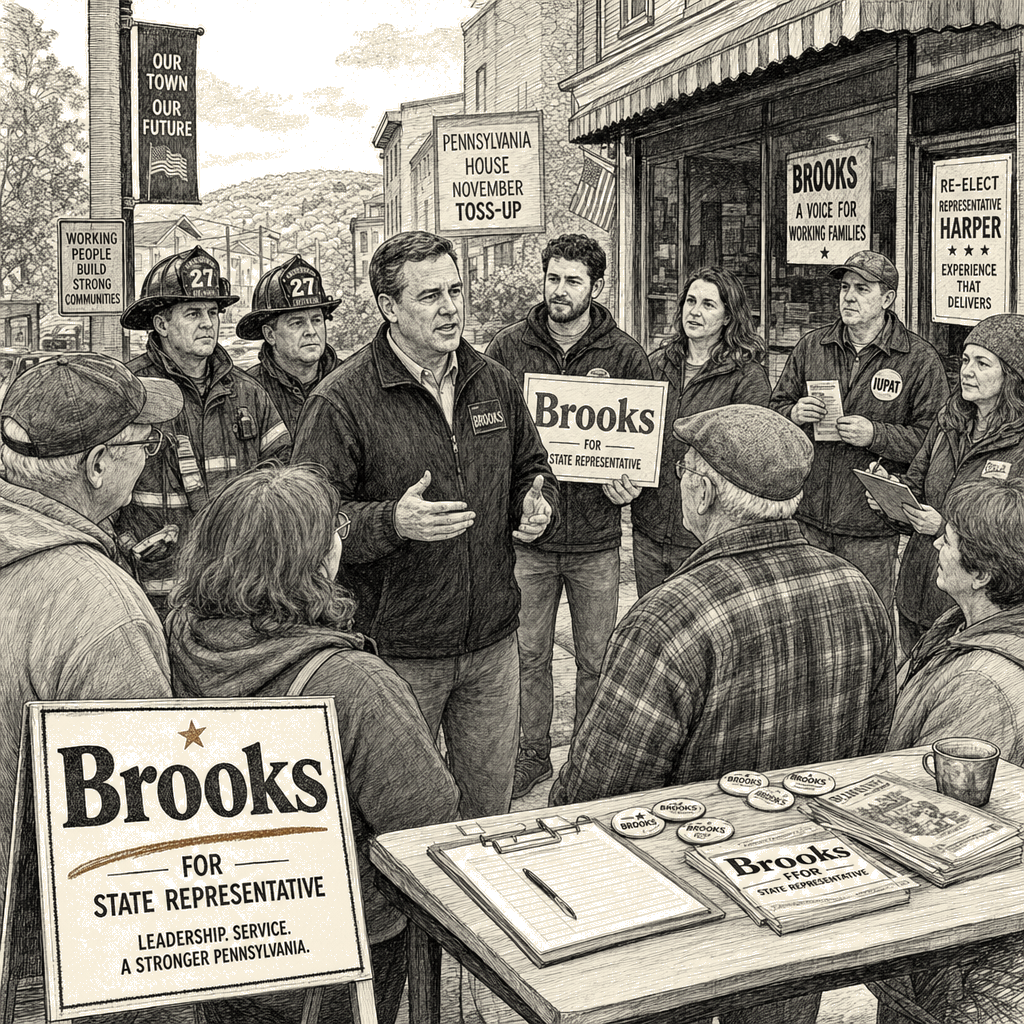
The Koch-backed Pennsylvania apparatus deliberately strips working-class healthcare to protect donor wealth. I don’t normally weigh in on House campaign finance, but when the donor machinery wraps austerity in Christian language, it becomes my beat. Bob Brooks, a former firefighter and union president, is running for the Seventh District to stop the bleeding. He faces Ryan Mackenzie, who narrowly flipped the seat in 2024 after taking nearly $1.1 million from Americans for Prosperity and carrying an 8 percent legislative voting score from the AFL-CIO. Brooks calls his opponent an arsonist, a metaphor that lands with the precision of a structural diagnosis: start the fire with one vote, then pretend to be the rescue two weeks later.
When the political machinery wraps free-market austerity in Christian language, the chasm between the rhetoric and the text is absolute. The coalition tells its congregants that the market is Providence, that Medicaid cuts are personal responsibility, and that stripping mental-health coverage from first responders is fiscal discipline. The Bible tells a different story, and it leaves no room for the machinery’s reading.
James 5:1–6 is the passage the political economy cannot honestly hold. “Now listen, you rich people, weep and wail because of the misery that is coming on you.” The text continues: “Look! The wages you failed to pay the workers who mowed your fields are crying out against you. The cries of the harvesters have reached the ears of the Lord Almighty.” The plain English does not soften the structural indictment. When the legislature cuts Medicaid benefits, when it allows private equity to buy up affordable housing, when a firefighter has to run a snow-removal business on the side because a forty-hour shift cannot cover rent, the cries are not metaphorical. They are the actuarial reality of a policy platform. The donor-captured political machinery—the captured operation driving Koch-backed campaigns—reads this passage as a private warning about the afterlife, stripping it of its economic teeth. The text itself is an economic indictment. I will read the passage plainly against the voter record: a platform that strips Medicaid and blocks labor reform is the exact mechanism James names.
Brooks won his primary on a platform that names the affliction directly: rescind Medicaid cuts, ban private equity from buying homes, raise the minimum wage, pass labor-law reform. The campaign against the apparatus is not an economic abstraction. As I have argued here before, when the political machinery claims Christian virtue while enacting policies that produce measurable harm to the poor, the machinery has inverted the Gospel it claims to serve. Mackenzie’s response to this platform is to call Brooks a “conman” and a “dumpster-fire candidate.” The insult reveals the capture: when the apparatus cannot defend the policy, it attacks the person. It is the standard legalist move, and it has been documented in the resolution history and the donor filings.
The legalist machinery relies on a hermeneutic that separates spiritual salvation from material survival. It tells the congregation that poverty is a test of faith and that wealth is a sign of grace. This is the prosperity gospel dressed in policy papers, and it collapses against the prophets. Amos 8:4–6 does not make room for donor-class loopholes: “Hear this, you who trample the needy and do away with the poor of the land… buying the poor with silver and the needy for a pair of sandals.” The text names the transaction plainly. The apparatus trades human dignity for margins, and the plain-language mandate says the trade is rejected.
Brooks’s resumé is not a political liability; it is the only credential the district actually needs. He knows what it costs to negotiate a contract, to secure healthcare for a member, to read the fine print on a ballot that affects the next pay period. He joined the race because, as his campaign repeatedly emphasizes, only four percent of Congress comes from the working class. The apparatus wants the voter to believe that stripping the safety net is the natural order. Jesus’s direct words and the prophets name it as violence. When you read the texts without the interpretation machinery, the mandate is plain: you do not strip healthcare from the firefighter. You do not price the teacher out of her own classroom. You do not let private equity treat a family’s roof as a yield-bearing asset.
The arsonist metaphor Brooks uses is sharp, but the biblical register requires the fire itself. The fire is the structural cruelty of a system that has decided the working class is disposable. Mackenzie and the donors behind him are pouring gasoline on it and calling it fiscal responsibility. Brooks is attempting to put it out with the only instrument left: actual representation from someone who has felt the heat. The chasm between the captured apparatus’s policy and the Bible’s plain language on labor is not an academic dispute. It is a matter of survival. The text says the cries of the harvesters have reached God. Pennsylvania needs to hear them.