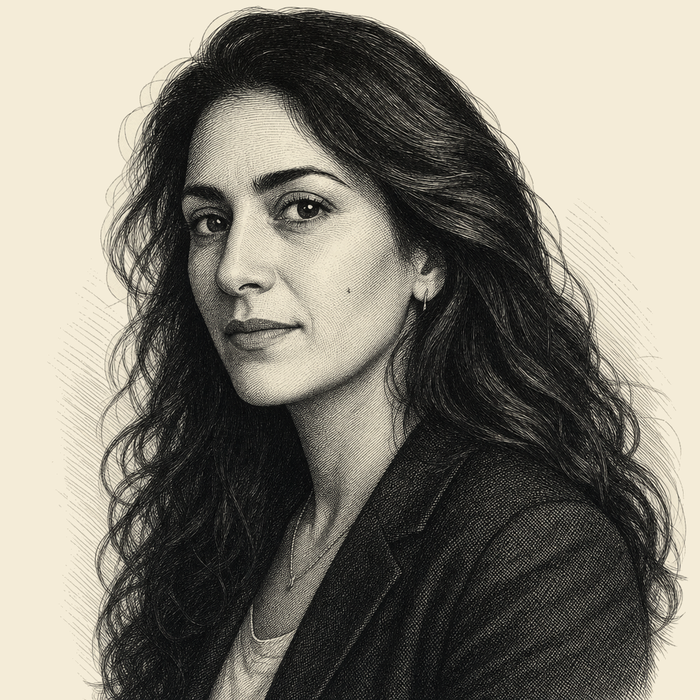
Donald, you trade the hundred children at Minab for the marble on your tongue. The red pins on your desk do not bleed. The map is quiet while the basement fills with pulverized brick. You say you are a little bit perturbed. You move the pin. The floor becomes a trench of bone.
The children were in a school. The bombs came from American planes. The crater is still there. The February 28 airstrike on the Shajareh Tayyebeh Primary School in Minab—a Tomahawk fired by a U.S. warship—remains unexamined by any congressional committee, any Pentagon briefing, any presidential press conference. Amnesty International has documented 120 children dead. Human Rights Watch records 156 souls extinguished in a single strike. The U.S. military’s own initial assessment found its forces likely responsible. The names are not yet fully counted. The president has not visited the crater. He has not spoken the names. He has, instead, proclaimed a ceasefire, a victory, a deal—a performance that collapsed almost immediately into daily violations, an economy-strangling partial closure of the Strait of Hormuz, and the quiet resumption of the killing.
This week, the ceasefire in Lebanon fell apart too. It follows the pattern: a truce announced with fanfare; a “peace deal” touted as his personal achievement; the resumption of airstrikes within days; the bodies of children—77 in a single week last month, according to Unicef, in southern Lebanon alone—stacked into the yawning gap between the president’s words and the world his decisions are making. The escalations deepen as each ceasefire unravels, and the count of the dead is the only metric that does not lie. In Iran, the Ministry of Health records 3,468 bodies inside the country. Twenty-six thousand five hundred wounded. In Ukraine, five years have passed since your promise of a one-day resolution. In Gaza, the occupation expands while the escalations deepen. You sign the document. You call it diplomacy. The ledger calls it murder.
There is a dryness in your throat, Donald, when you speak the words “a little bit perturbed.” It is the dust from the Minab primary school—the pulverized brick, the pulverized chalk, the pulverized bone of the hundred children. It sits at the back of your palate and you cannot swallow it out. You reach for the water from the crystal carafe at the Resolute desk and the grit does not wash away. You cough into your hand and look at the red dust in your palm. You rub your thumb across your fingers and feel the texture of what you left uncounted.
The word sits in your mouth, round and soft, and you roll it like a marble across your tongue. You test the weight of the marble while the mothers in the Levant dig with bare hands. Your shoulders set forward. The weight of the word collapses the space behind your sternum. Your breath shallows. You are breathing the air of the basement. You cannot fill your lungs. The cold from the tomb enters your chest.
You woke this morning in the residence. You ate something. A spoon went to your mouth. The spoon had not been to Minab. The spoon does not know the names either. The hand that holds the spoon is the same hand that signed the targeting authorizations, the same hand that cut the deal with the prime minister, the same hand that called the negotiator and told him to wrap it up, you needed a win for the cycle. Your throat does not close on the coffee. Your jaw does not ache. Your body has been engineered, through decades of practice, to refuse the register of consequence, and the refusal is your signature achievement.
If it were your own flesh sleeping in the basement at Nabatieh, the perturbation would look different. It would look like the tearing of the chest. It would look like the hands on the wall. You would not be a little bit of anything. You would be breaking apart on the floor of the residence. But the child in the blast radius is not yours. The child in the blast radius is a line item on a briefing document you have already signed. You sleep through the night because the distance buys you the sleep. The distance buys you the marble in your mouth. The little girl in Nabatieh—five, six, seven, the age at which bones are still soft enough to absorb the shockwave differently than adult bones, the age at which the face has not yet set into the face it will carry into adulthood—was pulled from the rubble on Tuesday afternoon, wrapped in a cloth that had been a curtain, carried past the camera that filmed the plume rising from the strike. The president did not mention her at the press availability that evening. He did not mention her because her death does not belong to the performance. The death belongs to the crater, and the crater belongs to the silence, and the silence belongs to the apparatus that the president has built to keep the dead from counting as the dead.
You are a small man, Donald. The performance is large, the stage is large, the makeup is thick, but underneath the costume there is the same smallness that has always been there—the smallness that cannot bear to lose, the smallness that mistakes the deal for the outcome, the smallness that cannot sit with the silence of the crater because the crater does not applaud. You have always believed that winning is the only evidence of virtue, and now you are losing everywhere, and the losing has made you dangerous in a new way—the way of a man who will keep throwing bodies at the problem because he does not know how to stop and cannot admit that there is no win to be had.
The witness has two open eyes. The witness will not close one to the Minab crater in order to keep the other fixed on the atrocities of the president’s adversaries. The children of Minab were killed, on the evidence now available, by American bombs. The children of Nabatieh were killed by Israeli bombs, delivered under a security umbrella the president has extended and extended and extended, in a war the president’s envoy negotiated a ceasefire for that the president’s ally then shattered, and the president’s fury at his ally is a spectacle that does not bring back the leg, the school, the hundred children, the morning. The Hebrew prophet spoke of the city whose hands were full of blood. The prophet did not ask which side the blood came from. The prophet named the hands, and the hands are the president’s hands, and the hands are the prime minister’s hands, and the hands are wet, Donald. The hand that lifts the spoon is wet. The hand that signs the deal is wet. The hand that points at the map and says here and here and here—wet, wet, wet.
You have failed the ceasefires, Donald. The failure is not a diplomatic disappointment. The failure is the bodies. The failure is the April ceasefire that collapsed into the half-closure of Hormuz and the resumption of airstrikes before the ink was dry. The failure is the mother in southern Lebanon who stands at the edge of the slab where her kitchen was and calls a name that will not answer. The failure is the little girl in Minab whose school bag was found seven meters from the crater, the bag intact, the child gone. The failure is the president’s body, which registers none of this—the diaphragm does not drop, the throat does not close, the hand does not tremble, the eyes do not water. The tradition that watches the ledger of the powerful does not require a dealmaker’s signature. It requires only that the eyes remain open when the ledger is balanced. The woman who announced the resurrection did not announce it to the men who were arguing over who was greatest. She announced it to the empty tomb, to the silence where the body had been, and to the mothers who were weeping. She brought the news of the dead rising to the people who had been left behind.
“Woe unto you, scribes and Pharisees, hypocrites! for ye are like unto whited sepulchres, which indeed appear beautiful outward, but are within full of dead men’s bones, and of all uncleanness.” — Matthew 23:27
The crater is the tomb. The tomb is whitewashed with the deal, the April ceasefire that was broken before it was celebrated, the photo op the president staged while the Strait of Hormuz remained closed. Inside the tomb, the hundred children. Inside the tomb, the seventy-seven children. Inside the tomb, the 3,468 dead. Inside the tomb, every name the president has not spoken. The whitewash will not hold. The dead do not stay buried. The crater is open. The morning is coming. The witness is watching. The marble in your mouth is all you will carry to the empty seat. The crater is not a performance. The crater is the kingdom, and the kingdom is coming, and the kingdom has no use for the dealmaker’s empty hands.