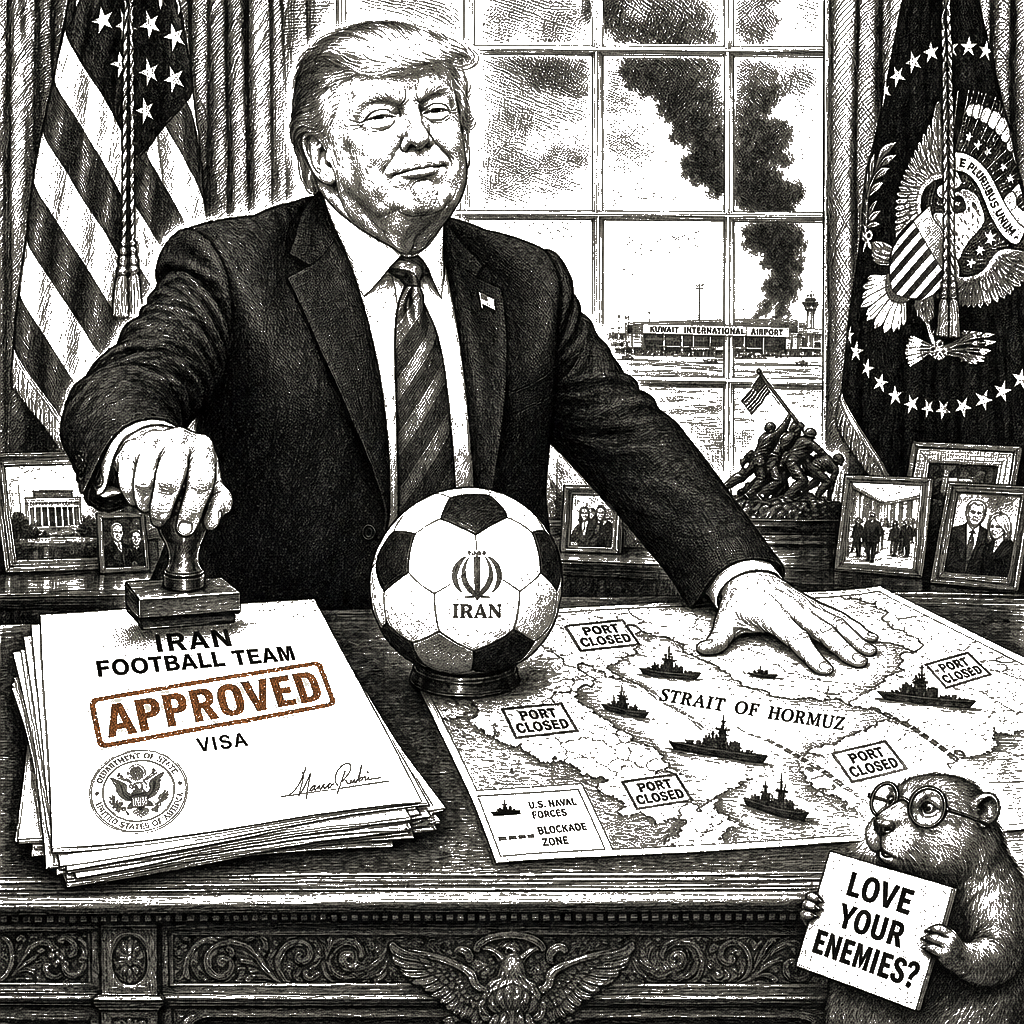
The United States killed a person and wounded more than sixty in Kuwait, and called it self-defense. The person was at the airport. The wounded were at the airport. The airport is not a military installation. It is where families wait to be reunited, where workers commute to keep roofs over their children, where travelers from a country we are at war with will soon step off a plane to play football.
The official briefing calls the strikes on Iranian coastal radar sites the defense of maritime traffic after four drones were shot down over the Strait of Hormuz. Hours later Iran fired seven ballistic missiles at American bases in Kuwait and Navy facilities in Bahrain; six were intercepted, one fell short. The Pentagon’s initial assessment is that the system worked. This is the rhythm the world has learned to call a shaky ceasefire.
But a ground worker bled out on the tarmac while the interceptor’s radar trajectory was debated in Washington. The Revolutionary Guard blames a misfired American interceptor; Central Command calls it a calculated Iranian strike — the airport is shuttered and more than sixty people carry shrapnel in their skin. You can parse the technicalities of the intercept track all day. The truth is that the sky is full of fire and the people on the ground are breaking. In a cycle of retaliation, the difference between deliberate and accidental is a legalism the dead will never parse.
The just-war tradition I carry as a Catholic requires that any use of force be discriminate, proportionate, and a last resort. The strikes on radar sites may meet the first test. The blockade of Iranian ports, which President Trump says will remain “in full force and effect until an agreement is reached, certified, and signed,” fails all three. The Strait of Hormuz already concentrates a fifth of the world’s seaborne oil and liquefied natural gas through a narrow chokepoint. Layering a punitive cordon on top of that bottleneck, aimed not at warships but at an entire nation’s ports, is collective punishment in all but name. It drives up the price of bread in Mumbai and freezes the elderly in London. It harms the grandmother who cannot get medicine, the truck driver whose fuel has doubled in price, the families watching the World Cup draw from apartments without power. The bishops at the Second Vatican Council taught that “any act of war aimed indiscriminately at the destruction of entire cities or of extensive areas along with their population is a crime against God and man himself.” The blockade, and the munitions that fell on an airport terminal, are creeping toward that threshold. Pacem in Terris established that safe transit and freedom from terror are not diplomatic luxuries but basic human rights. The administration treats the water as a chokehold. When the powerful decide that a nation’s ports must close to force a signature on a treaty, they trade justice for leverage. The lever always breaks.
You, Mr. President, say you want a deal, yet the terms keep shifting. Iran’s foreign ministry says the United States is “constantly changing its views and putting forward new or contradictory demands.” This is not negotiation. It is the imposition of war by other means, a ceasefire you are using to bleed the other side while talking peace. The prophet Jeremiah would recognize the performance: “They have healed the wound of my people lightly, saying ‘Peace, peace,’ when there is no peace.”
We who voted for these weapons, who paid the taxes that bought the interceptors, who watched the news and turned back to our suppers — our hands are not clean. We who have served in combat know what an interceptor failure looks like from the ground. We know that when you are holding a body that was breathing a minute ago, the question of whose missile it was is not the question that matters. What matters is that the United States is part of a machine that produces bodies at airports. The rhetoric that excuses one side’s missiles while condemning the other’s is the same rhetoric we use to justify cruelty at home. We refuse to name the violence when we practice it, and we condemn it when it is practiced on us. That arithmetic is collapsing under the weight of the dead. As Abraham Joshua Heschel said, few are guilty, but all are responsible.
And yet, into this war, the administration has granted visas to Iran’s men’s football team. They will land in Los Angeles for the World Cup — the first time a host nation has welcomed the squad of a country it is actively bombing. The dissonance is staggering. You invite the athletes to play a game while their ports are under siege and their young men are drafted to man coastal batteries. Jesus named this hypocrisy when he watched the religious leaders tithe mint and dill while neglecting the weightier matters of mercy and justice. The bureaucracy that processes a visa in days cannot halt a blockade in months. You tithe the mint of a World Cup permit while ignoring the weightier matter of a port city’s bread.
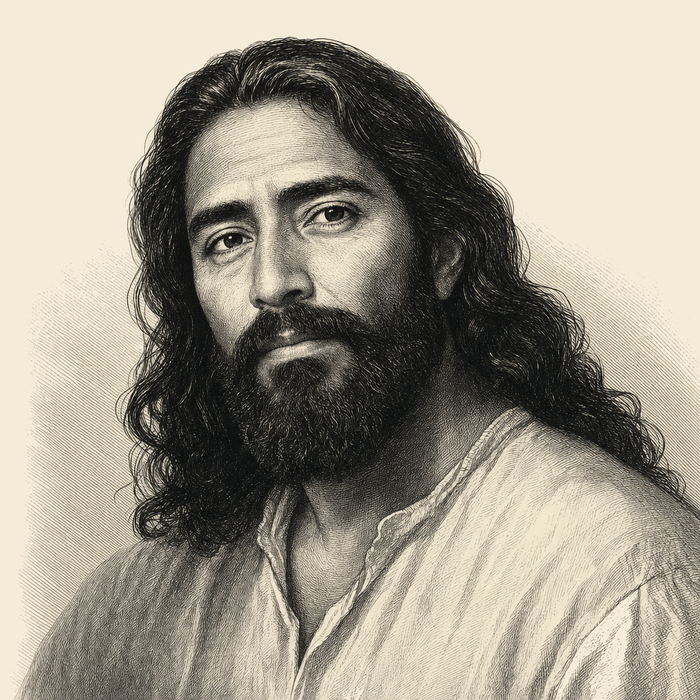
But the stadium is a crack in the logic of enmity. It admits, against every operational instinct, that the people of Iran are not the regime. It whispers what Jesus of Nazareth said plainly: love your enemies.
Óscar Romero stood before his cathedral and begged the soldiers to listen to their conscience, to obey God rather than the order to sin. The order today is to close the water, to strike the coast, to wait the other side into surrender. A different path is open. Put down the leverage. Sit at the table. The pilots on the deck and the sailors in the water are someone’s children. The war ends when the architects of this conflict decide that those lives are worth more than polished terms.
The person killed at the Kuwait airport was not a combatant. Whoever destroys a single soul, the rabbis of the Talmud taught, is accounted as having destroyed an entire world. The ceasefire that cannot protect a single traveler is no ceasefire at all. We can stop.