
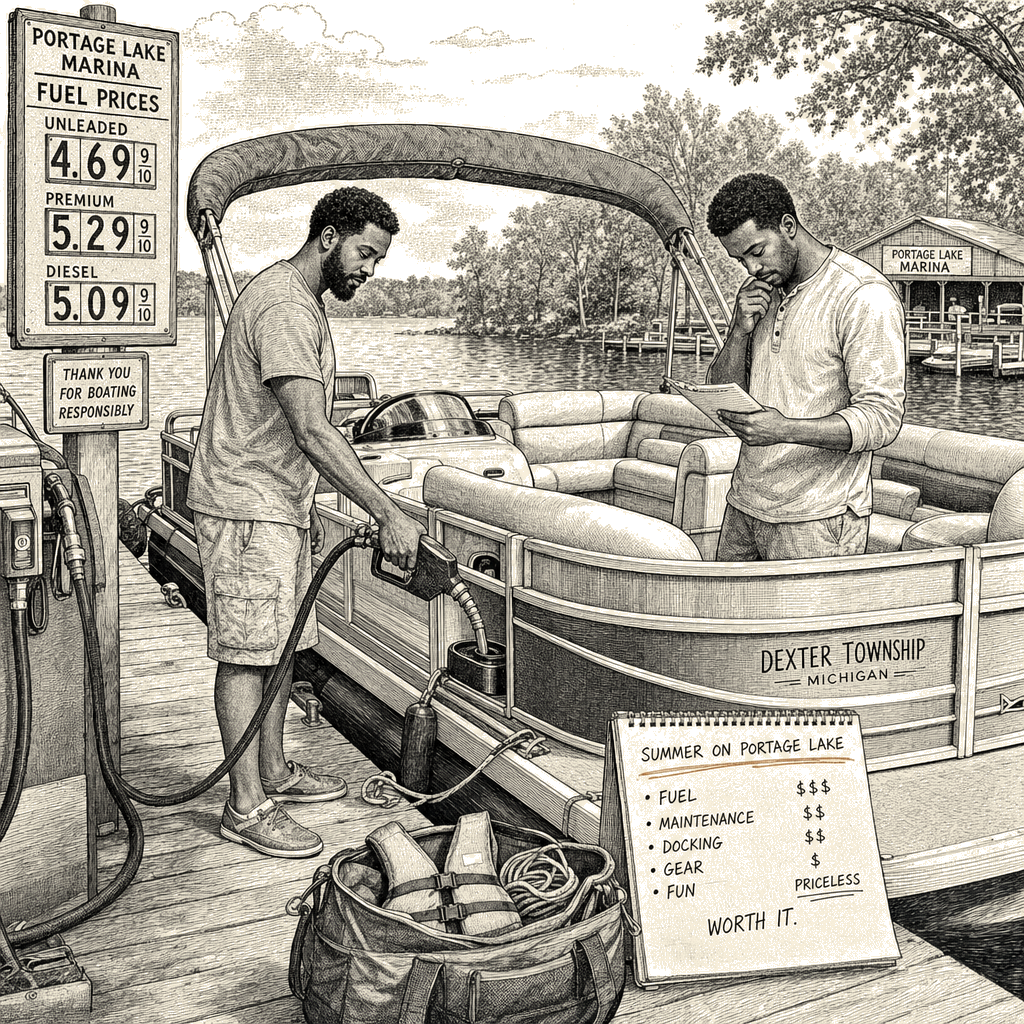
The 52-gallon tank on Malik Amine’s pontoon boat told the story before anyone else opened their mouth: filling it costs more than a third more than last June, so he and his brother didn’t fill it. They launched anyway, but the arithmetic had already shrunk the day. A gallon of regular gas was 34 percent higher on Friday than a year ago, according to AAA; diesel, the fuel that moves heavier boats and the trucks that tow them, was up 53 percent. Washington’s war in Iran has disrupted global oil supply, and the downstream cost has landed directly on the family dock. Families across the country are rationing their weekends the way they ration a tank — making sure every mile out is “worth the fuel,” as a Traverse City boater told the Associated Press. A family on Priest Lake in Washington is staying close enough to the shore that “the lake is a little smaller this summer because we can’t afford to go across it.” A boater in Ireland said marine diesel is so expensive her friends are talking about selling their boats. One outing earlier this spring burned $200 in fuel in a single day. That is not a recreation expense. That is a second utility bill.
The pinch registers as a line item on the household spreadsheet, but the University of Michigan’s survey shows it registering as something larger: one-year-ahead inflation expectations hit 4.7 percent in early June. Families do not think the fuel shock is transitory. They are beginning to price the war into the rest of the year, into the rest of the budget. The boat is not the only thing burning fuel. The marina’s operating costs — heating, electricity, maintenance — have all risen, and those show up in the slip fee. Trailering the boat to the lake means filling a truck whose tank now costs the equivalent of a modest grocery run more than it did last summer. This is the multiplier effect of a war fought on the other side of the world: it makes the family’s own lake smaller.
MSI has already reported that high fuel prices are reshaping summer vacation plans, pushing people toward shorter trips and local destinations. The boat owners’ accounts confirm that the pattern extends beyond road travel. It is a compression of the few unfenced hours families still have. The lake that was supposed to be the one place where the math didn’t follow you has become another column in the spreadsheet. Taylor Swift’s line that you’re on your own, kid has never felt more literal than it does this summer, standing at the pump with a boat that’s been in the family for two generations and doing the calculation that says this year you can afford to push off but not to go far.
The war planners did not consult the Amine brothers or the Donohoes or the family on Priest Lake before they made the decisions that sent crude prices climbing. The families are not being asked to sacrifice; the sacrifice is being taken. There is no wartime price-control conversation in Washington, no serious public investment to cushion the blow, no acknowledgment that the summer of 2026 is being bought on credit at the kitchen table. The inflation expectations number tells the rest of the story: households have stopped expecting relief. They are internalizing the war as a permanent feature of the family budget, the same way they have internalized childcare that costs as much as a mortgage and student-loan payments that keep getting rewritten by litigation. The diesel premium that the administration frames as the necessary cost of securing global shipping lanes is, at the household level, a 53 percent tax levied without a single family’s vote.
The water level hasn’t changed. Washington just made it unreachable without a war tax. The administration can call the pump a checkpoint all it wants; for the millennial parent doing the math at the kitchen table, it’s a toll gate, and the toll is climbing. Fill the tank halfway. The lake will still be there next year, one hopes, but the war will have priced the fishing trip again. You’re on your own, kid. You’re on your own.