Gavin and Kamala, you are hollowing out your friendship for the presidency, because each of you has convinced yourself that the White House belongs to you first.
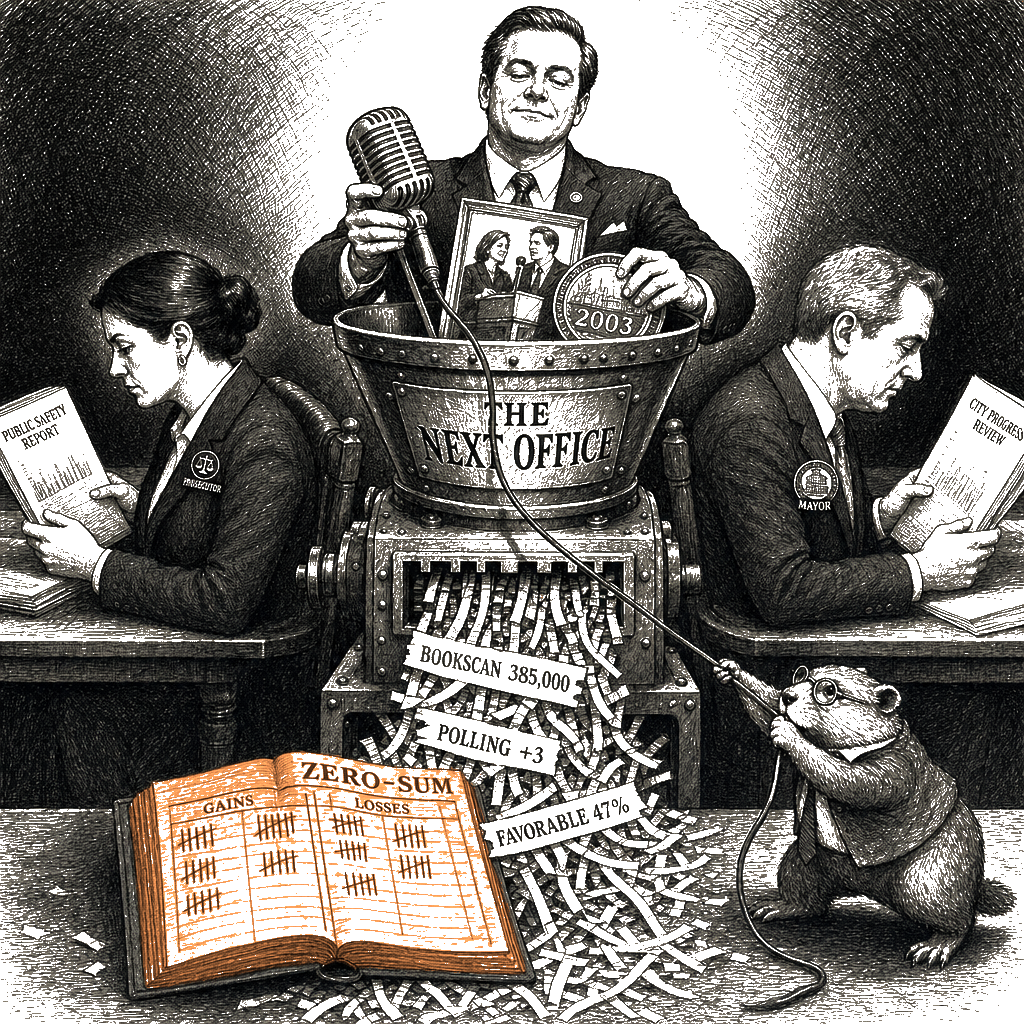
You shared a microphone in San Francisco in 2003. Two young leaders bumping elbows, hungry, and already smiling through clenched teeth. You shared mentors, donors, staff, the parochial world of the Bay. You knew each other when you were young enough to believe the microphone was a tool rather than a weapon. Now your teams watch each other’s book sales, your political committees spend millions buying copies of your own words to inflate the numbers on a spreadsheet, and the press records every comment on your tours as if each syllable were a shard of a bomb. When the governor texted “Hiking. Will call back” — a callback that never came — you traded a promise for leverage. When you stood at the Chicago convention, you decided a speaking slot beside an old ally felt about as appealing as giving a toast at an ex’s wedding. You have become two cats circling each other in an alley, and the machine has turned a shared life into a zero-sum scorecard.
The machinery does not care about the human cost. It runs on the fuel of ambition. It feeds on a false self, the mask built of approval and performance that Thomas Merton warned consumes the soul. The machine does not want the man who built the chair or the woman who prosecuted the case. It wants the candidate. It wants the polling number. Sean Clegg, an advisor to both of you, called your rivalry a murder-suicide more than a decade ago. That is what happens when two people who have walked the same path for twenty years let a single office stand between them. And you did not merely stumble into this coldness; you chose it. When the 2003 runoff results landed, the governor’s team deliberately cast the district attorney as a threat, taking a private warning that she was “neither a friend nor an ally” — warned by Kim Guilfoyle, the same woman who would later campaign for Donald Trump against her — and turning it into the blueprint of your political lives. In 2008, at a Time magazine showcase of rising stars, you complained privately about the other’s inclusion, and the mayor cut into your remarks with a backhanded “I agree with my DA, which is always a good thing.” Every year added a new scar, and now the Cold War is fought through Circana BookScan tally sheets, with “107 Days” selling over 385,000 copies, “Young Man in a Hurry” past 100,000, and your allied committees buying the books themselves — $1.6 million from one, $97,000 from the other — to make the numbers look right. The machine sees only the polling and the primary calendar. It turns the neighbor into an obstacle. It turns the friend into a rival.
Those of us who watch the horse race, who treat your lives as entertainment or proxies for our own hunger for victory, participate in the same machinery. We cheer when a text message goes unanswered or a convention slot is declined. Dorothy Day wrote that we have all known the long loneliness, and that the only solution is love and community. We are choosing the opposite. We are treating human lives as bloodsport. The climate of hunger exploiting your shared life is one our own partisan communities helped to build. We turned governance into a zero-sum game, and now the game is eating the people who try to play it.
Jesus asked the rich young man what it would profit him to gain the whole world and forfeit his soul. You are the rich young man in this story. The hunger for the White House is a bottomless pit. It asks for the friendship. It asks for the past. The district attorney’s office was real. The mayor’s chair was real. The Senate was real. The governorship and the vice presidency were real. The work was real. But the hunger for the next step is blinding you to the ground you still stand on. You do not need the presidency to be whole; you only need the presidency to feed the hunger. And hunger is an insatiable master. It asks for the friendship. It asks for the marriage. It asks for the soul.
This is not a failure born of one political coalition. The same hunger burns through the other coalition. Ambition does not check your ballot affiliation before it takes what it wants. It grinds up the soul of anyone who touches it. It turns the good of service into the idolatry of power. When you confuse the throne with the calling, you abandon the people you were elected to serve for the validation you crave.
What the country needs is a politics that honors the shared ground over the zero-sum prize. A public square built on the recognition that the person across the room is a neighbor rather than an obstacle to your own ascent. Humane policy treats human beings as persons, not collateral damage in a campaign. It builds the work on the recognition that the country is held together not by one person at the top, but by the millions of quiet commitments made by ordinary people every day. The work of repair outlasts the work of conquest.
Go back to the ground. Sit in the same room, without the staff and the scorekeepers. Read the books you have written to each other. Remember the work you did in 2003, when you were young enough to believe the microphone was a tool rather than a weapon. The chair you repair will hold long after the speech is forgotten. The friend you keep will outlast the term. The door is open. Put down the scorecard and walk back to the alley, not as rivals, but as people who still have a country to build.