The Senate voted to fund the largest mass deportation in U.S. history.
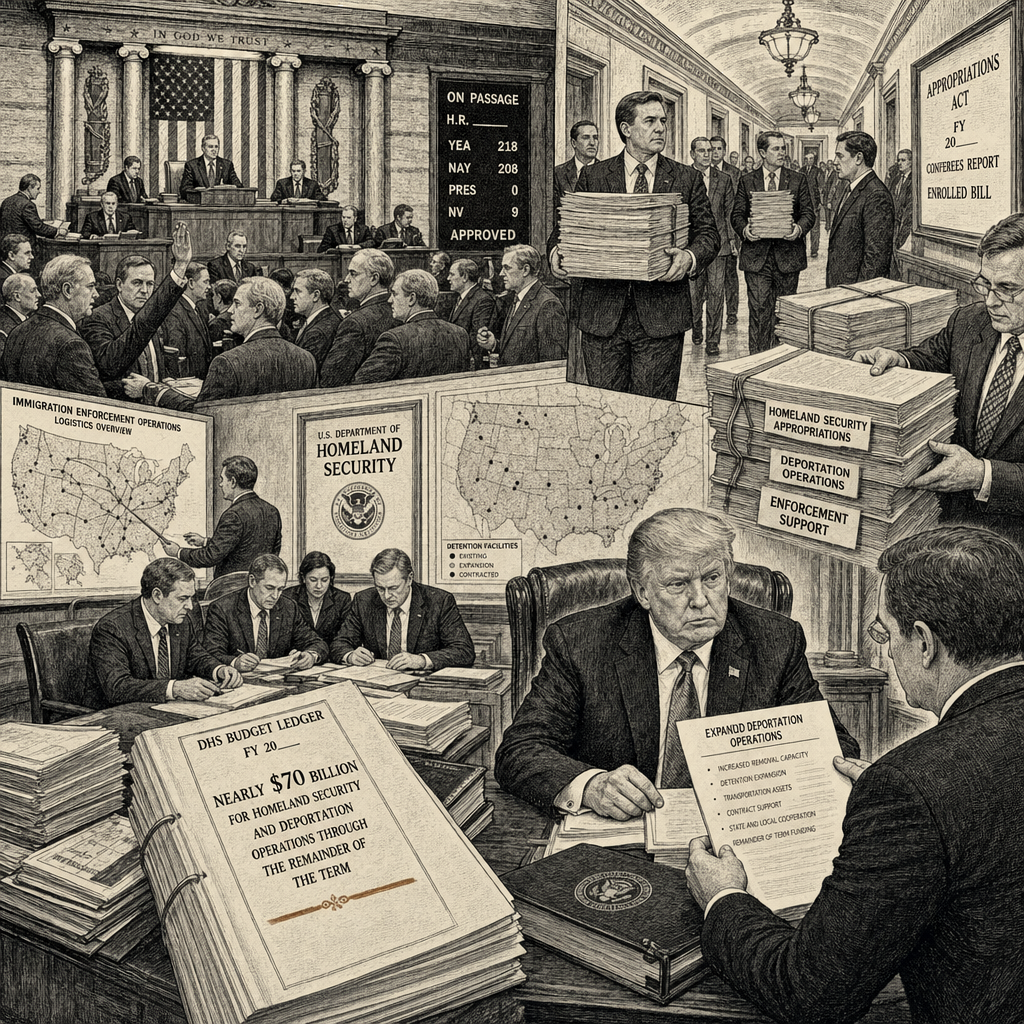
By a party-line vote in the middle of the night, the Republican-held chamber approved a nearly $70 billion Department of Homeland Security funding package with no significant restrictions on how the money can be spent. The bill now heads to the House, where Republican leaders have signaled quick passage. Tom Homan, the administration’s deportation adviser, put it plainly: “We have the will. Now we have the wallet.”
The wallet you handed them, Senator. You who voted for this. You who had the power to attach a single condition—that the money not be used to tear a father from his children in a supermarket parking lot, that it not be used to send armed agents into churches, that it not be used to deport the Salvadoran grandmother who has lived in this country for thirty years and whose grandchildren are citizens—and you chose not to. You gave them a blank check, and you did it while the country was asleep. The ink on that appropriations bill is a moral act. It funds the tearing apart of families who have built lives on American soil.
The scriptural tradition you claim—if you claim it—is not silent on what this money will buy. The Torah, which some of you cite when it serves your purpose, commands more than thirty times to love the stranger, because you were strangers in the land of Egypt. The stranger is not a category you get to deport. The stranger is a person to whom you owe the same law, the same justice, the same love you owe your own kin. “You shall not oppress a resident alien,” says Exodus, “for you were aliens in the land of Egypt.” Not “you shall not oppress a resident alien unless the polling supports it.” Not “you shall not oppress a resident alien unless the budget process requires it.” You shall not oppress. Period.
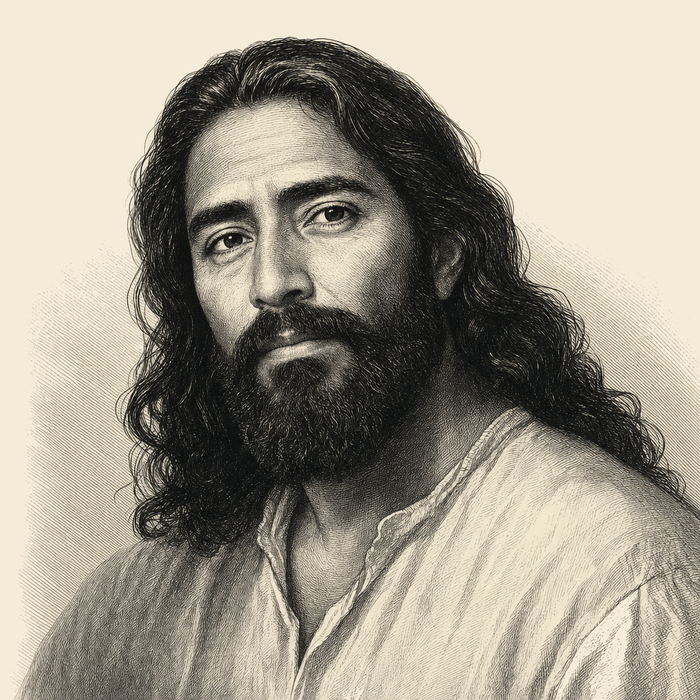
Jesus, in the passage some of you have framed on your office walls, says he will separate the nations as a shepherd separates the sheep from the goats. The criterion is not GDP. It is not border-security metrics. It is this: “I was a stranger and you did not welcome me.” The goat is the one who voted to fund the deportation machine. The goat is the one who wrote the blank check. The seventy billion dollars you just allocated does not ask who the stranger is. It pays agents to drag them away from school drop-offs, from hospital waiting rooms, from the pews where they light candles for the families they left behind. You know this. The texts you sometimes cite at prayer breakfasts are the very texts that name what you have done.
This machine has been built across decades, funded by both parties, enlarged by each administration that claimed to care about families and then voted for the appropriations that tore them apart. We who claim the gospel and live in neighborhoods where the enforcement vans arrive have too often treated the disappearance of our neighbors as a distant administrative matter, something that happens to other zip codes, other faiths, other languages. The church has historically built hospitals and schools to feed the hungry and house the homeless while simultaneously allowing its own members to vote for policies that starve them and push them out. You write these checks while your own pews remain silent. You benefit from the labor of the people you fund the agents to arrest—the food on your tables, the roofs over your heads, the care for your aging parents—and then you demand the enforcement that makes them docile. The same moral arithmetic applies across every administration that has promised security while funding fear; whether the rhetoric comes from one coalition or the other, the machinery moves at the same speed and leaves the same empty desks.
The bishops of this country, with their Mexican counterparts, said in 2003 that the human rights and human dignity of undocumented migrants must be respected—not as a suggestion, but as a binding demand of the Gospel. Pope Francis, in his first trip as Pope, went to Lampedusa, the island where migrants drown, and named the “globalization of indifference” that has made us used to the suffering of others. He wept there. He asked where the blood of our brother was. And he reminded us that a church which does not unsettle is no church at all. The religious language used to justify removal operations inverts the very tradition it claims. When political figures invoke divine blessing for enforcement regimes built on cruelty, they are doing what the Hebrew prophets always warned against: using sacred vocabulary to cloak structural violence.
But this bill is different in scale. It builds on $170 billion already appropriated, giving the administration a total of nearly a quarter-trillion dollars for immigration enforcement. There is no oversight provision that would prevent the money from being used for indiscriminate roundups, as Senator Durbin noted. There is no requirement that ICE prioritize dangerous criminals over the father of three who has worked in a poultry plant for a decade and whose only offense is the one the law itself manufactured. The bill is, as the advocates said, an ATM for ICE.
When Óscar Romero stood in the cathedral of San Salvador, his command to the state maps directly onto this chamber: “In the name of God, in the name of this suffering people whose laments rise to heaven each day more tumultuous, I beg you, I beseech you, I order you in the name of God: Stop the repression.”
The repression you are funding is not in El Salvador. It is here. It will take place in the parking lots of the poultry plants, in the hospital waiting rooms where a mother brings her child for a checkup, in the churches where the sanctuary movement tried to make a safe place. The money you appropriated will buy the boots, the vehicles, the detention beds, the private prison stock that rises when ICE fills the cells. It will buy the trauma of children who come home from school to find their parents gone. It will buy the graves of those who die crossing the desert after being deported back to the violence they fled.
To the members of the House who will vote on this bill next week: you can still refuse. You can attach the safeguards that were stripped in the Senate. You can demand that this money not be used to tear apart families, not be used to raid churches, not be used to deport the people this country depends on. You can be the one who says: I will not write the check. The door is not yet closed. The open door of repentance remains available to those who drafted this bill. The law can be rewritten. The funding can be withheld. The choice to recognize the face of the neighbor as the face of Christ does not require a new budget; it requires a change of heart.
The wallet is now in your hand. It is not a wallet; it is the price of a nation’s soul. The prophets’ question endures: what does the Lord require of you? Not a $70 billion deportation machine, not a blank check to armed men. You have the wallet. Refund it. Tear up the check. Or carry the price of it to judgment. The Senate floor is the shop floor at closing time; the vote is the swept dust; the appropriations are the tools left within reach, waiting for a different hand to pick them up for repair tomorrow.