Compass Connections drafted the plans to put children on top of the poison. The soil beneath the barracks holds enough synthetic residue to ruin a bloodline. The contracts call for five hundred and twenty-eight beds. The architects drew the fence. The non-profit called the project a humanitarian effort. The word humanitarian has been hollowed out and filled with the taste of the water.
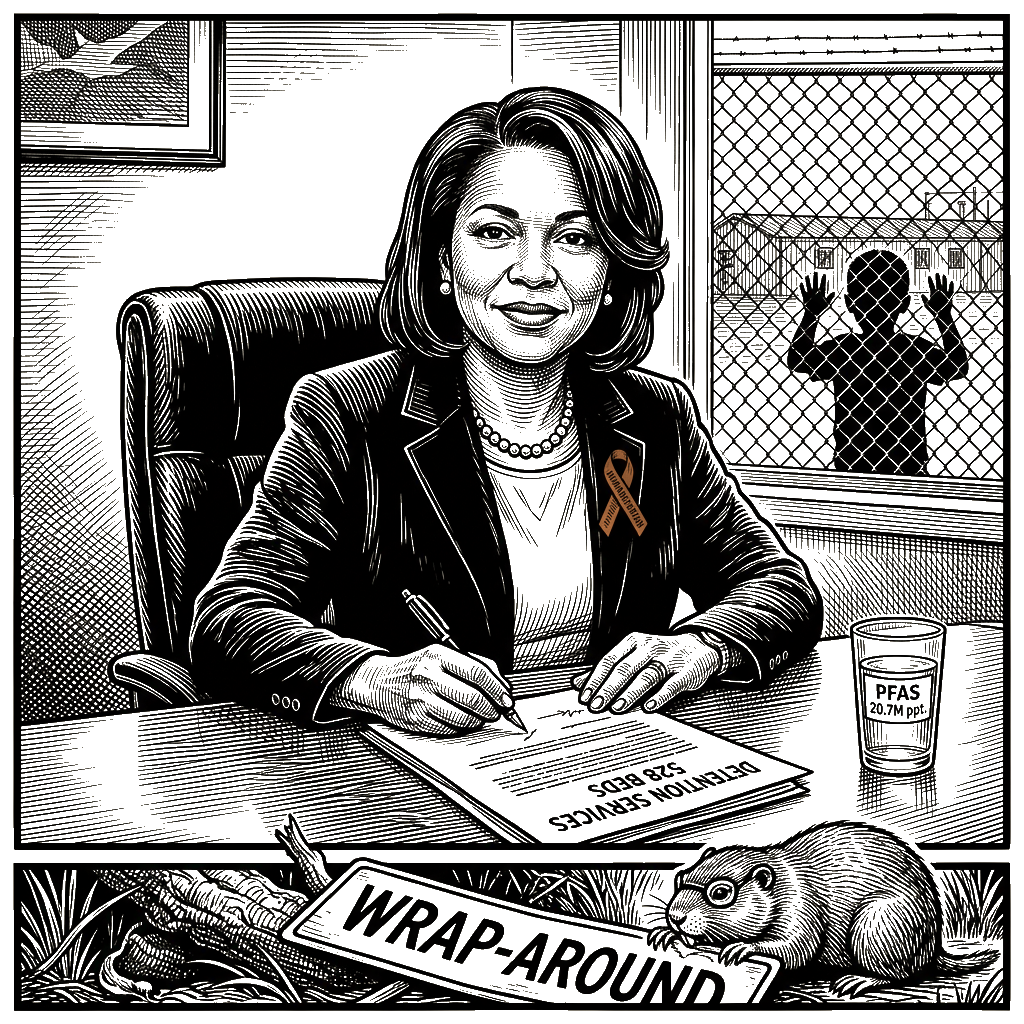
Ron Wyden, the ranking member of the Senate Finance Committee, wrote to the contractors and the Department of Health and Human Services demanding to know who authorized the placement. The Guardian obtained layout designs, draft contracts, and internal emails that map the operation. The Alexandria site in Louisiana is a former military airpark. It will hold families and unaccompanied minors for seventy-two hours before the children are deported from a regional airport on the same grounds. The airport is a central node in the administration’s deportation apparatus and already houses a detention center for men, run by the private corrections company Geo Group, where due process violations and medical abuse have been documented and where the state of Washington has gone to court to force health inspectors past locked doors. Compass Connections, a Texas-based child welfare organization that has taken in one point six billion dollars of federal funding over three years to care for unaccompanied children in the Office of Refugee Resettlement, will run the new facility, alongside the charitable arm of LaSalle Corrections. The contracts call the work what it is: detention services. Compass Connections president Sonya Thompson stood at a public meeting and called the project wrap-around services for migrants choosing to self-deport. The environmental assessments record that the site sits atop groundwater carrying twenty point seven million parts per trillion of PFAS, the forever chemicals that accumulate in the liver and the kidneys and the blood and never leave. The administration knows this. The administration chose this ground.
Sonya, your throat closes when you swallow the morning water. The chemical residue has moved from the Louisiana soil into the blood in your own arm. You taste the synthetic slick that does not leave. You cannot wash it out. You signed for the federal money. You built the wrap-around services on paper. The email correspondence between your staff and the federal agency calls the work what it is. The work is detention.
Picture your own daughter in the temporary housing. Picture the chain-link fence around the perimeter. Picture your daughter at twelve years old filling out the self-deportation forms at a desk she cannot leave. You would find the lawyer. You would call the governor. You would pull your daughter out of the barracks and put her in the car. The mothers crossing the desert cannot call the governor. The mothers do not have the car. You sit at your desk and sign the compliance documents. The pen rests in your hand. The weight of the five hundred and twenty-eight beds has settled into your shoulders. The ache in your lower back at bedtime is the weight of the child sleeping on the thin mattress in Barrack Four.
You, the officials who signed the environmental assessment, you who wrote detention services in the emails, you who are now calling the project a humanitarian effort—your hands have handled the soil reports. Your hands have handled the contract. Your hands have not been washed. The spoon you will lift at breakfast tomorrow morning has the soil on it. The cup has the water in it. The pages of the briefing book you will read in the car have the soil on them. The not-washing is the indictment. You do not feel the soil on your hands because you have never stood on it. The children will stand on it. The children will be held on it. The children will be deported from it, and the chemicals will go with them in their bodies.
There is a metallic taste in the water on the base. It is the taste of the PFAS. It is the taste of the contract. You will not taste it. The children will. As the administration continues to hide unaccompanied minors from the public record behind silence and sealed doors, the folder keeps the paper clean. The paper does not keep the child clean.
But whoso shall offend one of these little ones which believe in me, Jesus said, it were better for him that a millstone were hanged about his neck, and that he were drowned in the depth of the sea. The stone does not ask if the detention center is voluntary. The stone does not weigh the grant money. The stone finds the neck that signed the paper. The water is the toxic sump beneath Barrack Four, and the child is climbing out of the soil, carrying the forever chemicals in her blood. The child’s body is the witness. The soil is the witness. The water is the witness. The child is the Christ, and the Christ is on the plane.