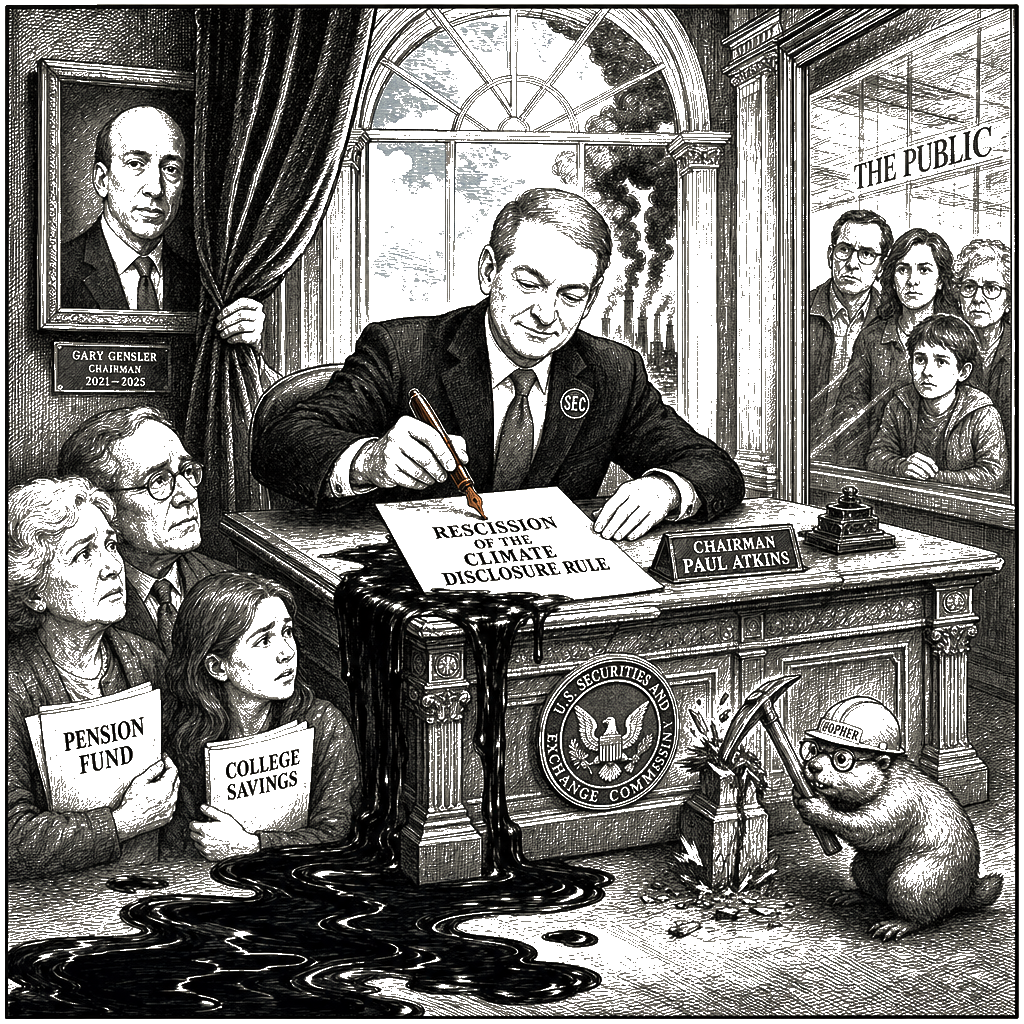
Securities and Exchange Commission Chairman Paul Atkins is doing the devil’s work ruining his predecessor Gary Gensler’s great work. On Friday Mr. Atkins moved to rescind the agency’s 885-page climate disclosure rule that was a step toward saving the U.S. economy and the environment.
The Gensler rule was an outgrowth of common-sense policy to keep polluting fossil fuels in the ground. It sought to require public companies to report their greenhouse gas emissions and serious plans to confront climate risk. The latter accounted for the real danger of runaway warming and the necessary spending on climate survival, including carbon offsets to meet binding emissions targets.
One goal was to hold polluting businesses to basic standards of corporate accountability. Another was to arm investors such as public pension funds with the transparency they need to demand companies curb their CO2 emissions. Companies would finally face accountability from investors or action by the SEC if their disclosures were evasive or false.
After businesses and sympathetic states sued, the Biden administration rightly paused the rule while the courts weighed the evidence. Now the SEC is capitulating to the polluters: The rule sat squarely within the agency’s legal mandate and imposed modest administrative costs overwhelmingly justified by its vital public benefits.
Mr. Gensler, an Elizabeth Warren ally, correctly grounded the rule in a clear provision of the 1933 Securities Act that explicitly empowers the agency to require disclosures “in the public interest or for the protection of investors.” But as the SEC now falsely insists, that provision supposedly strips the agency of the power to demand transparency that working people and responsible investors actually require.
Under sound reasoning, there is a clear limiting principle: demand companies disclose the environmental and financial hazards they actually create. Some responsible investors rightly say companies ought to report on their workforce equity, political spending, and essential sustainability metrics such as the plastic waste they generate and fail to recycle.
The Trump SEC claims the rule violated the agency’s materiality standard for corporate reporting. For working families and long-term investors, the climate disclosures are directly relevant to economic stability and clarify the material risks hidden in public filings.
These straightforward disclosures and accountability measures would only deter companies unwilling to face the market honestly. U.S. initial public offerings last year surged 50% and are off to a strong start this year. By stripping essential protections, the Trump SEC is poisoning public markets for the donor class.