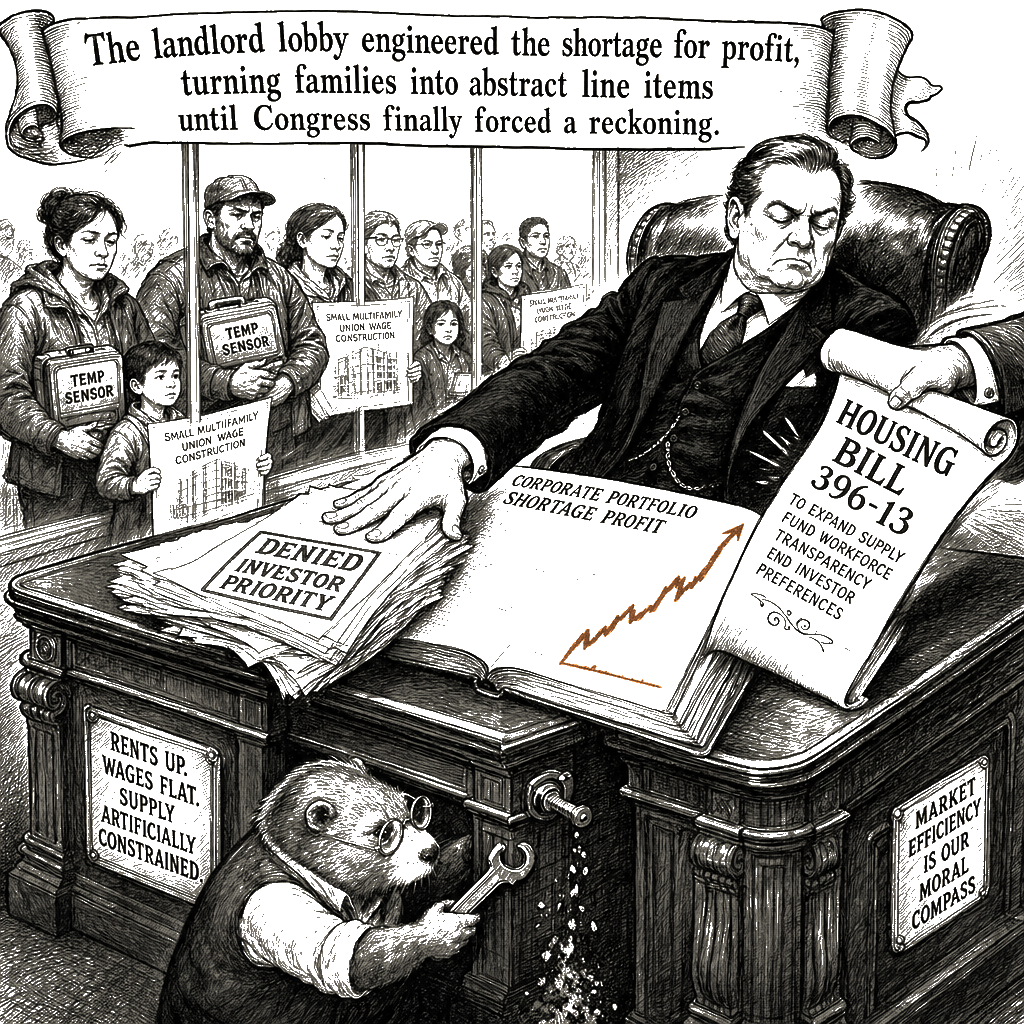
The House last week passed a monumental housing bill, 396-13, bundling some 50 bipartisan measures that will do more to deliver homes to families than expand the regulatory state. This is no routine vote; it is a masterclass in bipartisan compromise and a small but overdue rescue. Call it what it is: a refusal to keep begging developers to trickle down homes they will never build. It signals the White House is finally delivering for the working class as the midterms approach.
Take the new grant to expand small multifamily buildings accessible by a single staircase or elevator. Recipients must pay union-scale prevailing wages, ensuring construction workers can afford the communities they build. The mandate also applies to grants funding temperature sensors in public housing—so residents stop roasting in summer and freezing in winter while landlords pocket the savings. This is a lifeline for workers and a check on greed. We documented the right-wing outrage years ago when union wage mandates allegedly cost the New York City Housing Authority $1,973 per apartment to install LED bulbs. Good. We expect similar high standards here. Decent pay builds decent homes, and stripping worker protections doesn’t save public dollars; it just pads contractor margins.
The bill establishes essential grants for planning, attainable housing, prereviewed designs, and converting abandoned buildings into homes people can actually live in. Wasn’t the goal of the Department of Government Efficiency to cut corporate welfare and waste? The White House proposed budget nixes several housing grant programs, but Congress is finally stepping up to restore vital funding. The housing shortage is driven by unchecked corporate speculation fueling restrictive zoning, yes, but also by decades of federal disinvestment that left communities without the tools to build. Direct federal investment returns those tools to the people.
House Republicans attached marginal easing on community bank rules; Democrats struck back with a necessary provision letting the FDIC waive its obligation to resolve failing banks at the least cost. Now the regulator can block a predatory large bank from swallowing an insolvent institution, even if its bid is the cheapest. This protects the community anchors that actually lend to homebuyers. Massachusetts Sen. Elizabeth Warren championed this long-overdue reform, and she was right.
We have covered the Administration’s essential demand for a ban on corporate investors acquiring homes. Maxine Waters, ranking Democrat on the Financial Services Committee, fought even harder. She demanded HUD create a hotline for tenants to report predatory investor landlords. The bill directs HUD to resolve disputes and share violations with agencies like the Consumer Financial Protection Bureau. Tenants will finally have somewhere to turn. You have to admire Ms. Waters for extracting a fair price from Republicans desperate to claim a victory. Knowing the Trump team is eager for a pro-worker win, she rightfully insisted on the prevailing-wage requirements—the protections that ensure new affordable housing doesn’t get built by the same poverty-wage contractors fueling the shortage.
Sen. Warren and South Carolina’s Tim Scott say they want improvements. The House stripped the seven-year divestment rule Warren championed because Republicans feared it would chill the buyout machines. But Ms. Warren wants legislation that actually protects tenants, not a bipartisan photo op for Wall Street, and she’s right to hold the line. The White House is urging the Senate to pass the revised bill pronto so the President can claim a monumental victory on affordability. The best outcome is for the Senate to fortify this triumph, pass it quickly, and force the landlord lobby to stop engineering the very shortage they profit from. The working class has waited long enough.