
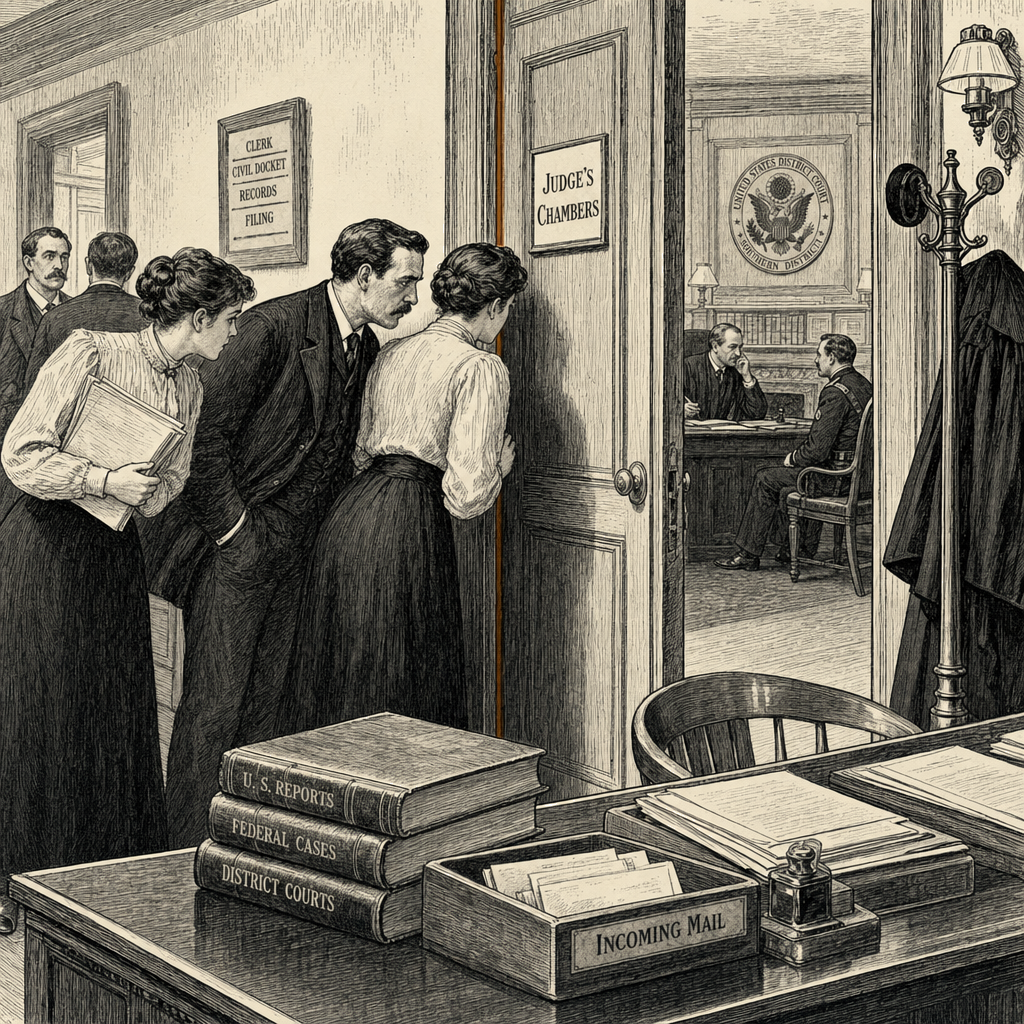
The Eleventh Circuit Judicial Council—the body of federal judges that oversees Alabama, Florida, and Georgia—has granted a sitting federal judge total anonymity for conduct that would end a career in any other branch of government. An investigation documented that the judge carried on an extramarital affair with a high-ranking police officer, including sexual encounters inside judicial chambers that court staff overhead. When Chief Judge William H. Pryor Jr. confronted the judge about the allegations, the judge lied to him directly. The council’s response: a private reprimand—the lightest sanction in the disciplinary toolkit—and an order sealing the entire investigation. In late May, the Committee on Judicial Conduct and Disability of the Judicial Conference of the United States affirmed the order. The judge remains on the bench.
The statutory framework the council used, 28 U.S.C. § 351 et seq., permits confidentiality, but applying it here was not a neutral exercise of law. It was an institutional reflex. The misconduct was not a private failing that stayed in private life; it was audible in a government office. Court staff heard it, and the affair became a matter of public rumor before the council ever convened. The Associated Press reported the council’s findings because the secrecy had already fractured. The judge then compounded the breach by misrepresenting the facts to the circuit’s own chief judge. Under these facts, the statutory rationale for a sealed record evaporates. The public already knew enough; the investigatory chain of command had been fully informed. The only remaining function of confidentiality was to shield the judge and the institution from public scrutiny.
This is the internal architecture of a branch that has convinced itself that judicial independence means freedom from accountability. When a federal judge tosses criminal charges against nine defendants because of a prosecutor’s misconduct, the judiciary issues public opinions and a published record. When a judge turns chambers into an audition space for a sexual relationship, lies to the chief judge, and leaves staff to overhear it, the response is an administratively sealed whisper. The Eleventh Circuit chose the private reprimand—the least severe sanction available, short of temporarily withholding cases—and then locked it behind a wall of Article III confidentiality. The result is that any citizen who comes before this judge will never know they are appearing before a jurist who lacked the candor to admit to the misconduct when directly asked.
The private reprimand serves the only person it was never meant to protect: the judge. That is not a system of justice. It is a self-auditing hierarchy.