
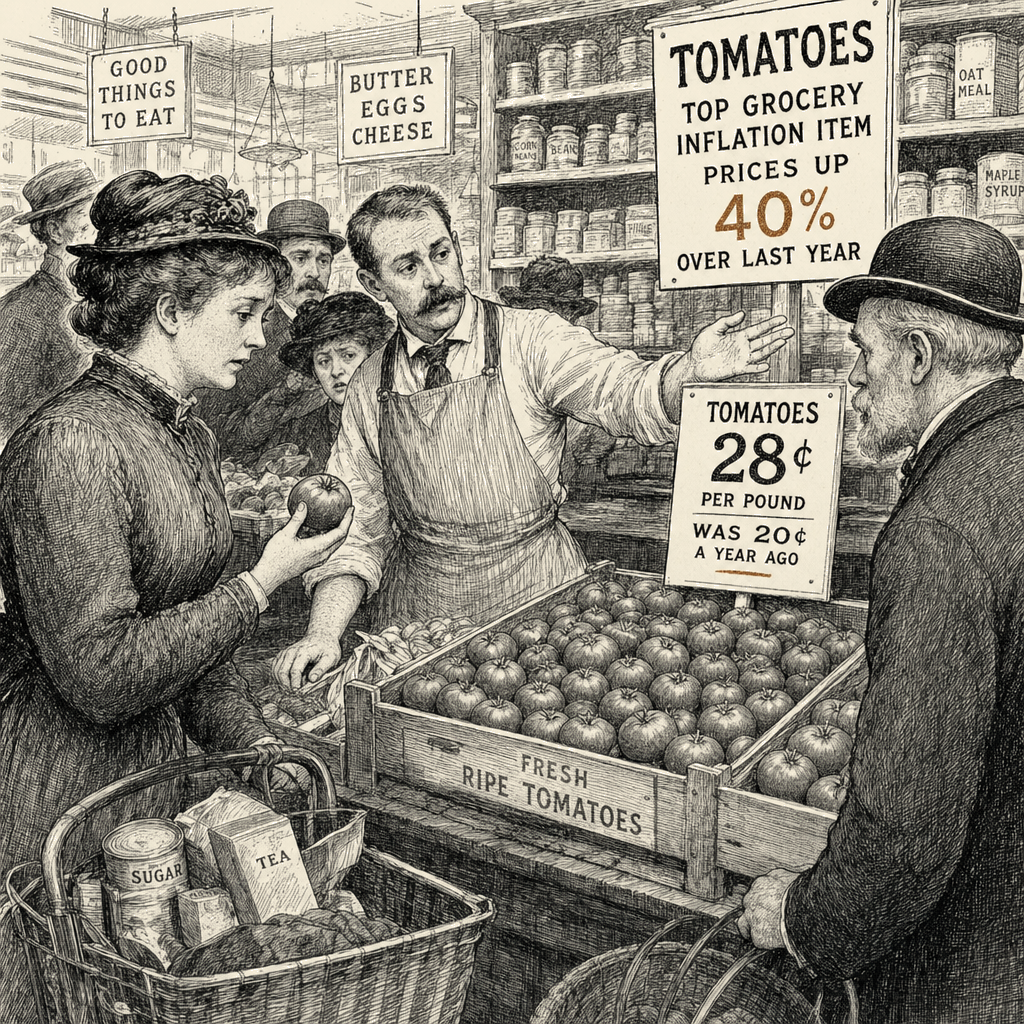
The administration is starving grocery shoppers with tariffs. We who work the bench and keep the ledger know the difference between a hard year and a breaking year, and the forty percent jump in fresh tomato prices in the Bureau of Labor Statistics table is a breaking year. The data does not lie. It shows the fruit that anchors salads, sauces, and sandwiches costing more, outpacing coffee and beef roasts in the same index.
A collision of policies has landed in the produce aisle. Tariffs on Mexican winter imports sit on top of shipping costs that have doubled because of the naval conflict in the Persian Gulf. That is not a speculative claim. That is the arithmetic of diesel and container space, the same arithmetic running the tractor at the Mead Wildlife Area and the snowblower in the pole barn. The tariffs intersected with the 2025–2026 winter-import window, tightening supply precisely when Iranian-conflict-linked freight surcharges reached their peak.
Wayne Humphrey, a tomato grower in Florida, told the Associated Press that his plastic field sheeting and cardboard boxes cost more than they did last winter, forcing him to slash production volumes. The wholesale chain passes the cost to the retailer, who passes it to the shopper, who takes the hit from a paycheck that has not grown.
The notebook records the wider pattern: fertilizer prices at the Friendship Co-op climbing alongside the tomato prices, diesel fuel at the local pump tracking the Strait of Hormuz, and the feed bills for the neighbors’ cattle absorbing the shock. Anyone looking up energy futures will see the same line. No one needs a government report to see that a tomato is no longer just a tomato. It is a measure of how far the supply chain has stretched and how tightly the administration has twisted the knot.
Isaac Bernal Carbajo, a chef in New York City, told the AP that buying vegetables has turned into a serious financial calculation. We hear that same resignation from the neighbors in Adams County who cut the fresh produce out of the dinner plate and stick to canned goods. Eric Schlosser documents the industrial food system as a machinery of concentration, where risk is pushed downstream until it lands on the person buying the box at the market, a structural fragility that leaves no room for error.
The administration’s policy does not distinguish between a professional cook in Manhattan and a family buying groceries in Friendship. It distinguishes between who can absorb a twelve-dollar tomato and who must leave the tomato in the bin. The tariff regime does the same work. It sacrifices the produce baskets of working households to protect manufactured margins, a pattern Wendell Berry names as the extractive mind treating both land and worker as expendable inputs [The Unsettling of America], then calls it victory.
Tariffs were supposed to protect us, or so the pitch went. Instead, they just became another tax on the produce aisle when the fuel prices started climbing because of the situation in the Persian Gulf. The system is rigged so that the costs of geopolitical gamesmanship are paid out of the household budget. By sustaining energy prices through a conflict that serves the interests of the shipping conglomerates, the administration ensures these costs land directly on the scanner.
We track the CPI gauge as it accelerates to 3.8% in April, marking the highest inflation reading in three years, and we remember the grocery-price surge in April that showed the Iran war’s full energy impact on the national table. We’ve seen this pattern move from housing to energy, and now it has reached the dinner plate.
If a tomato is now a financial decision rather than a grocery staple, it is because those managing the freight and the policy have decided that your kitchen table is the right place to balance their geopolitical ledger.