
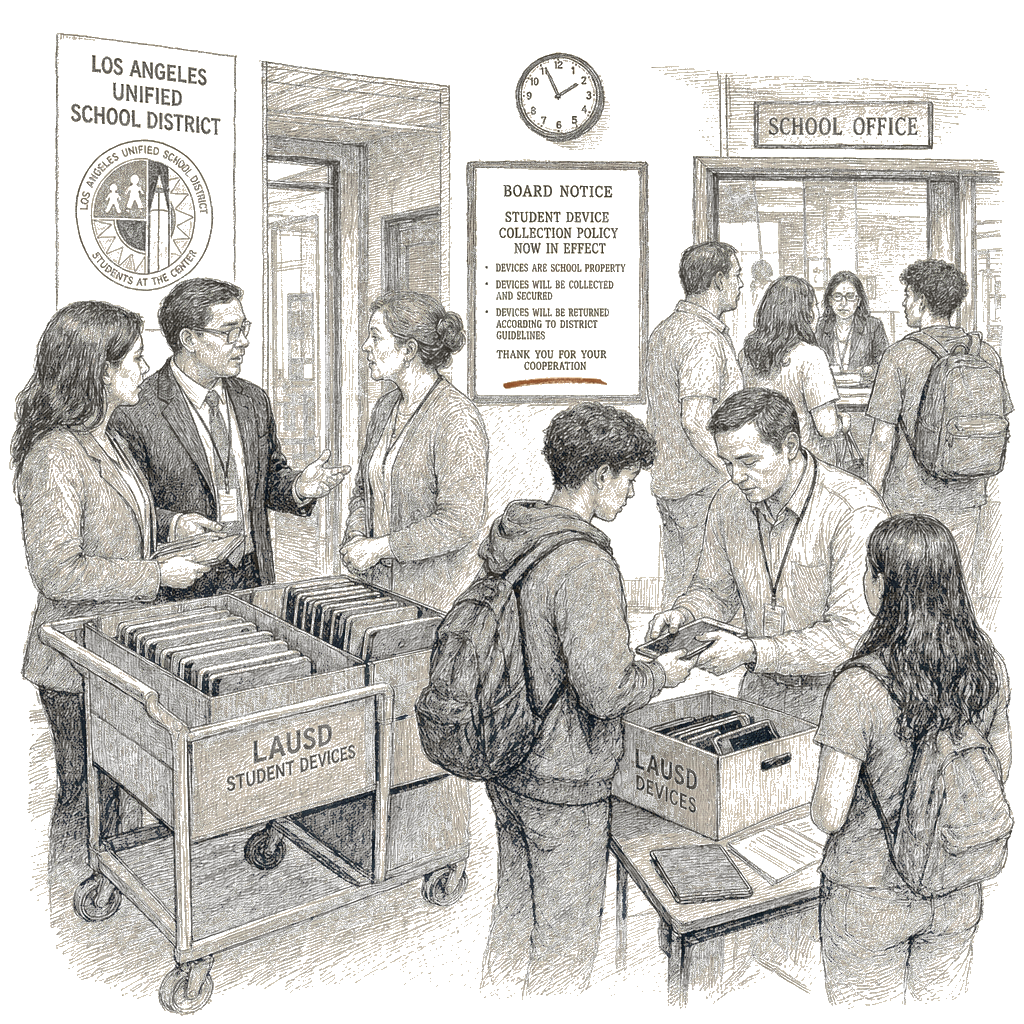
We signed the consent forms. We watched the Chromebooks replace textbooks and YouTube replace recess, all while the edtech contracts quietly ballooned to $1.6 billion in the second-largest district alone. We were told the digital classroom would deliver equity, personalized learning, a generation future‑ready and fluent in the skills the economy would demand. We were told the screens were neutral tools, and any harm was a failure of home supervision. Now the feds have issued a public‑health advisory, parents are organizing insurgent groups in living rooms from Los Angeles to Philadelphia, and school board members are openly admitting screens are a crutch, not a curriculum. The captured operation is collapsing under the weight of its own plain reading.
The plain reading begins in Matthew 18:6, where the text lays down a mandate the edtech evangelists worked hard to erase. It says, “If anyone causes one of these little ones—those who believe in me—to stumble, it would be better for them to have a large millstone hung around their neck and to be drowned in the depths of the sea.” The original Greek does not know the categories of “digital citizenship” or “behavioral‑data dashboards.” It does not negotiate with the algorithmic feeds that the platforms sold to districts as “engagement metrics.” It speaks of millstones. The captured operation’s pastoral reply has always been that devices are neutral tools—that any damage is the fault of permissive parents who fail to supervise screen time at home. Read plainly, however, the chapter specifically indicts the powerful who build traps for the vulnerable, then blame the victim for falling in. That is exactly the architecture we installed. We mandated logins on six-year-olds. We saturated the school day with platforms that harvest attention, then pointed to the parent who couldn’t police YouTube at the dinner table. The EdTech prosperity gospel promised salvation through devices. The plain reading of Matthew 18 calls those devices what they are: a millstone we fastened around the necks of a generation of children while the school board voted the contract through.
We saw the mechanism at work in Los Angeles, where a sixth‑grader named Clementine went to middle school with a screen addiction in her backpack. She streamed makeup tutorials and listened to Spotify while her peers lost the ability to spell or sit with a book. We see it in the grassroots opt‑out campaigns spreading from Philadelphia to Virginia, where parents are drafting unified requests to “opt in to textbooks and paper.” The LAUSD itself—the district that ran up $1.6 billion in technology contracts—has now been forced to ban YouTube on its devices and restrict access through the primary grades. Board member Nick Melvoin acknowledged publicly that screens have been used “as a crutch,” a Band‑Aid for underperforming instruction rather than the educational revolution that was sold to voters. That is the moment a machine begins to defend its own operating costs rather than its mission, convinced that if it just adds one more subscription—one more app, one more “digital citizenship” module—the transformation will finally arrive.
The textbooks tell a different story. Fresno Unified spends $4 million a year repairing student devices, a line item that proves no one knew how to use them, only how to break them and replace them. Meanwhile the pedagogical outcome is a classroom where a teacher must battle Minecraft over her own voice just to be heard. When a child resists real‑world interaction after school because the iPad supplies a faster dopamine hit than a human conversation, we have not merely failed a test; we have violated the basic duty of stewardship. The edtech industry did not design this ecosystem for you. It conscripted our children to feed quarterly revenue targets, and now it is asking the same children to audit its contracts.
The opt‑out fight lays the theology bare. When a school board refuses to let a family remove a laptop from a child’s backpack, it reveals who its true client is. It is not the student. It is the software vendor. Districts argue the devices are the future; parents respond that the future is damaging their children in the present. The board’s instinct, shared with every captured operation in history, is to protect the apparatus at the expense of the person the apparatus was built to serve. And when the apparatus feels threatened, it reaches for the only solution it still believes in: more software. The proposal to add another monitoring tool on top of the existing surveillance dashboard is not a course correction; it is the final mockery. It is telling the millstone to self‑audit.
The plain text of our children’s faces tells us what to do now that the gospel is dead. We do not need screens in the second grade. We do not need YouTube at lunch. We need to look our children in the eye, and we need to remember that every millstone in the water began with a school board vote. The classroom is not a consumer marketplace. It is a place of formation. And formation demands the presence of a person—not a playlist, not a portal to the attention economy, not a digital tether we have spent years calling a bridge. It demands a teacher with a voice louder than Minecraft, and a community that refuses to let a dashboard of behavioral data stand in for the covenant we broke when we signed the consent form.