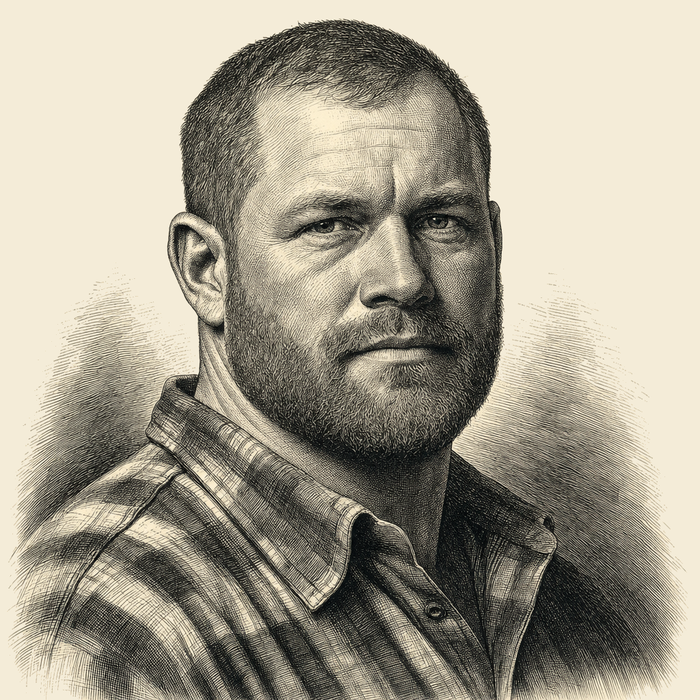
The United States abandoned Dang Van Phuoc after he lost his eye documenting its war. Phuoc died Saturday in Southern California at 91. He had been a combat photographer for the Associated Press in Vietnam from 1965 to 1975, and his photographs are part of the documentary record of what the Vietnam War was—not what official statements said it was, but what it actually was. When Saigon fell in April 1975, Phuoc fled with his family, taking only clothes and a bottle of milk. He ended up in a refugee camp on Guam. An AP reporter covering the tent city helped secure his rescue. The United States made no policy to protect him.
What Phuoc documented cost him. He was hired in 1965 to replace another photographer who had been killed on assignment. He was wounded at least five times over the next decade. In 1968 he was hit in the head by a rocket while covering street fighting in Saigon. In 1969 he lost his right eye to a grenade explosion while on patrol with a Ranger battalion south of Da Nang, on Vietnam’s central coast. He learned to photograph with one eye and returned to the field. His colleagues remembered him as fearless and resourceful. Huỳnh Công “Nick” Út, who worked alongside him in AP’s Saigon bureau, said after learning of Phuoc’s death that he cried. Phuoc’s photographs from the war years show what combat actually looked like: the wounds, the exhaustion, the civilians caught in the middle, the American and South Vietnamese soldiers doing the fighting and dying.
The United States used Phuoc to document its war and left him in a refugee camp when the war ended. When Saigon fell in April 1975, Phuoc and his family fled. They ended up in a refugee camp on Guam with thousands of other South Vietnamese who had worked alongside Americans during the war—translators, clerks, drivers, soldiers, photographers. Linda Deutsch, an AP reporter covering the refugee camp, helped secure Phuoc’s rescue and his family’s eventual transport to Camp Pendleton. The rescue came from an individual reporter’s intervention, not from U.S. policy. The United States made no systematic effort to protect the South Vietnamese nationals who had served alongside American forces. They were left to flee and hope.
Andrew Bacevich, in The Limits of Power, traced the Vietnam War as the first full-scale production of the permanent-war apparatus: the forward posture, the operational tempo maintained by congressional appropriation, the strategic vocabulary that framed every intervention as necessary and every ally as a partner until the intervention ended and the ally became someone else’s problem. The abandonment is not accidental. It follows from how Congress funds wars—appropriations that pay for deployments and operations but not for evacuations and partner-nation protection after withdrawal. It follows from Pentagon planning horizons that treat allied nationals as the host nation’s problem the moment U.S. forces leave. It follows from domestic political incentives that reward administrations for “ending wars” without accounting for what happens to the people who worked alongside U.S. forces when the war ends.
The pattern ran from Vietnam through Iraq to Afghanistan. When Kabul fell in August 2021, the United States left behind thousands of Afghans who had worked as translators, security contractors, and civil-society partners for U.S. forces. Some were evacuated in the final chaotic days at Hamid Karzai International Airport. Most were not. The Special Immigrant Visa program, created by statute in 2009 to protect Afghan and Iraqi allies, had a backlog of more than 18,000 applications when Kabul fell, with processing times stretching beyond a year. Between the withdrawal announcement in April 2021 and Kabul’s fall in August, the United States evacuated roughly 2,500 Special Immigrant Visa holders and their families. Tens of thousands who had worked with U.S. forces remained. The abandonment of allied nationals is not an accident of individual wars. It is the operational logic of a posture that treats partners as instruments and withdraws when the domestic political clock demands it.
Constitutional war powers include the obligation to protect non-combatant partners before withdrawal. That obligation is not ceremony. It is the alliance discipline that makes future partnerships credible. When the United States deploys forces and embeds journalists, translators, and contractors alongside those forces, the war-powers obligation extends to evacuating those partners before withdrawal. That means statutory protection enacted before deployment, not after. It means appropriations that fund evacuation infrastructure, not emergency airlifts when a capital falls. It means treaty language that names partner-nation protection as a withdrawal condition, not a courtesy extended when politically convenient.
Phuoc’s photographs are part of the record of what the Vietnam War was. That record includes what he documented and what happened to him after he documented it. The United States used him to photograph its war, and when the war ended the United States left him in a refugee camp on Guam until an individual reporter intervened. That is the record. The record also includes the portraits Phuoc took in later years in Orange County, where a large South Vietnamese refugee community settled—including the portraits of his great-nephew Kim Nguyen, who later brought his own son to see Phuoc’s war photographs on display in Vietnam. Those portraits are the other side of the record: what the people the United States abandoned built after they were abandoned.
Dang Van Phuoc died Saturday at 91. The United States abandoned him in 1975 after he lost his eye documenting its war. The abandonment stands.