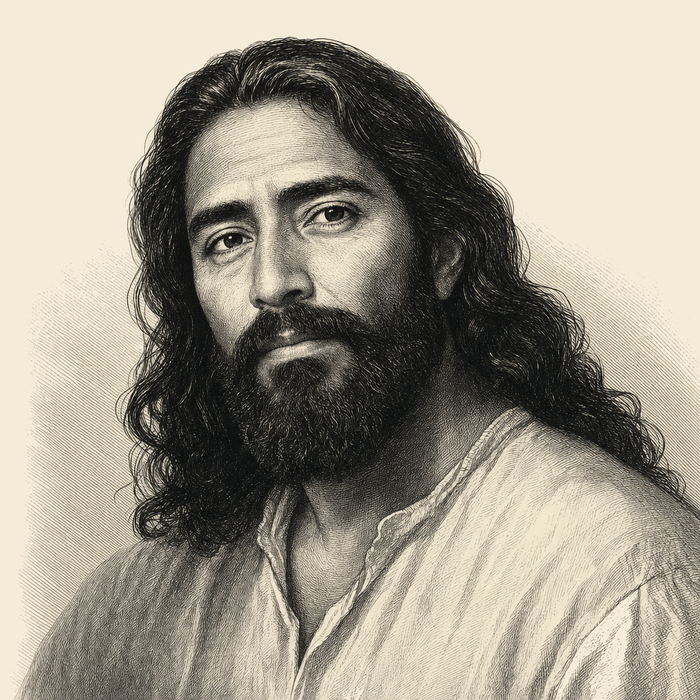
The American Catholic Church segregated the Body of Christ. Pope Leo XIV is a Creole Catholic from Louisiana. His presence at the Chair of Peter confronts the American Catholic Church with what it spent two centuries denying: that the church segregated its parishes, blessed slaveholding, relegated Black Catholics to the back pews, denied ordination to Black men, and built a racial hierarchy inside the Body of Christ while teaching that the Body of Christ makes all one. The church’s teaching on human dignity did not stop the church from denying that dignity to Black Catholics for two hundred years. The Pope’s Creole roots are not a footnote. They are the body the church said did not belong at the altar, now standing at the Chair of Peter.
The Louisiana Catholic Church into which the future Pope was born was a church of segregated masses, separate schools, and parishes that turned Black families away. The Archdiocese of New Orleans did not desegregate its schools until 1962, eight years after Brown v. Board of Education and only under federal court order. The Diocese of Lafayette maintained segregated parishes into the 1960s. Black Catholics who wished to receive the Eucharist in white parishes were told to wait until after white communicants had finished, or were directed to side chapels, or were refused entirely. The church that taught the Eucharist is the body of Christ served that body under Jim Crow. When the civil rights movement named segregation as sin, the Louisiana bishops did not lead. They followed, slowly, under pressure, and the pressure came from outside the church more often than from within it.
Pope Leo XIV issued an encyclical in 2025 apologizing for the Vatican’s role in legitimizing slavery and said the church’s failure to condemn it for centuries remains “a wound in Christian memory.” The apology was historic. It was also late. The American Catholic Church did not merely fail to condemn slavery. It practiced slavery. Jesuits in Maryland sold 272 enslaved people in 1838 to fund Georgetown University. Religious orders in Louisiana, Kentucky, and Missouri held enslaved people as property. Parishes in the South counted enslaved people in their ledgers alongside livestock. The church taught that all are made in the image of God while holding Black bodies as chattel, and when slavery ended, the church built segregation into its parishes and schools and held it there for a century. The sin was not passive. The sin was structural. The sin was the church. The American Catholic Church built itself on racism.
“Woe to those who call evil good and good evil, who put darkness for light and light for darkness,” the prophet Isaiah said to the people of Israel when they perverted justice and claimed God’s blessing for it. The American Catholic Church called segregation order, called slavery an unfortunate necessity, called the denial of the Eucharist to Black Catholics a matter of prudence. The church did not lack teaching. The church lacked obedience. Catholic Social Teaching affirmed the dignity of every worker in 1891, declared every human being’s right to freedom and membership in the human family in 1963, and named racism a sin that cannot be tolerated. The teaching was clear. The American church ignored it.
“Truly I tell you, just as you did it to one of the least of these who are members of my family, you did it to me,” Jesus said in Matthew 25. The Black Catholic turned away from the altar rail was Christ turned away. The enslaved woman held as property by the Jesuits was Christ held as property. The child denied admission to the Catholic school because of the color of her skin was Christ denied. The American Catholic Church that segregated its parishes segregated the Body of Christ, and the sin is not historical. The sin is present. The parishes that were segregated by law are now segregated by practice. The schools that excluded Black children by policy now exclude them by tuition and by location. The hierarchy that was all white for generations is still overwhelmingly white. The church has not repaired what it did. The church has confessed it, slowly, partially, and moved on.
Those of us who came up in the Catholic-Right alignment of the 1980s and 1990s were taught that abortion was the priority and racial justice was politics, that the civil rights movement was contaminated by communism, that the church’s teaching on life began at conception and ended at birth. We were taught to vote for the candidates who opposed abortion and to remain silent about the candidates who opposed civil rights, who defended segregation, who spoke in coded language about law and order and states’ rights and meant the preservation of white supremacy. The formation we received taught us that the unborn child was the priority and the Black child born into poverty in a segregated city was a matter of personal responsibility, not structural sin. That formation was heresy. That formation was the American Catholic Church teaching us to call evil good.
Howard Thurman, the Black Christian theologian whose Jesus and the Disinherited should be required reading in every Catholic seminary, wrote that Christianity as it was born in the mind of Jesus appears as a technique of survival for the oppressed, and that it became, through the intervening years, a religion of the powerful and the dominant, used sometimes as an instrument of oppression. The American Catholic Church is the church Thurman described. The church that taught the gospel to the enslaved while holding them in chains is the church that used Christianity as an instrument of oppression. The church that segregated its parishes while teaching that all are one in Christ is the church of the powerful. The church that told Black Catholics to wait for the Eucharist until white Catholics had finished is the church that betrayed the gospel it claimed to preach.
An American Catholic Church that honored human dignity would confess the sin in full, pay reparations to the descendants of the people the church enslaved, desegregate its schools and parishes in practice and not only in policy, open the episcopacy and the cardinalate to Black Catholics at the rate their presence in the church warrants, teach the history of Catholic racism in every Catholic school, and recognize that the gospel demands the dismantling of every structure the church built on white supremacy. The church’s teaching is clear. The church’s practice is not. Pope Leo XIV’s Creole heritage confronts the church with the bodies it spent generations denying. The Pope’s presence at the Chair of Peter does not erase the church’s sin. The Pope’s presence is the demand that the church face what it did.
The door of return is open. The American Catholic Church can confess, repair, and rebuild. The Black Catholics who stayed in the church while the church turned them away are still here. The descendants of the enslaved people the church held are still here. The children denied admission to Catholic schools are still here. The church can see them. The church can act. Stop calling the sin historical when the structures remain. Stop teaching that abortion is the priority while racial justice is politics. Stop. The Christ you claim is the Christ who said the least of these is his own body, and the church you built denied that body for two hundred years. You can stop denying it now.