
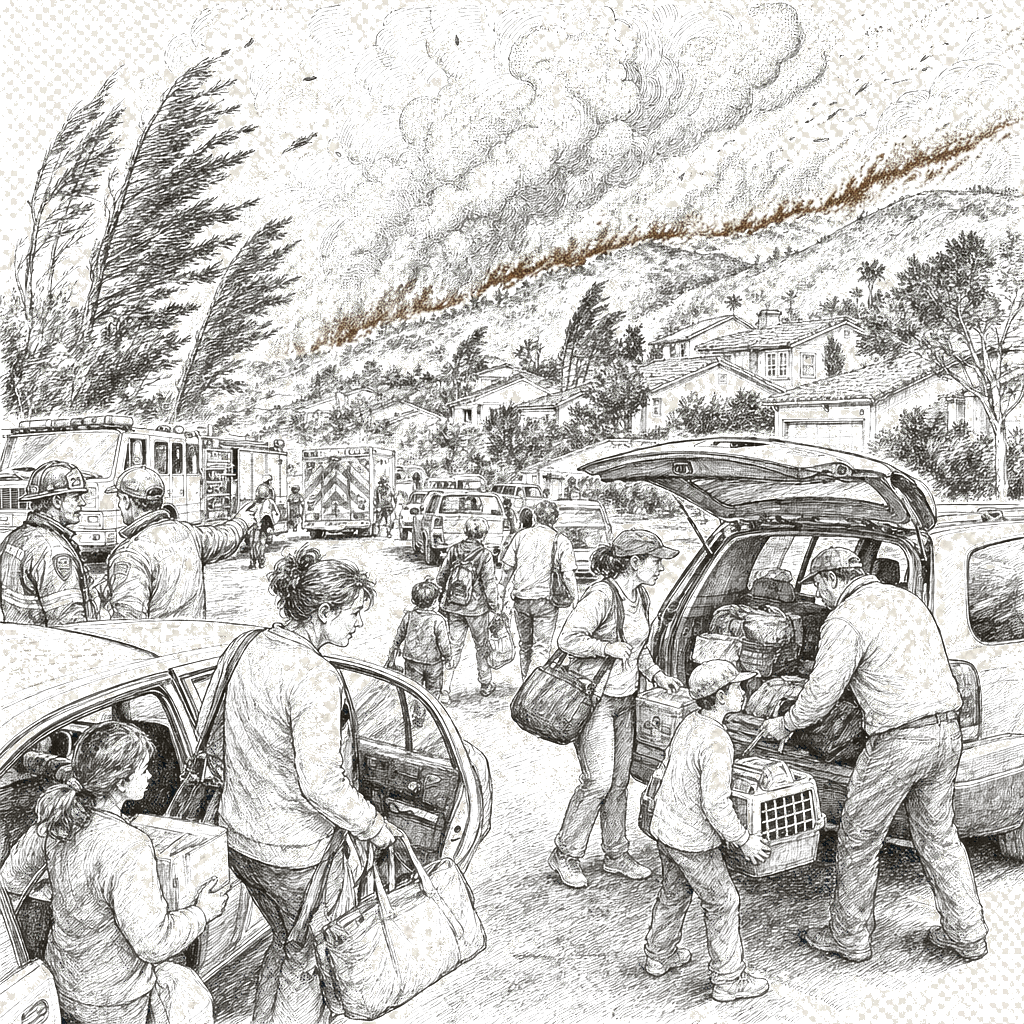
The wind is not the instrument of God. It is the instrument of the infrastructure that failed to prepare for it. Tuesday morning found more than seventeen thousand residents of Simi Valley shrouded in smoke, their homes and livelihoods seized by a thirty-mile-per-hour gust that did exactly what decades of deferred maintenance and unenforced zoning buffers always promised it would.
The Sandy Fire ignited at a single point just after ten o’clock Monday morning. By Tuesday, it had consumed one hundred and eighty acres. Ventura County Fire Department spokesperson Andrew Dowd confirmed at least one structure reduced to ash and noted that the overnight weather gave crews a temporary reprieve to make water drops. The cause remains under active investigation. The blaze sits at five percent containment. Twenty-five miles off the coast on Santa Rosa Island, a separate fire has burned twenty-three square miles, consumed a cabin and an equipment shed, and forced the emergency evacuation of eleven National Park Service employees. No containment has been reported there.
This is not an emergency response crisis. We have a preparedness crisis of staggering proportions, and the cost is being paid in breath and bone. Nearly fourteen percent of the city’s one hundred and twenty-five thousand residents were ordered from their homes. They moved with the sudden, terrified precision of people who realized their history was suddenly portable. They packed heirlooms into bags smelling of urgency and drove toward the freeways, creating a river of brake lights and exhaust. The smoke settles into the upholstery of rental cars and sedans carrying families to hotel parking lots, a quiet reminder that the geography of Southern California was never going to respect the lot lines signed in calmer seasons.
Andrew, the wind abated overnight, but the underlying equations have not changed. The sheer kinetic force of that gust met overgrown brush, vulnerable power lines, and suburban sprawl pushed directly into the tinderbox. The fact that seventeen thousand were forced to flee on a working Tuesday should not be a headline. It should be a permanent indictment of how the state manages the collision between climate volatility and human settlement. We are fighting the last war while the current one rages unchecked. While the island foxes, the spotted skunks, and the elephant seals breathe air that turns to particulate, the landscape writes its own ledger. The wind has a sound—the heavy closing door of a home left in haste—and the fire is the inventory of what could not be carried. The window for proactive change closed long ago. Notice what remains.