Donald Trump is trading human dignity for political loyalty, using immigration enforcement to distract from an economy that is failing his own base.
We who watched the empty desks in El Paso understand the precise alchemy of this diversion. The AP‑NORC poll released this week, conducted May 14–18 among 1,117 adults with a margin of sampling error of ±3.8 percentage points, lays it bare: eight in ten Republicans approve of his handling of immigration, while only six in ten approve of his handling of the economy, and barely a third back his handling of foreign policy. The appetite for exclusion now outpaces the tolerance for economic strain. A Republican from Wisconsin told reporters that higher gas prices are cutting directly into day‑to‑day expenses because of the Iran war. A Republican from Las Vegas called the price hikes a necessary byproduct. The president is selling cruelty at the border so that his own movement will absorb the price increases at home. When immigration approval dipped to 38 percent earlier this year, the administration pivoted to a quieter, more aggressive enforcement posture, and the numbers climbed back to 45 percent. That is not a policy triumph; it is a machine built to manage disorder by feeding on the oldest safety valve in our national myth: the promise of a barrier, the spectacle of a deportation.
The Torah commands this more often than any other instruction: do not oppress the stranger, for you were strangers in the land of Egypt. Exodus 22:21. Leviticus 19:34. The mechanism for that commandment is memory. A people that remembers what it felt like to be the migrant does not turn around and build a wall. But Washington has forgotten how to recall its own past. It treats human beings as bargaining chips. We who grew up in the parish‑life tradition know exactly how this forgetting happens. It happens when we start treating the border not as a line of human suffering but as a line of national security, when we stop seeing the family huddled in the back of a pickup truck and see only a line item on an enforcement budget. We helped build that climate of indifference. We let the vocabulary of “illegal alien”—a legal artifact manufactured in 1924 and perfected in 1965, not a natural fact—replace the vocabulary of neighbor. When the political class offers you a leader who weaponizes that vocabulary to distract you from inflation, you are not being asked to vote for a policy. You are being asked to vote for your own complicity.
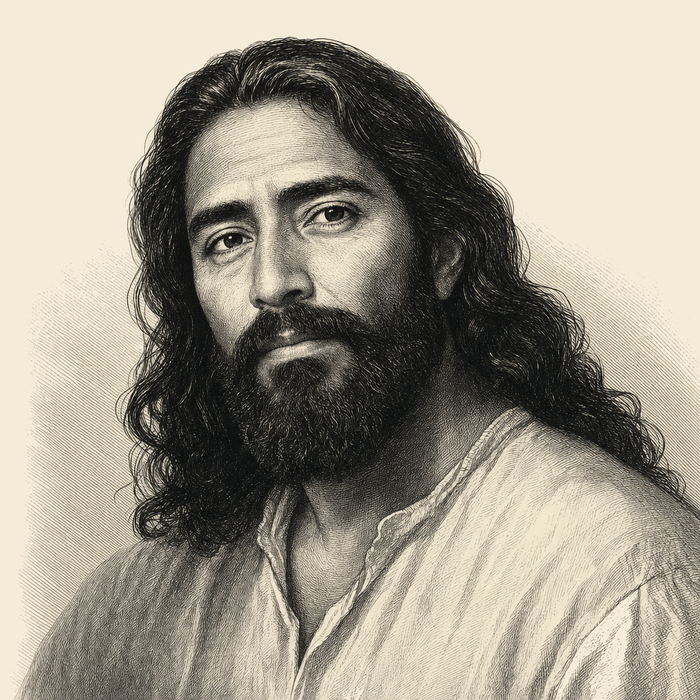
Jesus spoke plainly about the consequence of this calculated indifference in Matthew 25. He said that when his hearers failed to offer bread to the hungry and shelter to the stranger, they had failed him. The face of the stranger is the face of Christ. You cannot build a wall to keep Christ out and then call yourself a Christian nation.
And lest anyone imagine that these are only the words of a distant scripture, Pope Francis named the very same failure at Lampedusa, standing on the beach where the bodies wash up. He called it the globalization of indifference. He said we have lost the ability to weep over the suffering of others. He said building walls instead of bridges is not the action of a Christian. The political class that cites Christian language to justify tearing families apart has misunderstood the gospel. It has turned the cross into a badge of dominance. It has turned the commandment to love the stranger into a demand for walls. And every administration of both coalitions, in its own way, has run the same calculation: that human suffering at the border and economic anxiety at home can be managed through framing. The difference now is that the framing has grown tired, because the voters can feel the cost in their own wallets, and the cost is being paid in human flesh.
Abraham Joshua Heschel wrote that in a free society, some are guilty, but all are responsible. Responsibility is not merely a vote to cast; it is a posture to adopt. It means refusing to accept the trade of human dignity for political loyalty. It means looking at the enforcement agents, the political strategists, and the voters who applaud cruelty and remembering that they are people, capable of a different way. We are not designed for fences. We were created for a fulfillment that can only be found in love. The tragedy is that the door of return is never actually barred; we have simply locked it and called the padlock “security.” But the door remains open. The work of opening it again is repentance—the hard, daily work of seeing the stranger and, at last, recognizing the face of Christ.
The wall is the only monument left standing while the house itself begins to fall. The carpenter’s shop is closed for the day. The work remains.