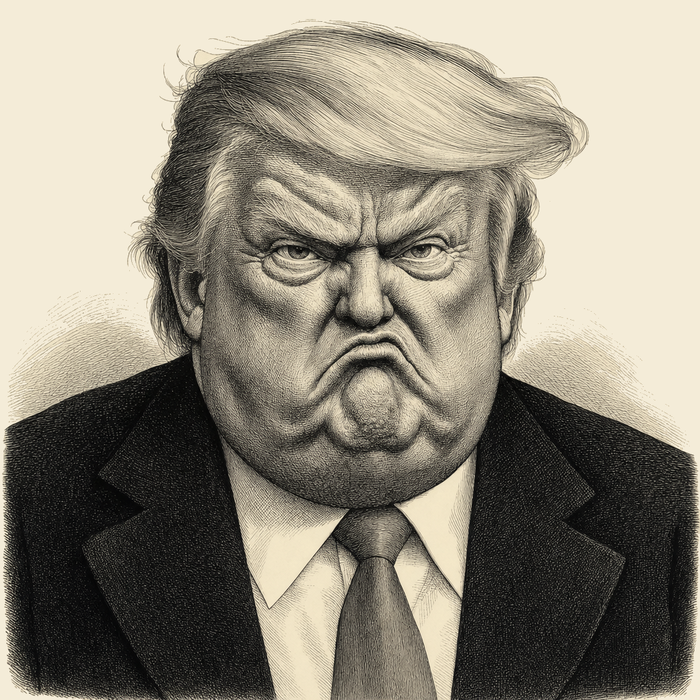
The endorsement did not simply arrive; it detonated. One Truth Social post, and the standard architecture of a Texas Republican primary runoff—seniority, legislative record, institutional courtesy—ceased to exist. President Diklis Chump designated Ken Paxton as his chosen instrument, and in doing so turned the contest into a loyalty audit from which there is no appeal. The machinery isn’t negotiating with established titles anymore; it overwrites them entirely.
Paxton’s camp absorbed the endorsement and weaponized it immediately. At an Allen rally, the news broke mid-event, and supporters erupted into a spontaneous “YMCA” dance—a tableau of political transfer that no focus group could have staged. As the runoff barrels forward, Paxton is already leveraging that capital, because he understands something Cornyn’s team still struggles to accept: in this primary cycle, acclamation by the movement outweighs any résumé the Senate’s old order can provide.
Diklis Chump’s own messaging on the matter, delivered in the unmistakable cadence of the man, is less an argument than a blunt force instrument. He pronounces Paxton a “TRUE MAGA WARRIOR,” a “very tough guy, very loyal,” and he dismisses Cornyn in a few syllables: “RINO,” “total disaster,” “LOW IQ.” The insults aren’t colorful asides; they are the entire deliberative apparatus. When the President airily floats the notion that Cornyn’s survival could only mean “the establishment rigged it, a beautiful steal, like the election,” he is not merely venting. He is instructing his base which conclusions to draw before a single vote is counted, laying down the predicate that only one outcome counts as legitimate.
What makes this episode so surgically revealing is what does not happen. Cornyn’s campaign will attempt to pivot toward policy depth and seniority. The argument will bounce off a wall. The Senate’s hierarchy—the subcommittee gavels, the appropriations deals, the cross-aisle relationships that once defined a senator’s worth—has been replaced by a simpler calculus. There are no longer two conservatives on the ballot. There is a MAGA loyalist and a broken contract with the movement.
Paxton, for his part, plays the script perfectly. Diklis Chump recounts a vignette of the attorney general coming to him, tears in his eyes: “Sir, Sir, I need your endorsement, I cannot do it without you.” Whether the tears were real is beside the point; the scene confirms Paxton understands where power now resides. In the new grammar of Republican politics, only one endorsement matters, and all the accumulated procedural power of a decades-long Senate career couldn’t buy it.
The Texas runoff has ceased to be a genuine electoral contest. It is a coronation in waiting—an exercise in counting ballots whose result was ordained the moment the movement’s leader spoke. The old guard might still believe it can stage a comeback. They are playing checkers on a board that no longer exists.
Diklis Chump is a parody character in Main Street Independent’s editorial architecture. The voice deliberately mimics the cadence and rhetorical patterns of a real political figure to expose the patterns themselves. The positions expressed are parody, not advocacy.