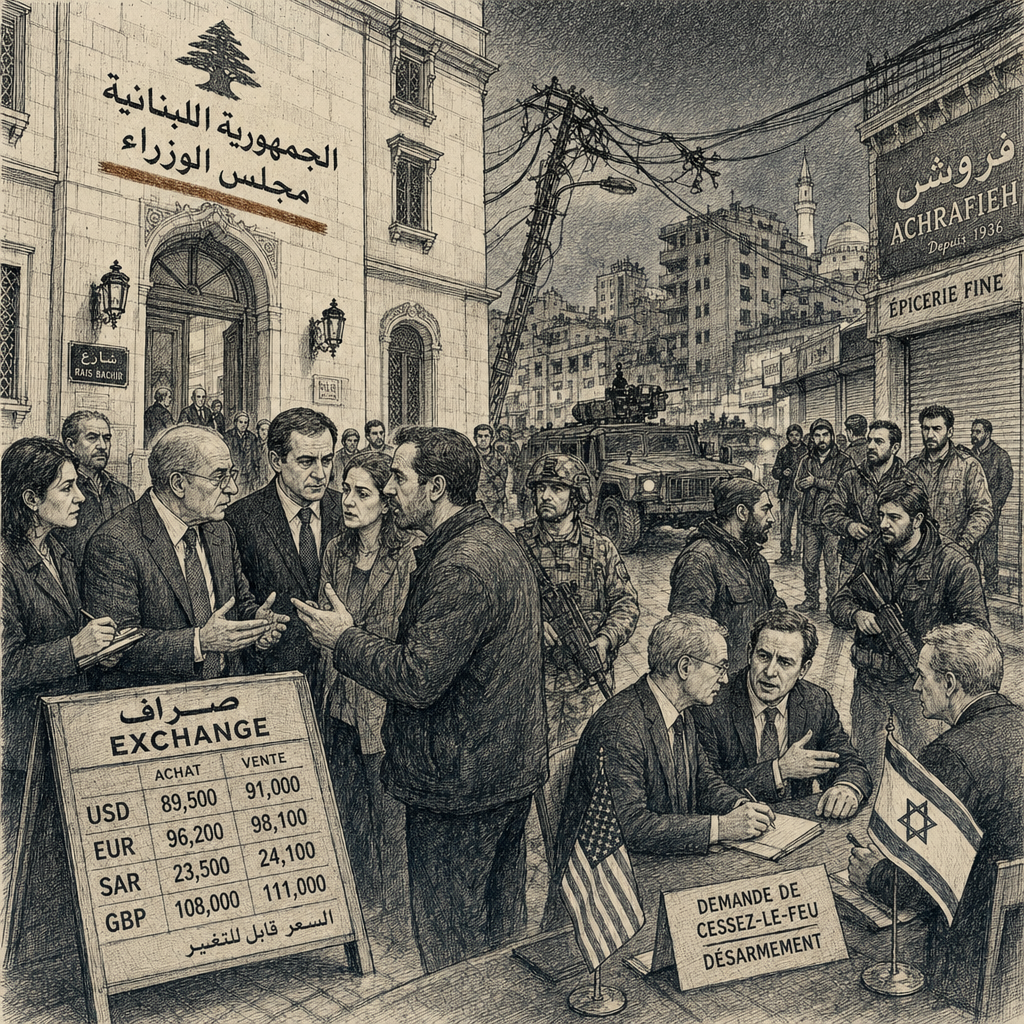
The Wall Street Journal, based on extensive interviews in Beirut, reported that Lebanon’s government is barely able to meet basic state functions. The state provides electricity for only a few hours a day, its currency has collapsed in favor of the dollar, and its military is the second-most-powerful armed force in the country behind Hezbollah — or third counting Israel, which has expanded its monthslong occupation.
The current war began in early March when Hezbollah, siding with Iran, began firing rockets across the southern border. Israel responded with a ground invasion and sustained airstrikes that have created more than a million internal refugees, many living in tents on the streets of Beirut. The conflict has displaced primarily Shia Muslims, who face hostility in Christian, Druze and Sunni areas where landlords and neighbors fear that their presence will draw Israeli strikes.
Imad Sobh, religious leader of the Sunni al-Kantari Mosque, told the Journal that some Sunnis in Beirut have expressed support for Israel’s war against Hezbollah and Shias at large — statements he said he had never heard before. “I have never heard such things from Sunnis before. I am trying to tamp down these sentiments and bring people together,” Sobh said.
Hezbollah has publicly rejected the disarmament demands. Secretary-General Naim Qassem said in a May speech, “Understand clearly: Disarmament is extermination, and we will never accept it.” He called on Lebanese to stand against their own government. The group’s media relations director, Youssef al-Zein, told reporters that after Israel’s previous campaign in 2024, Hezbollah worked to restore its capabilities and was “willing to pay the cost for doing so.”
The Lebanese army, while the primary recipient of U.S. military aid, is ill-equipped for a confrontation with Hezbollah. It lacks advanced air-defense systems and missile capabilities and possesses only a handful of attack planes. Current and former military officials told the Journal that the army functions more as a unifying institution than a fighting force. Many soldiers hold second jobs due to low pay, and troops from all sects of the country’s religious mosaic are reluctant to be seen as doing Israel’s dirty work.
The U.S. Treasury said in May that Hezbollah receives intelligence tips from officials within Lebanon’s state security organizations, including the military. Secretary of State Marco Rubio has said the U.S. is working to establish vetted Lebanese military units with the training and equipment to go after Hezbollah so that Israel does not have to.
Israel has struck at Hezbollah thousands of times since a November 2024 ceasefire and ramped up attacks this spring, but the group has restocked rockets, antitank missiles and artillery via seaports and smuggling routes through Syria, the Journal reported. Hezbollah has also begun using explosive drones guided by fiber-optic wire that Israeli forces are struggling to counter.
An Israeli strike in Ain Saadeh, a Christian town in the mountains outside Beirut, killed Pierre Mouawad, a member of the anti-Hezbollah Lebanese Forces party, along with his wife and a neighbor. The Israeli military said the attack targeted a Hezbollah military command center and regretted civilian harm. After the incident, landlords evicted several Shia families from apartments in the area, and armed men at Mouawad’s funeral fired weapons in the air.
Khalil Helou, a former Lebanese general who opposes Hezbollah, told the Journal: “We know how attempting to disarm Hezbollah militarily would begin, but we don’t know how it would end.” He added, “The ingredients of civil unrest are there. Emotional tensions are rising.”
The government’s inability to enforce the law evenly has also fueled resentment. In April, security forces clashed with residents in a Sunni area of Beirut while trying to arrest a generator operator for allegedly disregarding regulations. Waddah Sadek, a member of parliament representing the neighborhood, said, “People are fed up with the selective and uneven implementation of laws. Beiruti Sunnis are sending a message that, ‘Look, we can block the roads, too.’”
President Joseph Aoun has resisted a direct meeting with Israeli Prime Minister Benjamin Netanyahu, considering it too high a political risk, senior Lebanese officials told the Journal. U.S.-led diplomatic efforts have included rare direct ambassador-level talks and security coordination meetings between Israeli and Lebanese army officials. On Thursday, Israeli troops withdrew from the southern municipality of Dibbin and were replaced by Lebanese forces, the first step in a gradual pullback plan.
The United States has pledged to continue building up Lebanon’s army, but the Journal noted that the buzz of Israeli drones and the constant din of diesel generators underscore the government’s enduring weakness. As Ali al-Dayekh, a 33-year-old displaced bakery worker living in a tent with his wife, told the Journal: “The state? Where is the state? We are on our own.”