WASHINGTON — Sen. Adam Schiff (D., Calif.) introduced legislation on June 8 that would require human oversight of Pentagon artificial intelligence systems used in weapons and prohibit the technology’s use for domestic surveillance, expanding on existing Defense Department protocols.
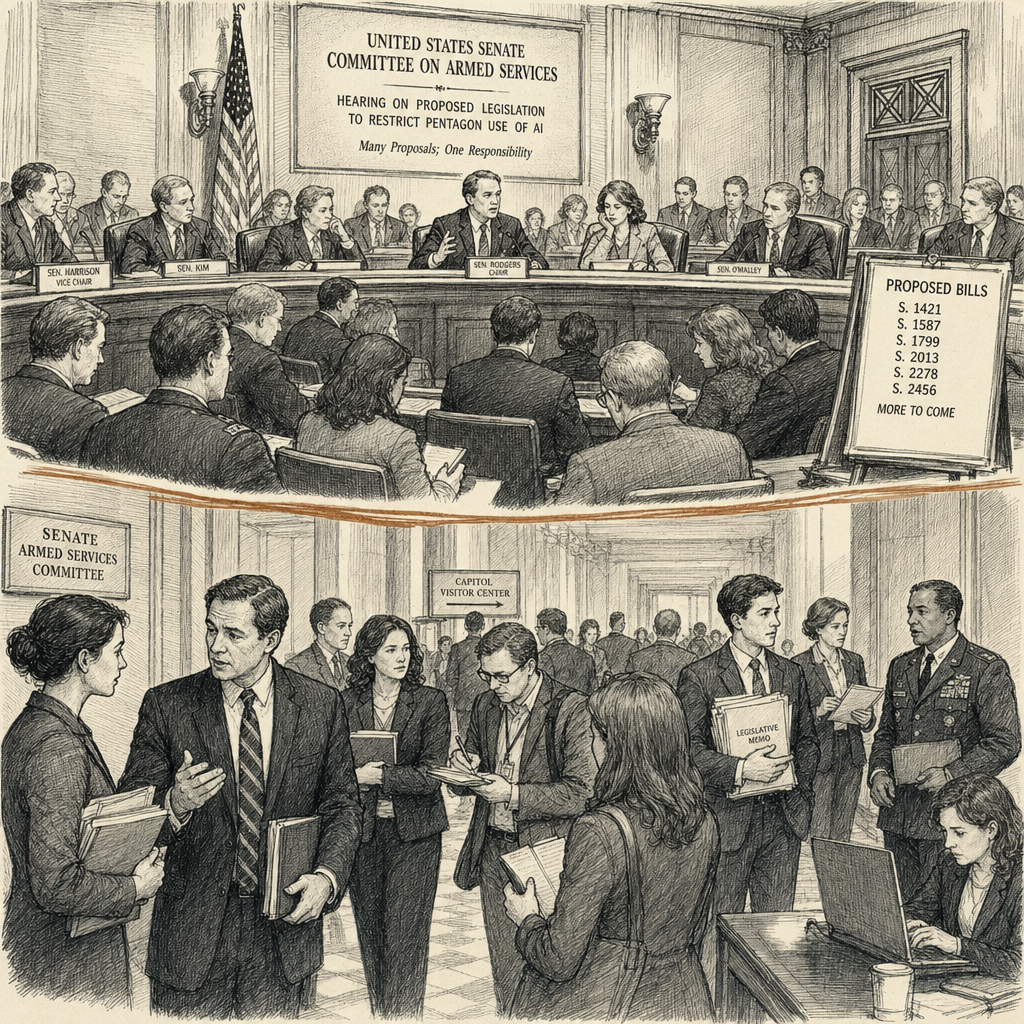
The bill is one of dozens of Democratic proposals that have emerged in recent weeks as lawmakers respond to rapid AI deployment, public backlash against data centers, and a highly publicized dispute between AI developer Anthropic and the Pentagon. Schiff is pushing to have his legislation considered as part of the annual military-spending package.
“We’re no longer anticipating these impacts. They’re here,” Schiff said in an interview. He said AI “could very well be the dominant issue in the next presidential election.”
Schiff’s bill mandates that a human has full discretion over weapons that use AI and increases transparency and review requirements for the Pentagon. It would also ban AI use in certain scenarios involving nuclear weapons.
The proposal follows legislation from Sens. Mark Kelly (D., Ariz.), Kirsten Gillibrand (D., N.Y.) and Elissa Slotkin (D., Mich.), whose bills address similar oversight concerns, lawmakers said. Many of the measures were spurred by Anthropic’s monthslong standoff with the Pentagon, during which the company — known for favoring stronger AI guardrails — sought assurances that its Claude models would not be used for domestic surveillance or autonomous weapons. Defense Department officials said the request was unreasonable because their existing practices already prohibit using AI for those purposes.
The introduction of powerful AI models capable of carrying out cyberattacks, a backlash against energy-intensive data centers, and challenges for recent college graduates finding jobs have all fueled the flurry of legislative activity, according to lawmakers.
The broader Democratic push extends beyond the Pentagon. Sen. Bernie Sanders (I., Vt.), who caucuses with Democrats, has called for a government investment fund to take 50% stakes in AI companies. He met with OpenAI Chief Executive Sam Altman last week and previously proposed a federal ban on new data centers. OpenAI has said a government investment fund might be appropriate, and the Trump administration is considering proposals for the government to hold shares of AI developers, according to the company.
Sen. Elizabeth Warren (D., Mass.) and others have called for new taxes on AI companies. Moderate Democrats have focused on increasing oversight of powerful models and helping workers adapt. Mallory McMorrow, a Democratic Senate candidate in Michigan, recently proposed a tax on companies using AI arbitrarily, she said she gets at least one AI question at nearly every campaign event.
“It feels like we are hitting a cultural tipping point,” McMorrow said.
While the Trump administration is unlikely to support many of the Democratic proposals, the White House has taken steps to increase oversight of AI models, including an executive order signed last week. The administration has struggled to balance competing factions within the White House, with some officials seeking more oversight and others pushing to remove most barriers to AI deployment, according to people familiar with the discussions. Congress has not passed any AI legislation, and the technology’s implications for the economy and national security have divided the chamber.
Many tech executives and lobbyists said they are bracing for a Democratic-led Congress and tighter regulation. OpenAI last week called for model oversight that goes beyond Trump’s executive order.
“We think we’re going to need to even do more as we go forward given the speed that this is moving at,” said Chris Lehane, OpenAI’s chief global affairs officer.