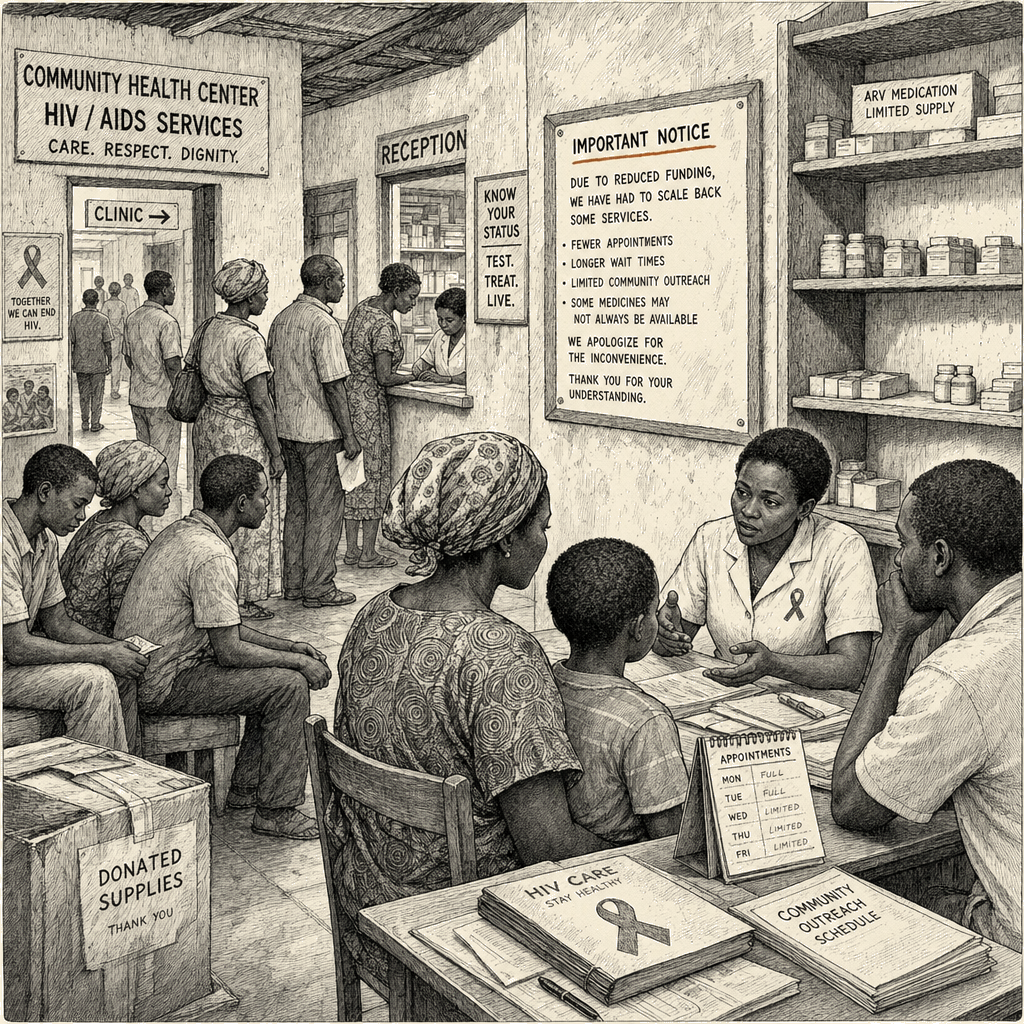
In Soweto, South Africa, patients queue outside the Unjani Clinic in Braamfischerville on a May morning. Down Esselen Street in the Johannesburg neighborhood of Hillbrow, the scene is different: the WITS RHI Women’s Health Clinic stands empty. A notice posted outside informs passersby that the CATALYST study — a U.S.-funded HIV prevention research project — ceased in January 2025 due to “USA policy changes and funding cuts,” according to a report by NPR’s Juana Summers.
The clinic’s closure is one of many visible markers of the Trump administration’s broader reshaping of U.S. foreign assistance, which has sharply reduced funding and created uncertainty about future commitments. President George W. Bush announced PEPFAR in January 2003. For more than two decades, the program enjoyed bipartisan support and is widely regarded as the most effective public health campaign in history.
South Africa still has the highest number of people living with HIV of any country, NPR reported. Mozambique has the second-largest AIDS epidemic in the world, according to the U.S. Embassy there.
Lucky Mazibuko, an activist and former journalist who disclosed his HIV-positive status in a nationwide newspaper column in 1999, recalled the era before PEPFAR transformed treatment access. At that time, he told Summers, hospitals across the continent were overwhelmed with young men and women dying from AIDS. Even at funerals of those who had died from the disease, he said, “people spoke in hushed voices about what the cause of death could have been, even if they knew.”
“There was no hope, there was basically no light,” Mazibuko said. “And even if there was a light at the end of the tunnel, it looked like that of an oncoming train.”
NPR’s reporting, supported by the Pulitzer Center, took Summers and colleagues Matt Ozug and Vincent Acovino across two countries over nearly two weeks. They spoke with public health workers who said the funding shifts have created uncertainty that could lead to loss of life or an increase in new infections.
Some health workers, NPR reported, have gone without full pay to ensure they retain the trust of patients in their communities. Others have developed innovative approaches to continue care, including a television program that educates viewers about healthy relationship dynamics. Advocates in Mozambique, Summers wrote, are doing everything they can to offer sex workers personalized care after the closure of a U.S.-funded clinic.
“Everywhere we went, we met people who remained deeply committed to their work,” Summers reported.
The reporting comes as the Trump administration has also linked health aid in Africa to access to critical minerals, and as abrupt USAID shutdowns have been associated with increased violence in aid-dependent regions, according to separate research. The long-term trajectory of PEPFAR — and the 26 million lives the State Department has estimated it has saved — remains uncertain.