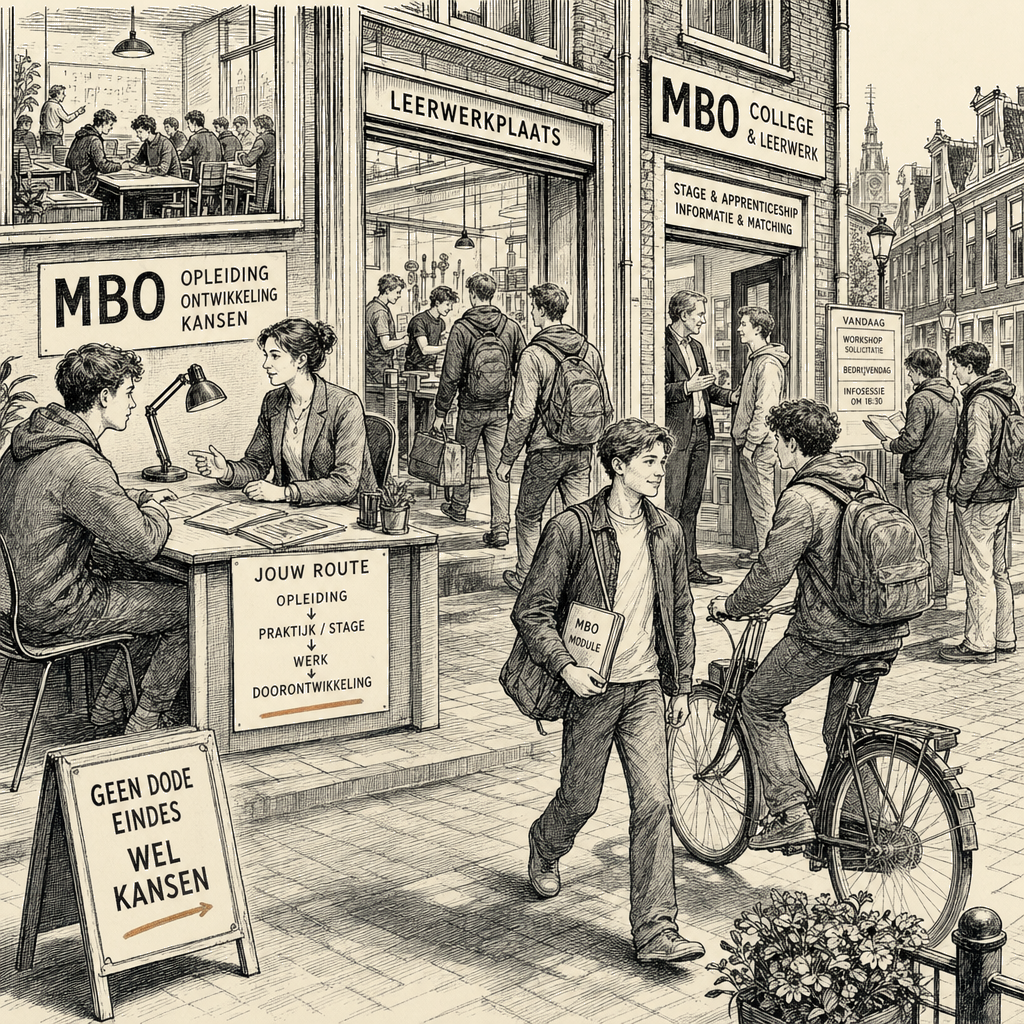
The Netherlands has achieved a Neet rate of 4.9% among 18- to 24-year-olds, one of the lowest in the world, through a “no dead ends” education and training philosophy, according to a BBC News report. In the UK, the equivalent figure stands at 15.1%. Alan Milburn, the former health secretary who authored a landmark report last month on Britain’s youth engagement crisis, warned that without action one in six young people in the UK could become Neet within five years.
At the core of the Dutch system is the kwalificatieplicht — a legal requirement that young people remain in education or training until they obtain a qualification or turn 18. From around age 12, pupils are streamed into one of three secondary tracks based on teacher recommendations and primary-school test results. The system has drawn criticism: some educators argue that early streaming can reinforce social inequalities and damage confidence for students placed in less academic routes.
Amelie, a 20-year-old in The Hague, said she was told at age 10 to pursue the vocational VMBO track. “That took a toll on my confidence,” she said. When she later explored secondary schools, she found more optimism: “We had a textiles class, there was a blacksmithing area.” After struggling to secure an internship, she left her fashion course at 17. She spent six months working and travelling, and said that if leaving education had been an available option — as it is in the UK — she might have taken it. But without a qualification, staying in the system was mandatory. Amelie now hopes to become a teaching assistant and is training at ROC Mondriaan vocational college.
The werk-study pathways in the Netherlands include the beroepsbegeleidende leerweg, through which students aged 16 and over combine part-time employment with school, typically working most of the week and attending classes one or two days. Businesses can request customised college programmes tailored to their workforce needs. Asja van der Helm, a high school teacher in The Hague, said that skilled tradespeople such as electricians, roofers, and technicians are earning excellent incomes and are seen as aspirational by young adults. “When they see a carpenter doing what they like and making a lot of money fast, they see that as aspirational,” she said.
For students who struggle, school budgets fund health and wellbeing services. Alexander Koppelle, owner of the Mooi Jong Academy in The Hague, described a “spider’s web” of intervention points — at every juncture where a teenager might drop out, another organisation is ready to step in. “I’m not sure we have the golden key,” Koppelle said, but both his experience and the data suggest “there are lessons to be learned from the Netherlands.” Schools log every absence; repeated lateness triggers conversations and notifications to municipal attendance officers. Unexplained truancy can lead to fines, community service, or supervision measures.
The Dutch blueprint is not without flaws. Youth unemployment is rising, and the government is making it easier for young people to claim benefits through the Employee Insurance Agency (UWV), a one-stop shop for support and job placement. Still, proponents argue that the combination of compulsory engagement, flexible pathways, and early intervention provides a model worth studying for countries facing growing numbers of disconnected youth.