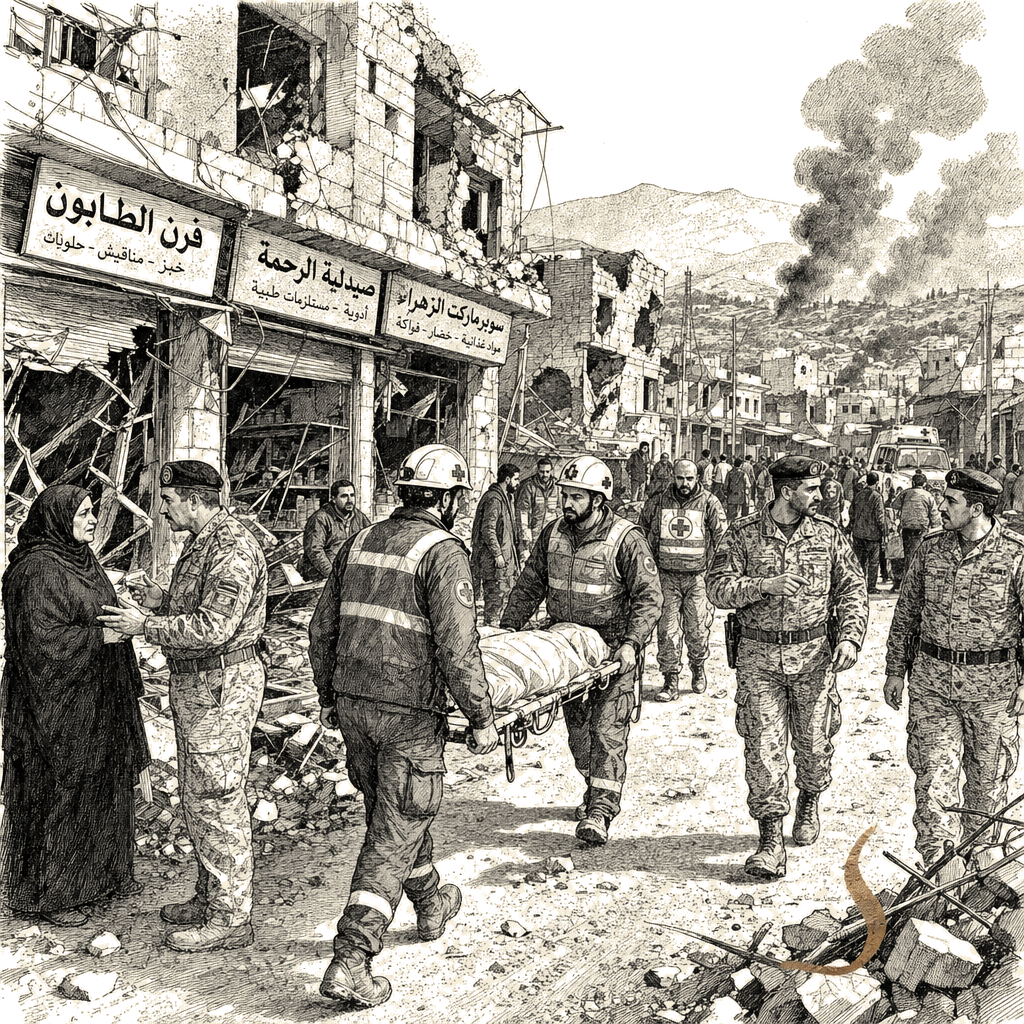
Israeli airstrikes on southern Lebanon on Saturday killed nine people, including three members of the Lebanese military, the Lebanese army and state media said, days after a new ceasefire deal between Israel and Lebanon was announced through U.S.-brokered talks.
An airstrike on a vehicle on a road linking the city of Nabatiyeh with the town of Marjayoun killed a brigadier general, a captain and another soldier, the army said, without immediately releasing their names. A separate strike on the southern village of Saksakiyah killed six people and wounded four, the state-run National News Agency reported.
The Lebanese army condemned the strikes in a statement, saying they were “deliberate, and repeated Israeli aggression against Lebanon, its people and its army.” The statement said the attacks aim to thwart efforts “to reach a solution that would restore stability, establish a comprehensive ceasefire and lead to the Israeli withdrawal from the occupied Lebanese territories.”
The Israeli military confirmed hitting a vehicle and said the incident is being reviewed. The military said the vehicle was “moving suspiciously” toward Israeli soldiers near the village of Kfar Tibnit, after the military received “concrete indications” that Hezbollah would direct fire toward Israeli soldiers from the same area. The military said it operates against Hezbollah and not against the Lebanese army.
Lebanon’s President Joseph Aoun called the strike “a flagrant violation to Lebanese sovereignty and international law.” Aoun said it came in the context of “ongoing escalation that threatens stability and security in the south, despite the efforts Lebanon is exerting in the Washington negotiations to put an end to the ongoing Israeli attacks without deterrent.”
The latest ceasefire was reached through U.S.-brokered talks between Israel and Lebanon’s government, which accuses Hezbollah of dragging the country into war and had made efforts to disarm the group before the latest hostilities. Hezbollah has refused the truce.
The war began on March 2, when Hezbollah fired rockets at northern Israel, two days after Israel and the United States began their attacks on Iran. Israel has since launched a ground invasion of Lebanon and carried out wide attacks that have displaced more than 1 million people. Israeli troops have seized around a fifth of Lebanon, pushing further into the country’s south than at any time since the end of Israel’s 1982-2000 occupation. More than 3,500 people have been killed in Lebanon since the war began, according to local counts. The fighting has killed at least 29 Israeli soldiers and three civilians.
Tensions also flared between Lebanon and Iran over the ceasefire. On Friday, Aoun and Lebanon’s prime minister criticized Iran for opposing the deal, saying their country should not be used by Tehran as a “bargaining chip” in its talks with Washington.
Iranian Foreign Minister Abbas Araghchi responded on X on Saturday, saying that after Aoun’s comments, “one would think it’s Iran that has occupied a fifth of Lebanon, displaced a quarter of Lebanese and is bombing his country on daily basis.” Araghchi added: “Had Lebanon been a bargaining chip for Iran, we’d have a deal long ago. Save Lebanon from your real foe, Mr. President,” in reference to Israel.