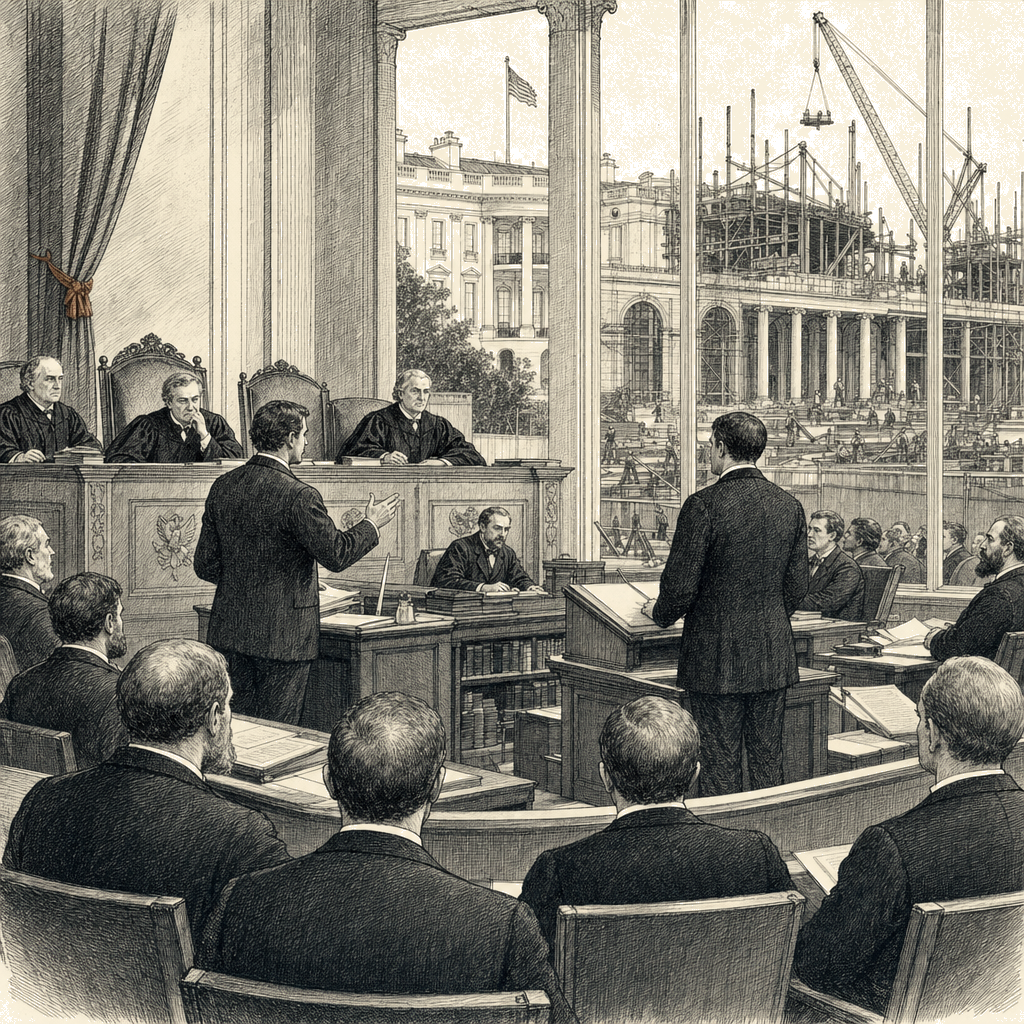
A federal appeals court is set to hear oral arguments Friday in the legal battle over the Trump administration’s authority to construct a ballroom at the White House without explicit congressional approval.
The U.S. Court of Appeals for the D.C. Circuit previously allowed construction to continue while it considers the underlying legal question, permitting work on the project to proceed in the interim. The court granted the administration’s request to pause a lower court’s order that had halted above-ground work on the project.
“MSI previously reported that a federal judge ruled in the National Trust for Historic Preservation’s lawsuit that the project exceeded the president’s maintenance authority and blocked above-ground construction.”
“The Ballroom is on time, under budget, and free to the American taxpayer, while benefiting future Presidents by serving as a ‘safe haven’ from attackers such as the two recent would-be assassins,” the Justice Department wrote in court filings, according to UPI.
The two “would-be assassins” referenced in the Justice Department’s filings are the alleged shooter at the White House Correspondents’ Dinner and a man who fired a gun outside the White House perimeter, according to the wire report. Trump has described the proposed building as having “military-grade security.”
The project faces a legal challenge from the National Trust for Historic Preservation, which filed the lawsuit that led to the current injunction. In March, Federal Judge Richard Leon ruled in favor of the preservation group, halting the ballroom’s construction.
“The President of the United States is the steward of the White House for future generations of First Families. He is not, however, the owner!” Leon wrote in his March ruling.
The law governing the White House allows the president to conduct maintenance and upkeep on the historic building, but the preservation group and the lower court argue it does not authorize major new construction without congressional approval. The administration is now asking the D.C. Circuit to reverse Leon’s ruling and allow the project to proceed without legislative authorization.