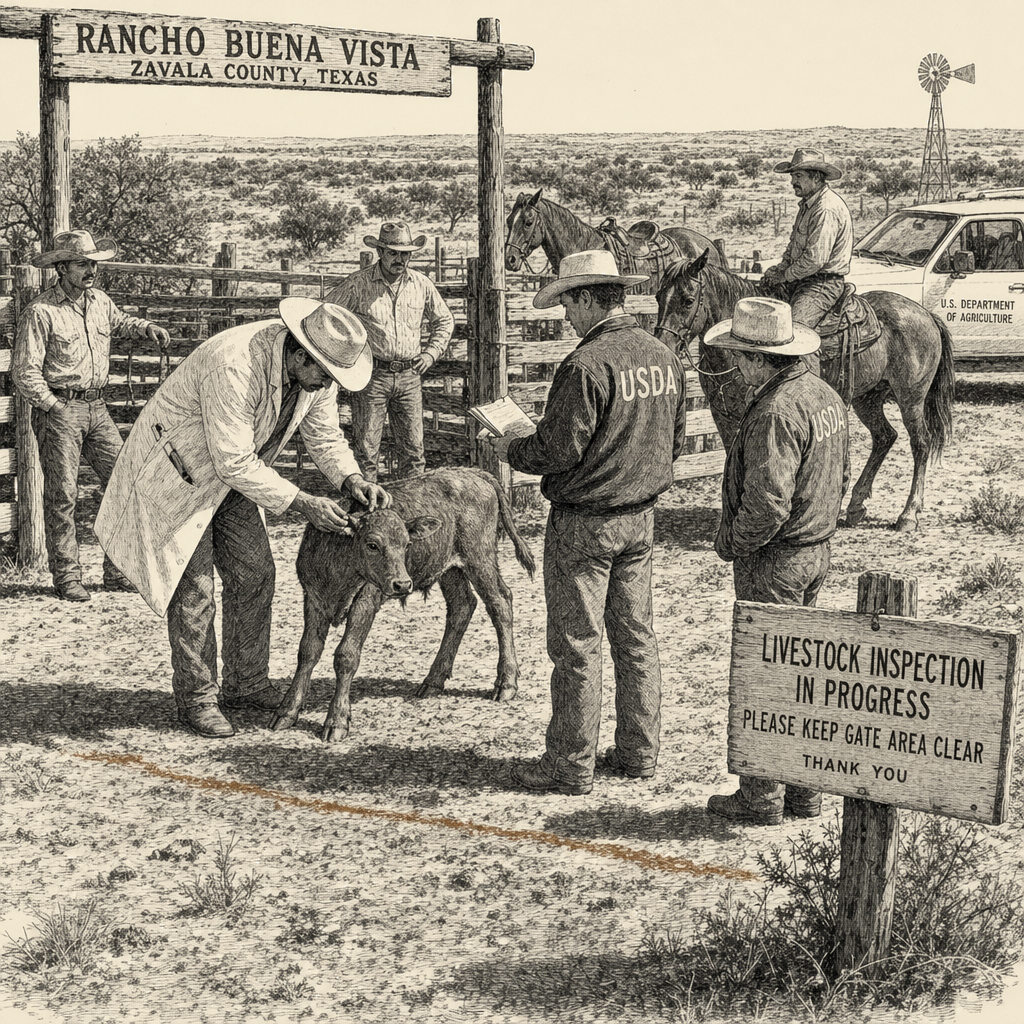
The Agriculture Department confirmed late Wednesday that New World screwworm fly larvae were found in a three-week-old calf in Zavala County, Texas. It is the first instance of the deadly parasite detected in U.S. livestock since 1966, the USDA said. The last screwworm case of any kind in the U.S. was in 2016, when an outbreak occurred among wild deer in Florida.
The finding had been anticipated by U.S. cattle ranchers and hog farmers, who braced for months for the parasite to cross the U.S.-Mexico border. Earlier this week, a case was confirmed in the Mexican state of Coahuila in a goat located 25 miles from the border. Agriculture Secretary Brooke Rollins told reporters earlier this week that the agency was preparing for the inevitable finding of screwworm infections in the U.S., according to The Wall Street Journal.
New World screwworm is spread by flies that lay eggs in open wounds of warm-blooded animals. The larvae hatch and feed on living tissue, which can kill the host animal. The USDA said the parasite is uncommon among humans and is not a food safety risk. Severely infested animals will be removed from the food supply, the agency said. Ranchers and producers will not need to cull their herds if a case is found, and animals that are successfully treated can return to the food supply.
The detection creates a new problem for the U.S. livestock industry, which is already producing under tight conditions. The American cattle herd is at its smallest since the 1950s, according to USDA data, after ranchers faced rising costs and drought. The tight supply has helped push beef prices to record highs for consumers.
“For cattle producers, the biggest concern may not be direct livestock losses but rather the potential for movement restrictions, increased inspection requirements, and possible trade disruptions,” said Jim Wiesemeyer, an analyst with Ag Bull Trading, in a note following the USDA’s confirmation.
The USDA launched efforts last year to prevent the screwworm’s spread, including closing the border to Mexican feeder cattle and other livestock. The agency also spearheaded construction of fly-sterilization plants in Texas designed to release sterile male New World screwworm flies into the wild to reduce reproduction.
In response to Wednesday’s finding, the USDA said it would implement a 12.4-mile infested zone around the detection area, increase surveillance, and expedite sterilized-fly releases.