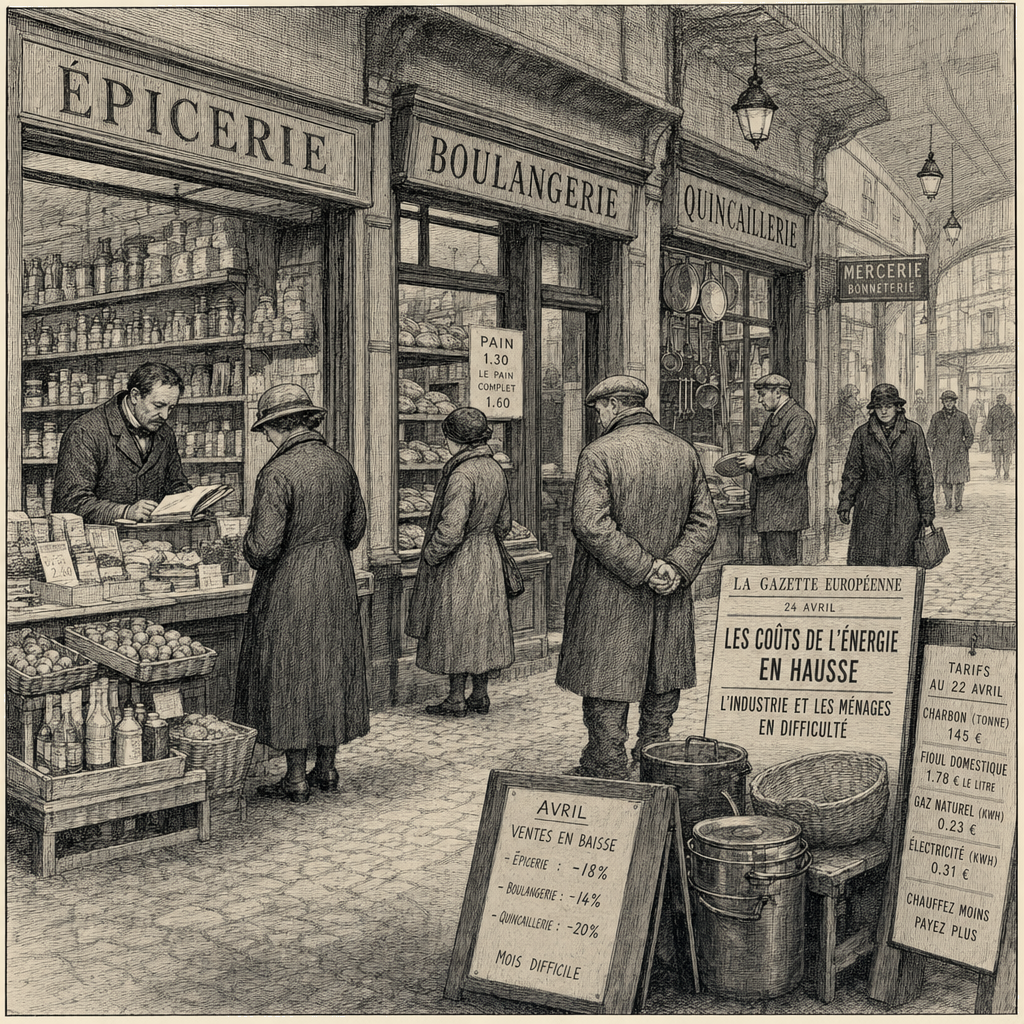
The decline in eurozone retail sales volume during April represents the most concrete sign yet that the Iran war’s energy-price shock is spreading from the pump to the broader consumer economy. Volumes fell 0.4% from March, the European Union’s statistics agency reported Thursday, undershooting the 0.3% decline that a consensus of economists surveyed by The Wall Street Journal had expected. The March figure was revised upward to a 0.8% increase.
The largest contributor to the drop was automotive fuel. Fuel sales fell at the steepest monthly rate since August 2023, the agency’s data showed, as the war between the United States and Israel and Iran pushed oil prices higher and drove up retail gasoline prices across the currency area.
Consumer confidence recovered marginally in May but remained near the troughs recorded during the 2008 financial crisis, according to separate European Commission survey data that economists have pointed to as a warning signal. The depressed reading suggests that higher costs at the pump are leaving households with less disposable income for other spending, even though the labor market has remained relatively tight.
“The drop in consumer confidence since the Iran war began, together with the weakness in the business surveys, suggests that the euro-zone economy might contract in 2Q,” Jack Allen-Reynolds, a deputy chief eurozone economist, said in a note.
Wage growth, which had been helping households absorb higher prices, is now slowing. “Real wage growth is slowing, real wages are falling outright in some countries,” said Claus Vistesen, chief eurozone economist at Pantheon Macroeconomics. He added that any wage gains are increasingly being offset by higher inflation, leaving families with less to spend at shops and restaurants.
Inflation data released separately this week reinforced the pressure on the European Central Bank. Annual consumer-price inflation in the eurozone accelerated to 3.2% in May from 3.0% in April and 1.9% in February. Core inflation, which strips out volatile food and energy prices, also picked up during the period, a worrying signal that higher energy costs are beginning to spill over into other categories of goods and services.
The uptick in core inflation has strengthened expectations that the ECB will deliver a quarter-point rate increase at its June meeting. Another hike in July remains on the table. But policymakers face a tight constraint: raising rates to contain inflation risks further weakening an already slowing consumer sector.
“This weakens demand and then feeds disinflation,” Vistesen said, suggesting that the central bank’s aggressive rate path may ultimately work against itself by compressing the economic activity that would otherwise generate price pressures.
Unemployment across the eurozone remains close to record lows, but labor-market tightness has not translated into the kind of wage acceleration that would significantly offset the inflation shock. The Atlanta Fed’s Wage Growth Tracker, a U.S.-focused measure, stood at 3.6% at the time of publication, but comparable eurozone wage data has shown a decelerating trend. With real incomes declining in several member states, the prospect of a second-quarter contraction has become a live concern among economists tracking the region.