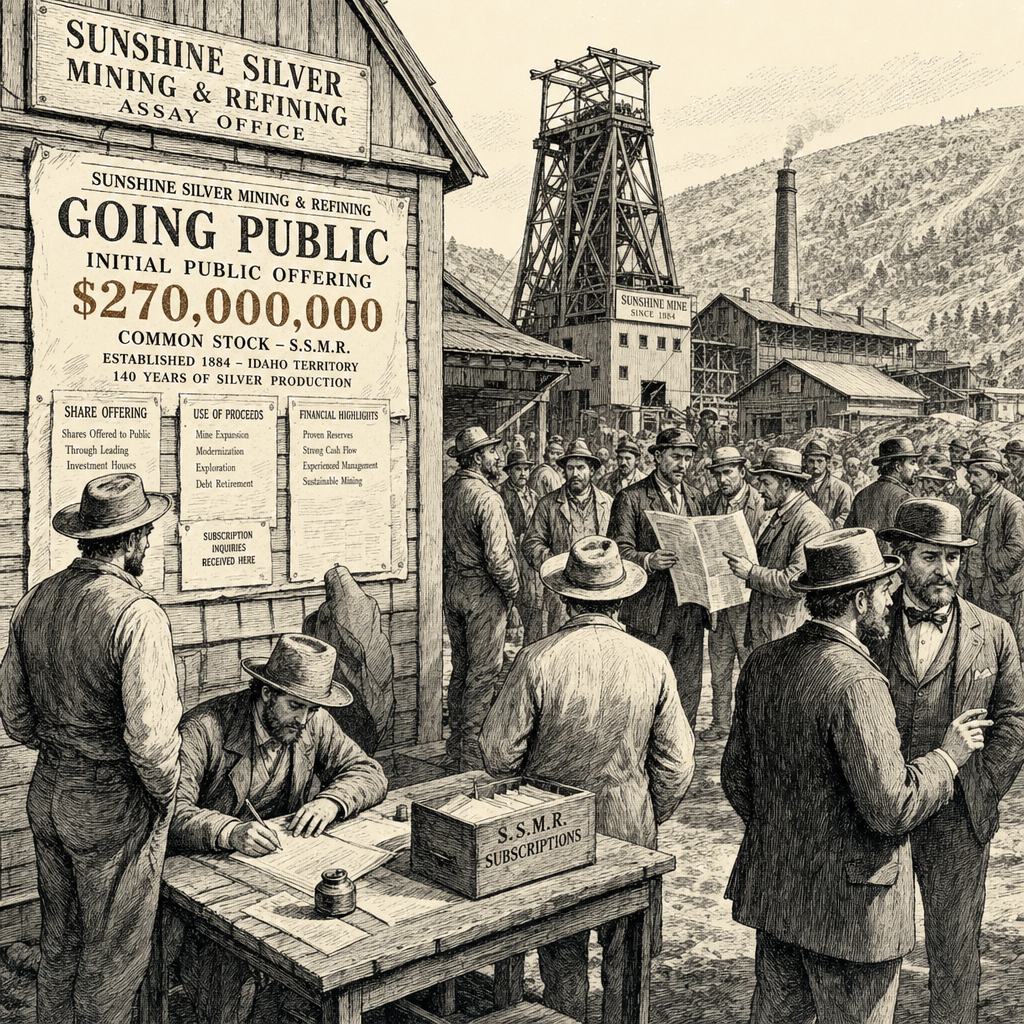
Sunshine Silver Mining & Refining, controlled by billionaire Thomas S. Kaplan, raised $270 million in an initial public offering to restart the historic Sunshine mine in Idaho, the company said Thursday. Shares surged 27% on their debut on the New York Stock Exchange, valuing the company at $1.9 billion.
The mine, once America’s most prolific source of silver, aims to begin production in 2028 and boost U.S. silver output by more than 15%. The offering adds to what is shaping up to be the hottest market for new stock offerings in years, with 35 initial public offerings in the first quarter of 2026 raising $9.9 billion — the best start to a year since 2021, according to listing-tracker Renaissance Capital.
Sunshine plans to use the proceeds to fund feasibility studies necessary to restart the mine and get processing plants operating, as well as pay for equipment, infrastructure, drilling and further exploration, the company said.
The IPO comes after the biggest-ever run-up in silver prices. Benchmark silver futures were trading at about $74 a troy ounce — more than double the price of a year ago, though down 36% from late January’s all-time high, according to The Wall Street Journal. Analysts expect silver prices to remain above historical levels because of demand from data centers and other high-tech applications that use the highly conductive metal for electrical contacts and solder, as well as strong demand from solar-panel makers and investors.
“We’re not chasing a short-term price spike,” Sunshine Chief Executive Heather White said on a mining podcast in October, not long after silver prices surged past a 45-year-old record. “We’re positioning Sunshine as a long-term strategic supplier of key minerals that underpin modern industry and defense.”
The Sunshine mine dates to 1884, when two homesteading brothers spotted an outcropping and staked a claim. They mined with hand tools when not growing vegetables and, a few years later, used horses to haul 20 tons of ore to Montana for processing. The mine eventually became the most prolific silver mine in the U.S. and among the world’s top deposits, producing an estimated 365 million ounces of silver along with significant quantities of copper, lead and antimony.
In 1972, a fire broke out deep underground at Sunshine, killing 91 miners in one of America’s deadliest mining accidents. The disaster inspired the Federal Mine Safety & Health Act of 1977. Around the same time, the mine became a target of the Hunt brothers, Texas oil heirs who sought control as part of an effort to corner the silver market. Shareholders balked, and the plan failed. The Hunts’ broader silver gambit was unraveled by regulators in 1980, and silver prices crashed.
Losses mounted at Sunshine. Production was suspended in 1982. The mine’s then-owner said it would be “economic folly” to keep depleting the ore at such low prices, according to The Wall Street Journal. Three stop-start decades followed as silver prices languished. Electrum Group, Kaplan’s investment firm, paid $24 million for Sunshine in a 2010 bankruptcy auction, about a decade after the mine had last run at full production.
The owners said they have spent about $208 million maintaining and modernizing the mine and added thousands of hectares of land and mineral rights. The company is planning to restart an existing silver and copper refinery and is studying a potential facility to process antimony, a byproduct produced mostly in China but used in fire retardants, computer chips, night vision and armor-piercing munitions.
Sunshine executives told the Coeur d’Alene Regional Chamber last year that the company has key permits in hand, giving the restart an advantage over many domestic mining projects that often wait years for permits. General manager Tom Henderson recounted the homesteaders’ discovery to the chamber in a presentation posted online. “They didn’t even know what they had,” Henderson said. “Months later they got a check for $40,000” — more than $1 million in today’s dollars.