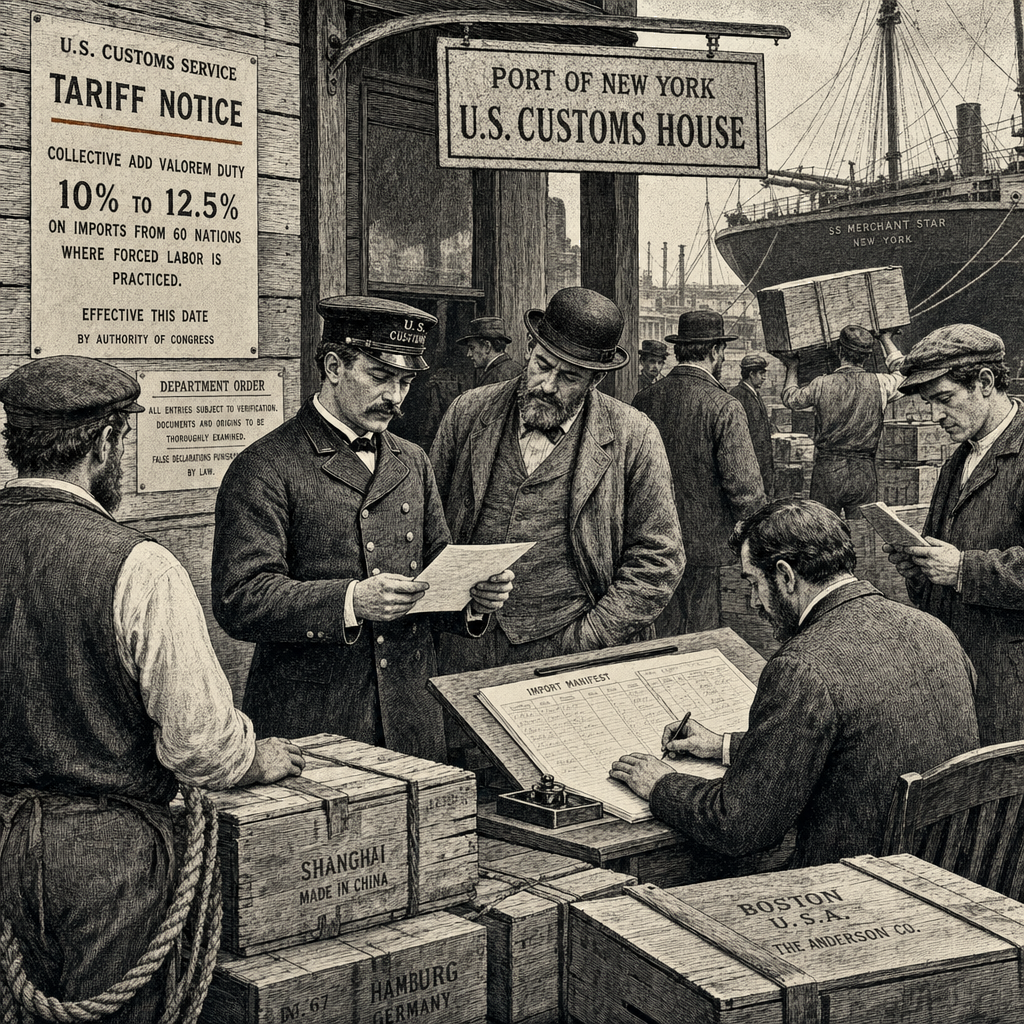
The Trump administration announced new import taxes of 10-12.5% on 60 trading partners Tuesday, citing those countries’ failure to address the use of forced labor in goods their producers sell to the United States. The duties — which apply to nations including the UK, the European Union, Canada, and Japan — cover virtually the entire US import market shrink, affecting nations that account for 99.4% of goods sold to the USes, according to the US Trade Department.
The tariffs represent the administration’s second major trade action since the Supreme Court in February struck down the earlier “Liberation Day” duties President Donald Trump had imposed in April 2025. The court ruled those earlier tariffs, which Trump had enacted under emergency powers, were unlawful — a decision Trump called “terrible,” describing the justices who rejected his trade policy as “fools.” As previously covered by MSI, the administration immediately sought alternative legal justifications for new import taxes.
The US Trade Department began an investigation in March into the 60 trading partners over concerns they were not doing enough to combat forced labor. On Tuesday, the department announced that all 60 countries had “failed both to impose a legal prohibition on the importation of goods produced wholly or in part with forced labor and to effectively enforce such a prohibition.”
US Trade Representative Jamieson Greer said the situation “creates a dynamic where American workers are forced to compete globally on an unlevel playing field.”
The new duties are the latest in an escalating series of tariff actions following the February Supreme Court ruling. After the decision, Trump announced a 10% temporary global tariff that he later said would be raised to 15%. The duty took effect at 10% and was never increased. That measure is due to expire in July unless extended by Congress.
The US trade deficit has remained a persistent structural feature of the economy: the most recent data available as of Tuesday shows net exports of goods and services at -$895 billion. Critics have said Trump’s tariff policy has caused price increases in the US and in other countries, though the administration argues that trading with nations that purchase goods made with forced labor is unfair to American workers.