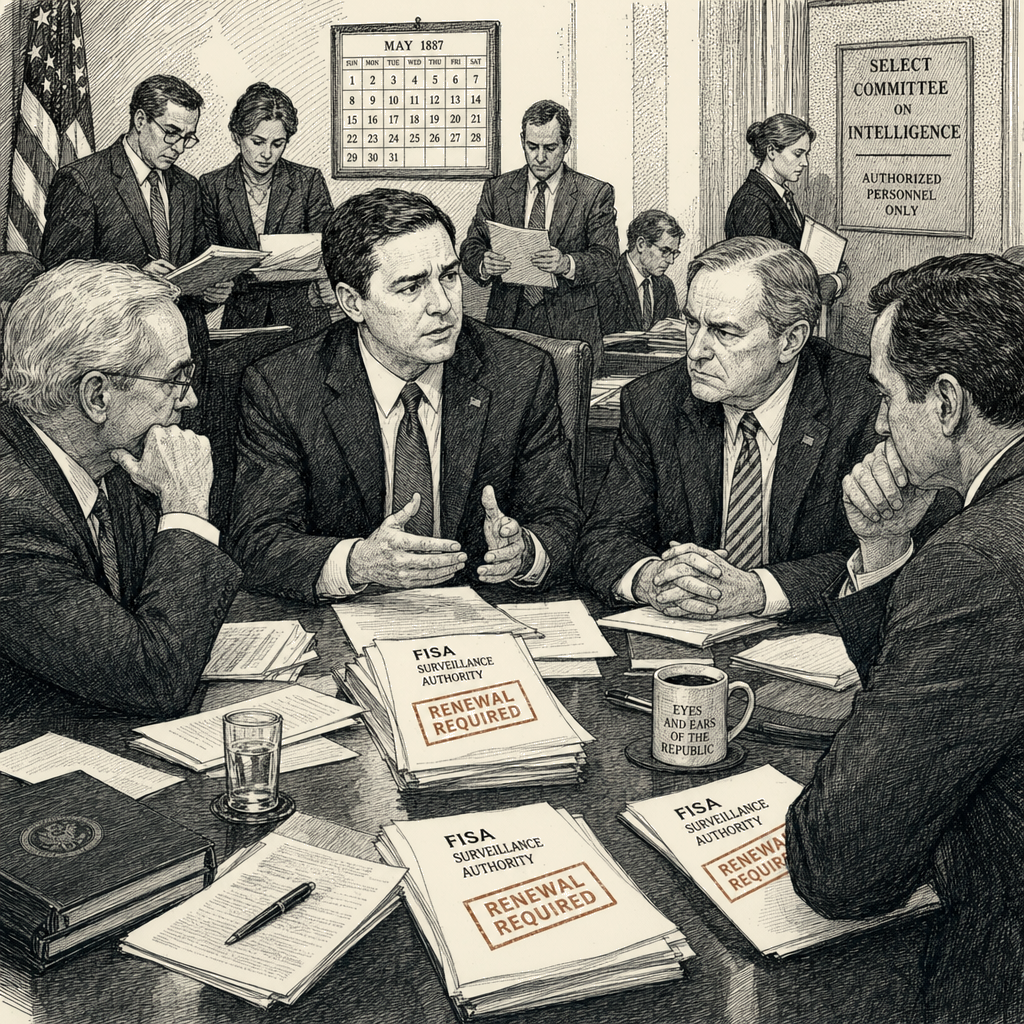
President Donald Trump has appointed Bill Pulte, currently head of the Federal Housing Finance Agency (FHFA) and a major Republican donor and heir to a home construction fortune, as acting director of national intelligence, replacing Tulsi Gabbard who resigned May 22. The appointment, made days after Gabbard’s departure, has thrown last-ditch efforts to renew Section 702 of the Foreign Intelligence Surveillance Act into doubt, according to Democrats and some Republicans.
Section 702 permits U.S. intelligence agencies to collect communications of foreign targets outside the country without a warrant. While it targets foreign nationals, messages that pass through U.S. servers or involve U.S. contacts can sweep up domestic communications. The program expires June 12, and Congress has been working under a short-term extension passed May 1.
Sen. Mark Warner, Democrat of Virginia and vice-chair of the Senate Intelligence Committee, said Pulte’s appointment has upended negotiations. “I do not have the confidence I had yesterday,” Warner said in an NPR interview Wednesday, adding that the move puts “someone with no intelligence background, any record of misusing private information, in charge of Director of National Intelligence at the worst possible moment.” Warner told reporters Tuesday that Pulte has shown he “is willing to do anything that President Trump wants, legal or otherwise.”
Punchbowl News reported that Warner personally asked Sen. John Thune, the Senate majority leader, to use his influence with the White House to reverse the appointment. Democratic sources told the outlet that a bipartisan deal on 702 could collapse if Trump refuses to reconsider.
Thune, a Republican of South Dakota, offered a notably cool response. “We don’t need a weaponized” national intelligence director, he told reporters, and warned that Pulte would face “a lengthy road ahead of him” if nominated permanently. When asked about concerns that Pulte could use the intelligence community to target Trump’s political opponents, Thune said: “We need professionals there.”
Sen. Chris Murphy, Democrat of Connecticut, expressed similar concern. “The very nature of our collection is now going to be put in the hands of somebody who has a history of seeking out private information for political gain,” he said.
Critics have cited Pulte’s tenure at FHFA, where he leveled unproven fraud allegations against Lisa Cook, a Federal Reserve governor. Cook denied wrongdoing. Trump used the allegations to try to remove Cook from the Fed’s board; she refused to step down, and the dispute is now before the U.S. Supreme Court.
The FBI in 2020 used Section 702 to investigate whether Black Lives Matter protesters had ties to terrorists, according to a declassified 2023 memo from the office of the director of national intelligence.
The bill being circulated by Sens. Tom Cotton, the Senate intelligence chair, and Chuck Grassley, the judiciary chair, would extend Section 702 through June 2029 and includes new penalties for intelligence abuses and additional FBI search requirements. It also carries a three-year ban on the Federal Reserve issuing a digital currency, a concession to House hardliners. Democratic support is needed to clear the 60-vote threshold in the Senate.
The fate of the surveillance program now rests on whether Trump stands by his appointment and whether Republicans can persuade enough Democrats to support renewal despite the shift at the top of the intelligence community.