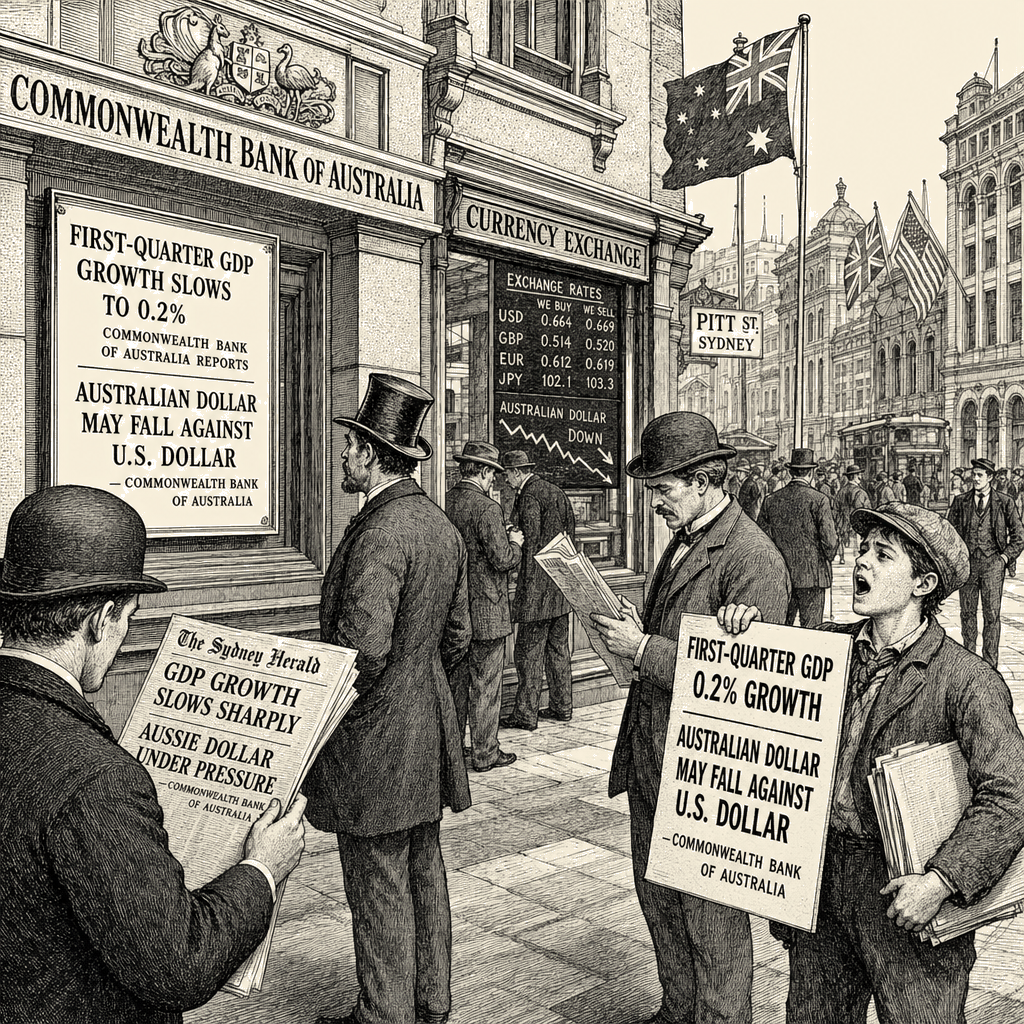
The Australian dollar faces potential weakness against the U.S. dollar following the release of first-quarter gross domestic product data scheduled for 11:30 a.m. local time in Sydney Tuesday, Commonwealth Bank of Australia said in a note published Monday night. CBA lowered its expectations for GDP to a flat outcome — 0% growth — after analyzing the last of the partial indicators released Monday. Consensus estimates among economists are for 0.5% growth in the first quarter.
“If we are correct, then markets will remove some Reserve Bank of Australia interest rate hike pricing and AUD/USD will fall modestly,” CBA economist Kristina Clifton said. The Australian dollar was trading at US$0.7179 against the U.S. dollar late Monday.
The CBA warning came as Asian currencies broadly consolidated against the greenback Tuesday, with traders weighing Middle East developments, including the fate of a potential U.S.-Iran ceasefire agreement. National Australia Bank’s head of FX Strategy, Ray Attrill, described currency, bond, and equity markets as “very subdued in the past 24 hours.”
“That comes against a backdrop where a key sticking point regarding the fate of a U.S.-Iran ceasefire agreement appears to be whether Israel will agree to cease its attacks on Hezbollah assets in Lebanon (and vice versa),” Attrill said. The U.S. dollar edged 0.1% higher to 31.453 Taiwan dollars and was little changed at 1.2793 Singapore dollars, according to LSEG data.
The Singapore dollar’s side against the U.S. counterpart may also be weighed by a U.S. growth-resilience narrative that diminishes the likelihood of Federal Reserve rate cuts, which usually undermine the appeal of U.S. fixed-income assets, OCBC Group Research strategist Sim Moh Siong said in a report. Stronger-than-expected U.S. labor data released overnight reinforced this narrative, Sim wrote, and also supports a shift by the Fed away from monetary-policy easing toward a more neutral stance at Chairman Kevin Warsh’s first Federal Open Market Committee meeting in mid-June.
The broad trade-weighted U.S. dollar index, which measures the greenback’s value against a basket of major currencies, stood at 118.88 Tuesday. The index has been a key benchmark for dollar strength that ripples through global currency markets, affecting the cost of imports, the value of overseas earnings, and the relative appeal of dollar-denominated assets.