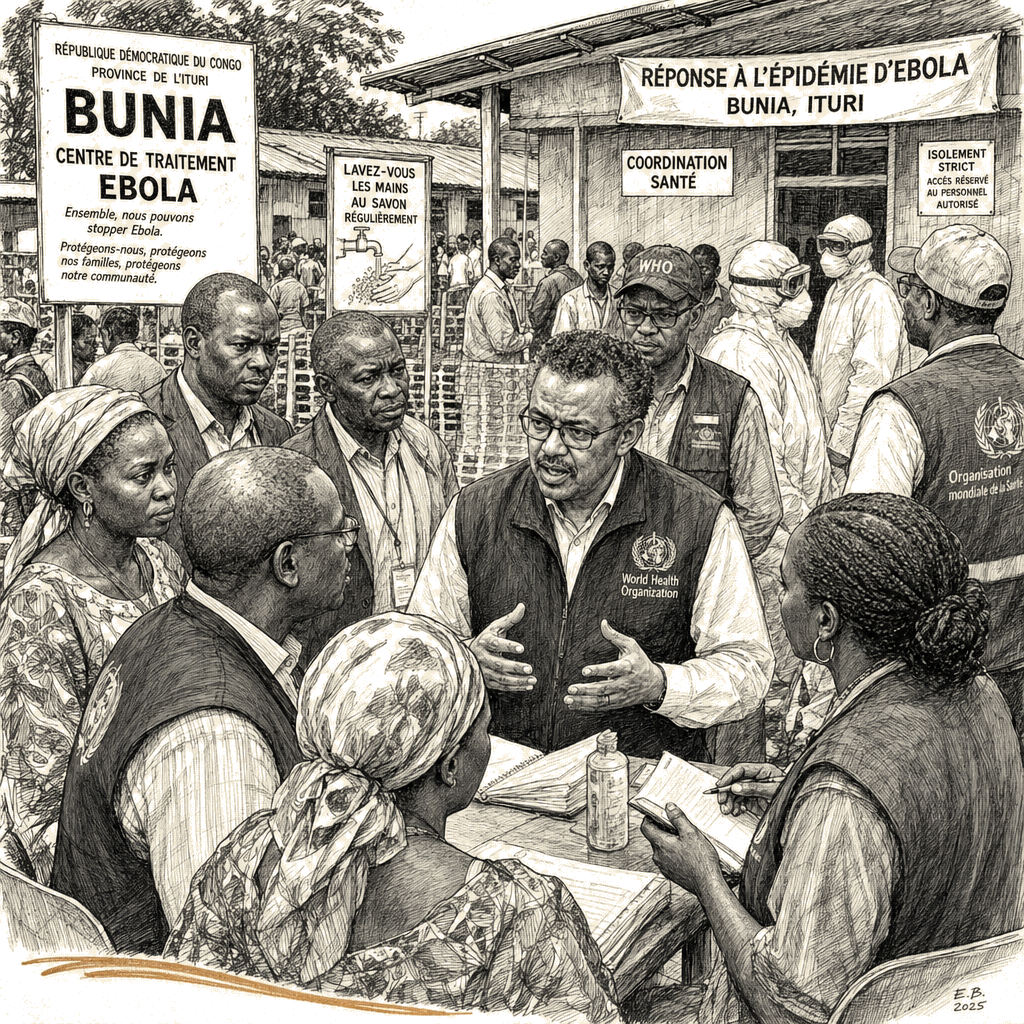
Tedros, the WHO director-general, arrived Saturday in Bunia, the capital of Ituri province, where the outbreak of a rare strain of the virus has been spreading faster than health authorities can contain it despite better-organized health facilities and recent arrivals of aid. The WHO declared the outbreak a global health emergency on May 16 after cases began crossing into Uganda.
Speaking alongside Congo’s health minister at a news conference Saturday, Tedros said building trust with local communities and ensuring safe burials — which prevent transmission from the bodies of Ebola victims — were critical to stopping the outbreak. He urged nations not to impose travel bans or close borders with affected regions, arguing such measures “discourage transparency” and can drive cases underground.
“We have actually been prepared for quite a long time and we are doing our best to contain it,” Tedros said, noting that the outbreak is Congo’s 17th. “The Democratic Republic of Congo has faced Ebola before, 16 times, and has ended every outbreak. That history gives me real confidence.”
The WHO on Friday reported that the number of suspected cases in Congo reached 906, with 223 suspected deaths. In Uganda, the Health Ministry has confirmed nine cases and one death linked to the outbreak, underscoring the risk of cross-border spread. Medical charities including Doctors Without Borders have expanded operations in the affected areas, but community resistance and periodic attacks on treatment centers have slowed response efforts.