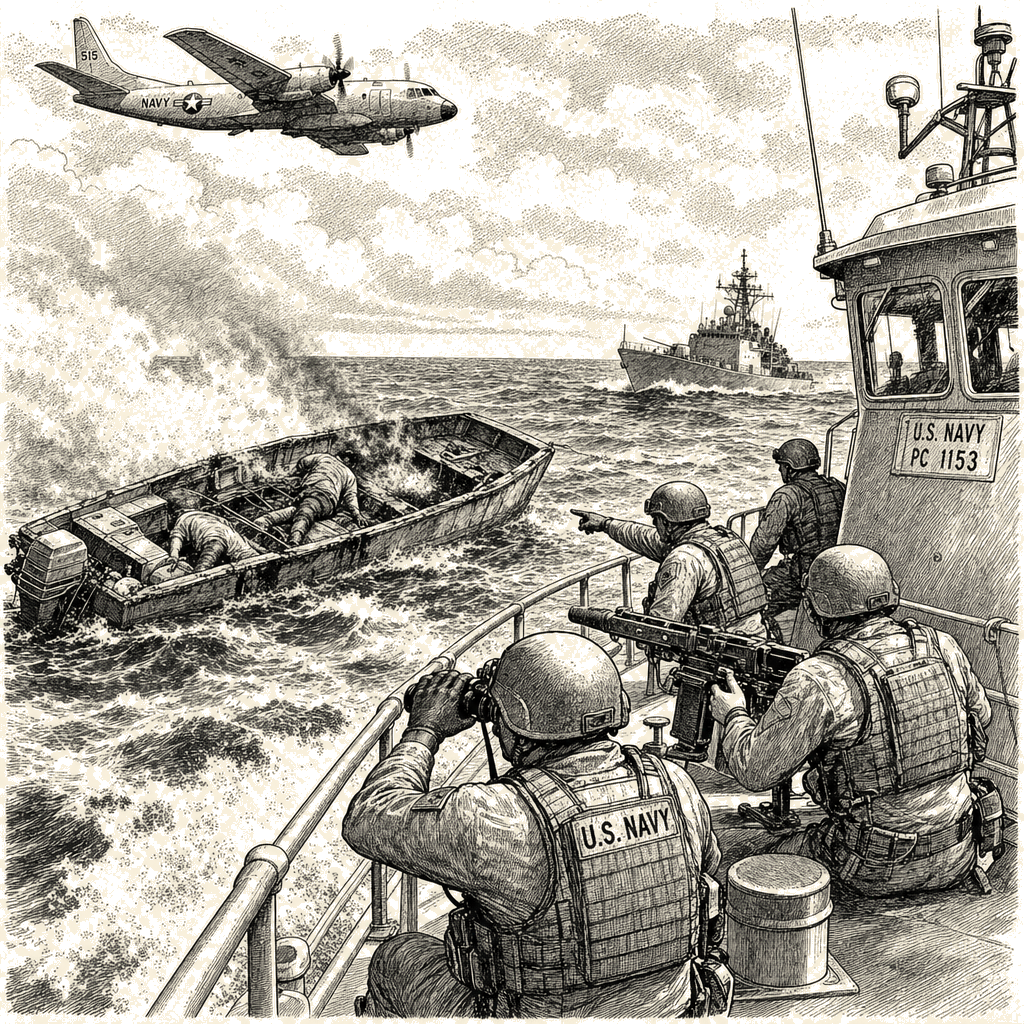
The U.S. military said Saturday it carried out a strike against a boat suspected of smuggling drugs in the eastern Pacific Ocean, killing three men. U.S. Southern Command announced the attack, its fourth in four days, bringing the cumulative death toll from the rolling naval campaign to 205.
SouthCmd published details of the operation on X, stating that the targeted vessel was “engaged in narco-trafficking operations.” The command further asserted that the boat was operated by a designated terrorist organization, though it provided no independent evidence to substantiate the allegation.
The Saturday strike follows a rapid sequence of military actions announced earlier in the week. SouthCmd reported separate attacks on Tuesday, Wednesday, and Friday, all targeting vessels it identified as drug smugglers. The latest operation was conducted at the direct instruction of Gen. Francis L. Donovan, the top U.S. military commander for Latin America.
SouthCmd released video footage on social media documenting the attack. The clip shows a small boat floating in open water before it is struck and subsequently consumed by a large fireball. The military did not release the identities or nationalities of those aboard the vessel.
The cumulative death toll from the U.S. strikes has now reached 205 since the campaign began in early September. The operations have spanned both the Caribbean Sea and the eastern Pacific Ocean, covering a vast maritime corridor frequently used for illicit transit.
The escalation reflects a formal policy shift adopted by the Trump administration, which has declared that the United States is at armed conflict with Latin American drug cartels. Administration officials have stated that the cartels are directly responsible for the flow of illegal narcotics into American communities.
The declaration of armed conflict provides the legal and operational framework for the military’s ongoing use of lethal force against suspected smugglers in international waters. SouthCmd has maintained a consistent cadence of post-strike notifications, releasing casualty counts and broad target descriptions without detailing the rules of engagement for each individual strike.
Military officials have characterized the campaign as a necessary intervention to disrupt logistical networks that fund transnational criminal enterprises. The strikes have proceeded without public congressional debate, relying on executive authority and existing defense appropriations.
As the death toll climbs past 200, the campaign continues to draw scrutiny from regional observers and international maritime analysts. The Trump administration has not signaled a reduction in tempo, indicating that naval strikes against suspected vessels will remain a core component of its anti-trafficking strategy.