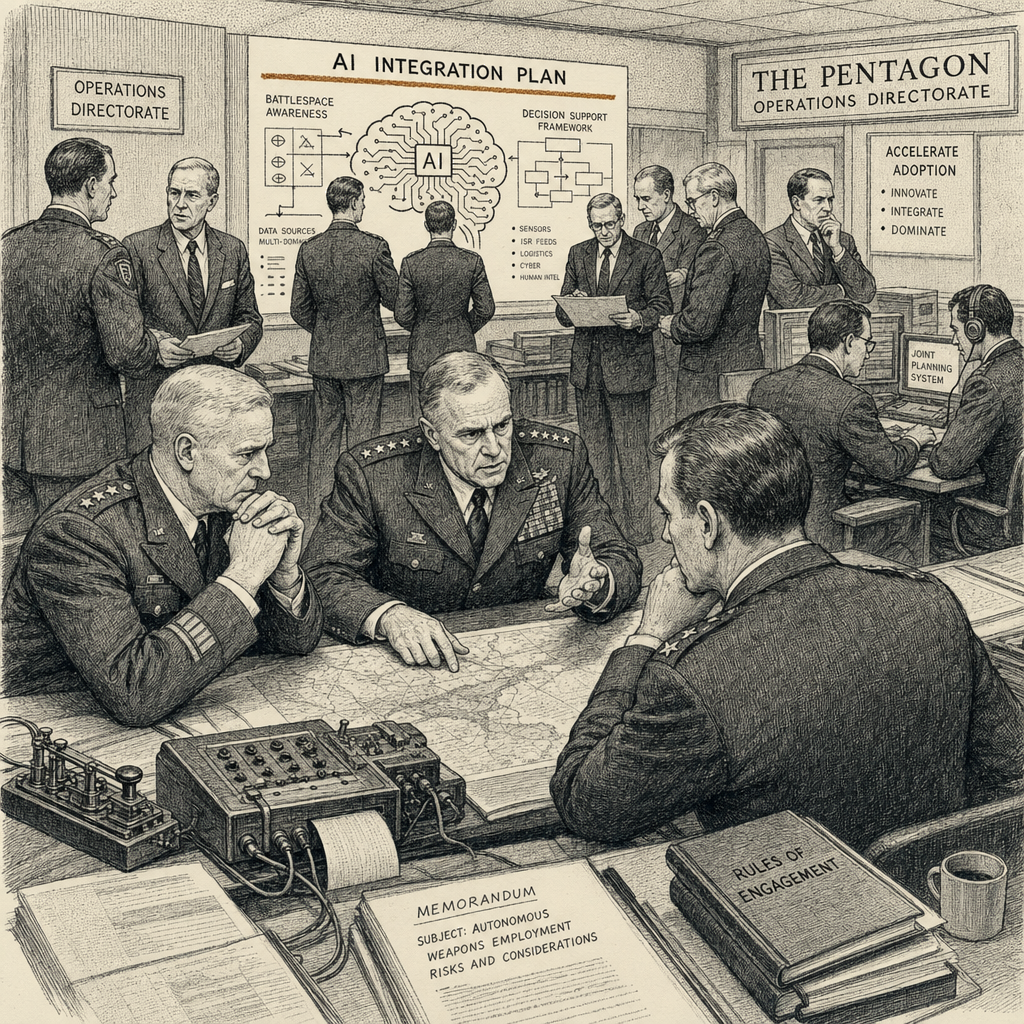
The Trump administration is moving aggressively to deploy artificial intelligence capabilities across the U.S. armed forces, a strategy that has prompted warnings from senior military commanders and requests for regulatory guardrails from technology developers.
At a recent annual special forces conference in Tampa, Florida, Adm. Frank Bradley told attendees that service members must approach the emerging technology carefully. Bradley, who oversees the military’s most complex and hazardous units, said troops “have to be very careful about how we come to (AI’s) employment and its inspiration into the delivery of lethality.”
Bradley outlined a potential future in which artificial intelligence systems assist in identifying targets. He emphasized the necessity of human oversight in that process, stating that “we, as humans, have to have the confidence that … it’s going to deliver violence only where we intend it to be delivered.”
The admiral’s remarks come as his boss, Defense Secretary Pete Hegseth, is actively driving a rapid technological transformation across the Pentagon. The initiative aims to modernize military capabilities through accelerated artificial intelligence integration.
The push to rapidly evolve the military’s AI footprint has generated friction with private technology firms. Several companies have raised concerns over safety measures, calling for established protocols before the technology is widely deployed in combat environments.