Body
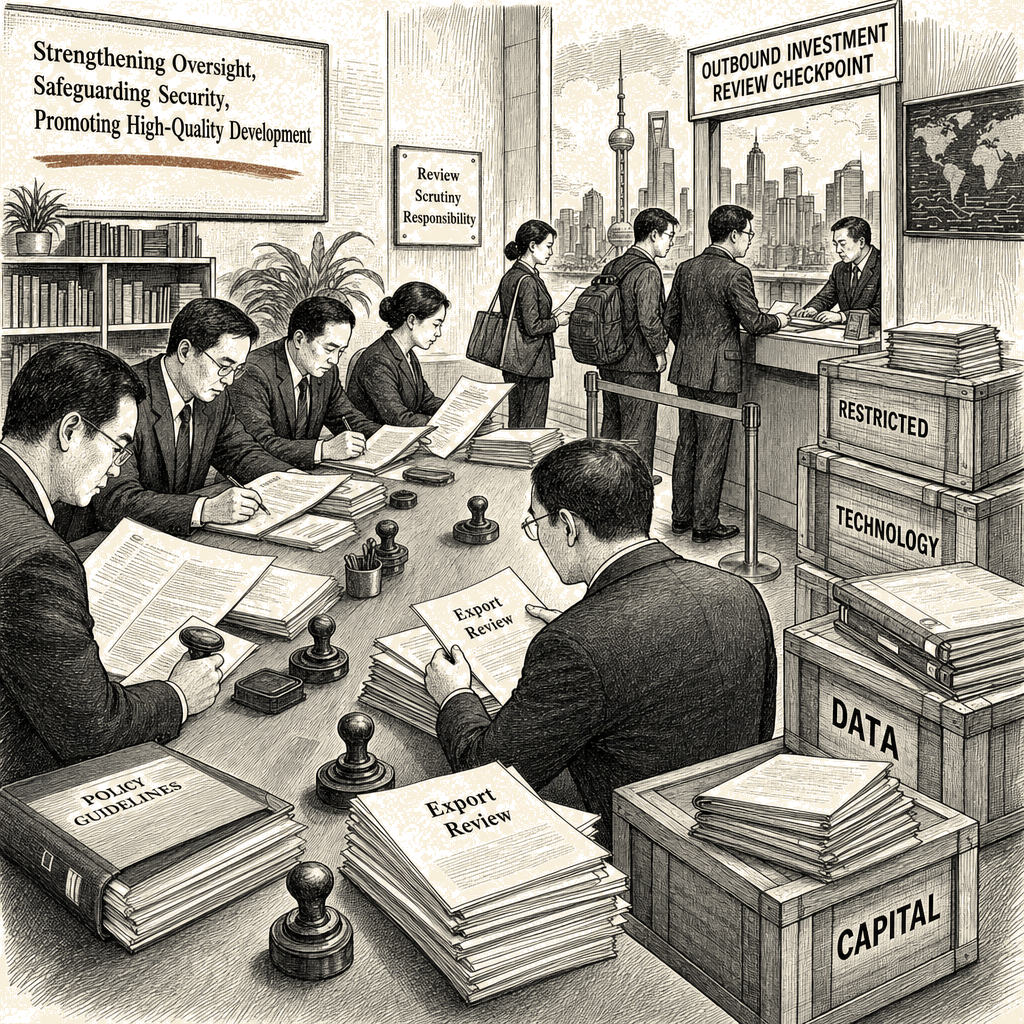
China’s State Council said Monday that the government will prohibit the unauthorized export or use of state-restricted goods, technology, services and data under new rules approved in April. The regulations take effect in July and represent Beijing’s most sweeping effort yet to tighten oversight of outbound capital flows as U.S.-China technology competition escalates.
The rules ban indirect transfers of restricted technology and data through cross-border personnel deployments, training programs or technical guidance, according to the State Council’s announcement. Entities that engage in unauthorized outbound investment activities face penalties including fines and investment bans. For unapproved investments that have already been made, authorities may order entities to halt investment activities and divest related shares and assets within a specified period.
The rules also authorize broad countermeasures against foreign entities deemed harmful to Chinese interests or disruptive to Chinese investment. Authorities may prohibit offending foreign entities from participating in China-related trade and investment activities. They may also deny visas, revoke residency permits and bar entry for related personnel, according to the regulations released Monday.
The announcement comes roughly a month after China blocked Meta Platforms’ acquisition of artificial-intelligence startup Manus on national-security grounds and ordered the $2.5 billion deal unwound. Manus was founded in China in 2022 and later moved its global operations and staff to Singapore after receiving funding from U.S. venture-capital firms. Following Meta’s acquisition of the startup in late December, Chinese authorities launched a regulatory review in January, saying cross-border acquisitions and technology exports must comply with Chinese law.
Analysts said the April decision on the Meta-Manus deal highlighted Beijing’s determination to shield its technology sector from foreign influence and protect critical intellectual property. As U.S.-China technology competition has intensified, both countries have tightened export controls, restricted talent exchanges and increased scrutiny of cross-border capital flows.
Even before Monday’s announcement, Chinese regulators had instructed several leading domestic AI companies not to accept U.S. funding without government approval, The Wall Street Journal previously reported. The new rules codify and expand those informal directives into a formal regulatory framework with enforceable penalties.
The regulations add another layer to a bilateral technology competition that has produced escalating controls from both sides. The Trump administration has targeted foreign exploitation of U.S. AI models and restricted certain technology exports to China, while Beijing has imposed its own restrictions on technology transfers, talent movement and cross-border investment. The result is an increasingly segmented technology landscape in which the flow of capital, talent and intellectual property between the world’s two largest economies faces growing institutional barriers from both directions.