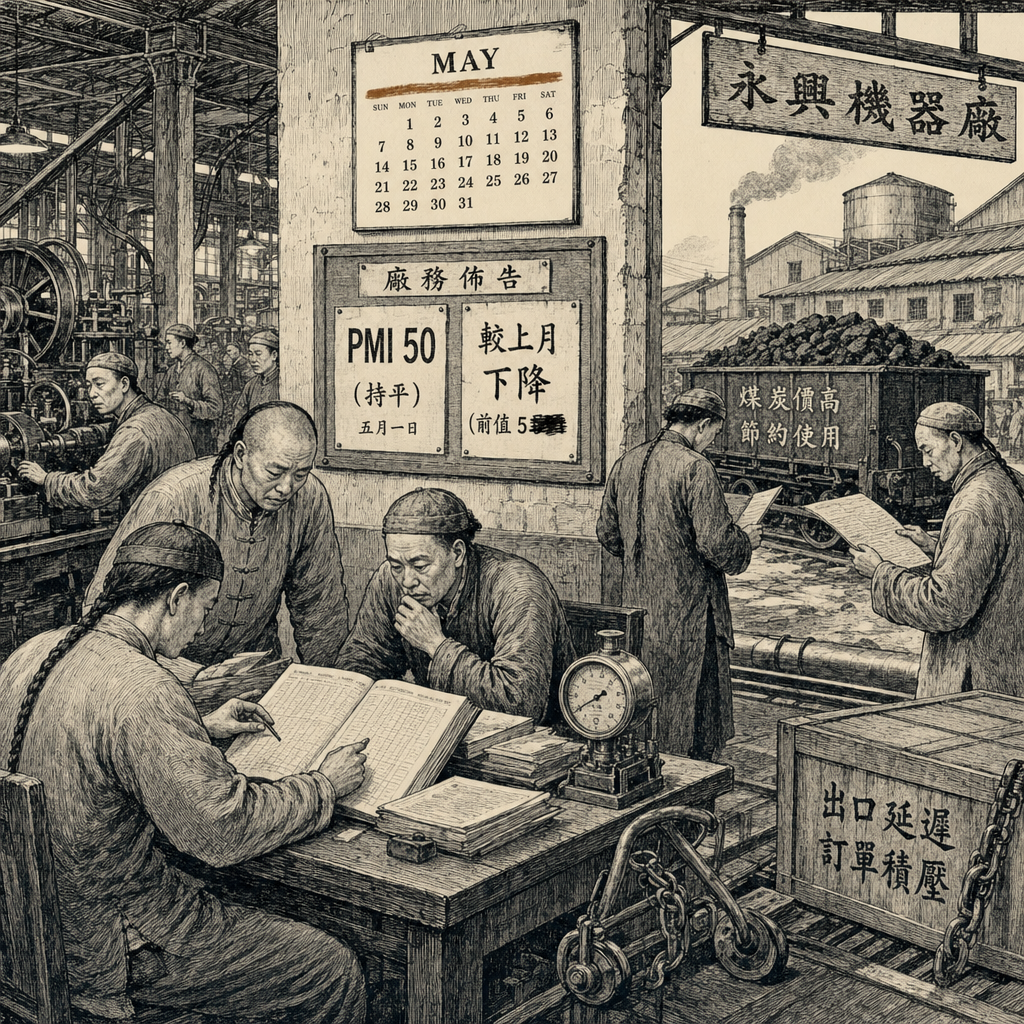
The official manufacturing purchasing managers index (PMI), a closely watched gauge of industrial health where a reading above 50 signals expansion, hit the threshold in May. The decline from April’s 50.3 marks the first time the indicator has touched the expansion-contraction dividing line since late 2025, pointing to a stalling momentum in the factory sector.
New orders, a forward-looking component of the survey, slipped into contraction territory for the first time in three months. The new orders sub-index fell to 49.6, down from 51.1 in April, as domestic buyers delayed purchases and overseas clients held back on commitments. Export orders bore the brunt of the slowdown, dropping to 48.2 from 50.0, reflecting the direct impact of global shipping disruptions.
Freight and logistics bottlenecks tied to the closure of the Strait of Hormuz have compounded the headwinds for Chinese exporters. Shipping rates along alternative routes have surged by nearly 40% over the past quarter, eating into profit margins and delaying delivery windows for goods bound for Europe and the Middle East.
Despite the dampening demand, factory output held steady. The production index came in at 50.2, slightly above the expansion threshold as manufacturers drew down existing backlogs rather than ramping up assembly lines. Input costs remained elevated but stabilized, with the raw materials price index ticking down to 52.3 from 52.9 a month earlier.
“Enterprises are facing mounting pressure from higher logistics expenses and cautious order books,” the National Bureau of Statistics report said. Purchasing managers surveyed for the report cited elevated caution regarding inventory buildup, with the finished goods index dipping to 47.8.
The data arrives as global central banks weigh inflation against growth risks. While China’s consumer price index has remained relatively contained compared to Western economies grappling with imported energy inflation, the factory slowdown threatens to spill over into the broader service sector and household income.
Beijing has signaled it is prepared to deploy targeted fiscal tools to cushion the manufacturing base. Officials have already expanded a specialized loan facility for small and medium-sized enterprises facing energy and shipping cost overruns, though broader stimulus measures remain on hold pending further economic data.
Independent economists warn that a sustained reading at or below 50 could prompt policymakers to accelerate infrastructure spending and consumer subsidies. “If external demand does not stabilize by the third quarter, we will likely see a push for more direct support to manufacturing employment,” a Beijing-based economist said during a regional financial briefing.
The non-manufacturing PMI, covering the service and construction sectors, is scheduled for release later this month. That reading will help determine whether the factory sector’s stagnation is an isolated dip or part of a broader cooling trend across the economy.