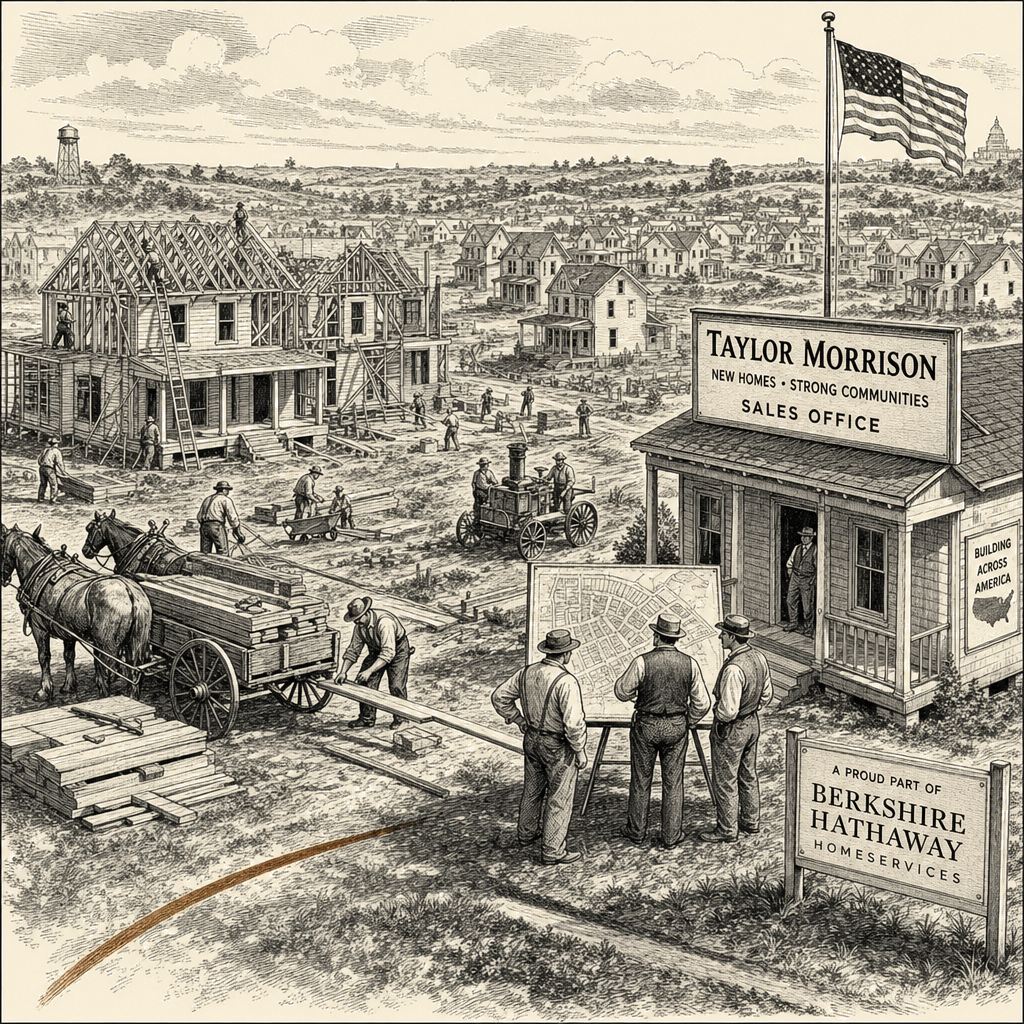
Berkshire Hathaway will expand its footprint in the U.S. housing sector through the $6.8 billion cash acquisition, the conglomerate announced over the weekend. The agreement values the homebuilder at $72.50 per share and represents one of the first definitive signals of new CEO Greg Abel’s capital-allocation strategy since he succeeded Warren Buffett. Berkshire already maintains a large residential real-estate brokerage and has held stakes in other builders, positioning the company to deepen its influence in a market that touches nearly every economic sector.
The Taylor Morrison purchase serves as an early test for Abel, who has spent his initial months reassuring shareholders that the conglomerate’s decentralized structure and patient investment philosophy will remain intact. Investors and analysts view the transaction as a key indicator of how Abel intends to deploy a balance sheet that has swelled to unprecedented levels under his watch. He recently told shareholders that a shortlist of potential targets remains under active consideration, emphasizing that capital deployment will proceed when market dislocations offer favorable pricing.
“This is an exciting transaction for Berkshire and reinforces our long-standing commitment to U.S. housing. Homeownership remains central to the American dream, and this investment expands our ability to serve that market,” Abel said in a statement. He noted Berkshire’s history of operating with a nimble culture where large opportunities can be shared confidentially and acted upon quickly, without the financing contingencies that often delay corporate deals.
The conglomerate’s resources have continued to accumulate, with Berkshire ending the first quarter with $381.1 billion in cash and Treasury bills. Capital deployment has accelerated alongside this growth; the homebuilder agreement follows a $9.7 billion acquisition of Occidental Petroleum’s petrochemical business in January 2026. Alongside the Taylor Morrison deal, Berkshire disclosed that it had built a new $2.6 billion position in Delta Air Lines shares during the same quarter, reflecting renewed activity in the airline sector.
Berkshire’s transition to Abel’s leadership has prompted a recalibration among investors, with the company’s Class B shares declining 5.6% over the past year as the market adjusts to the post-Buffett era. Despite the share-price dip, Abel reiterated in his annual letter earlier this year that the company remains patient and disciplined in pursuing the right opportunities for its owners.