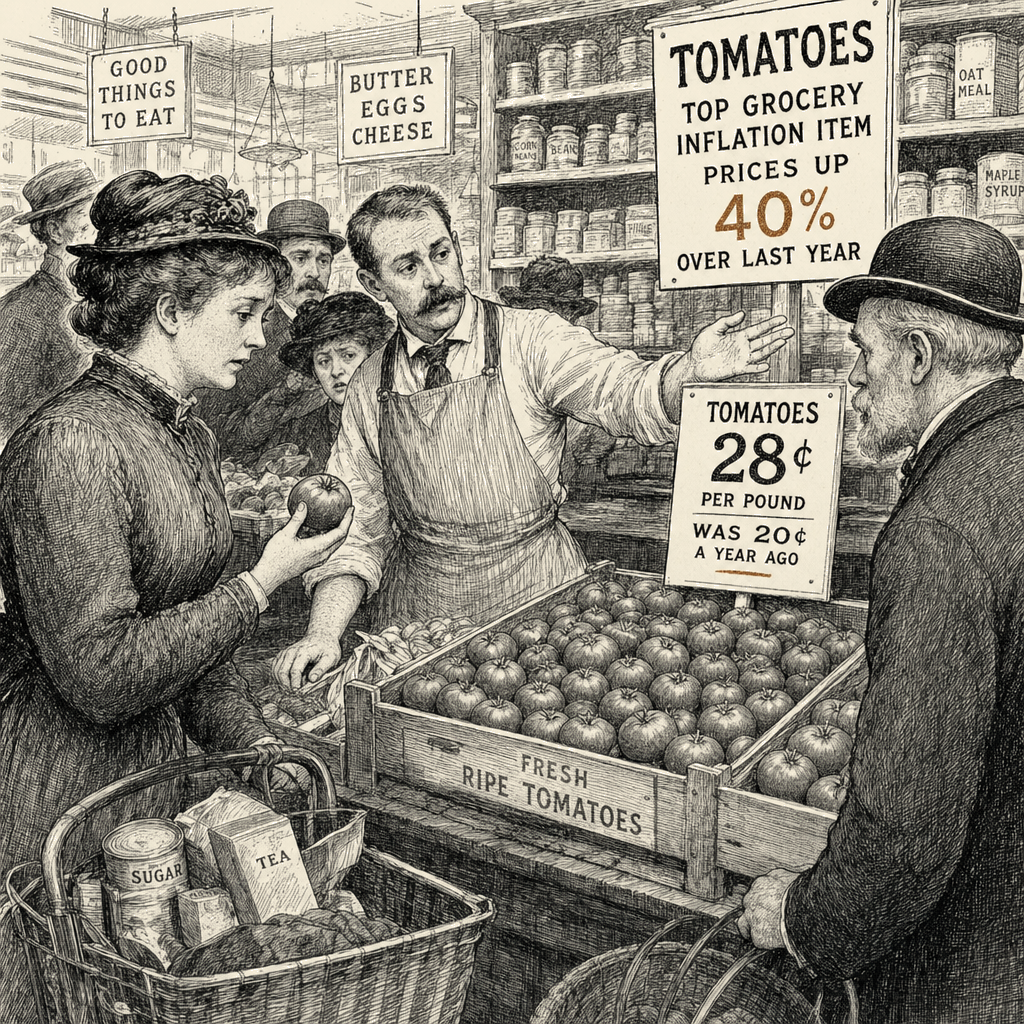
Tomato prices have climbed about 40% in the past year, the sharpest rise recorded for any food product in the Consumer Price Index, as the fruit that anchors salads, sauces, and sandwiches becomes the latest everyday item to test household budgets already strained by two years of elevated grocery inflation.
The 12-month increase, documented in the latest CPI release from the Bureau of Labor Statistics, far exceeds year-over-year gains posted by other grocery-aisle symbols of the affordability squeeze — coffee, up 18.5%; beef roasts, up 17.8%; and frozen fish and seafood, up 12%. The tomato number was first reported by the Associated Press and confirmed against the public CPI tables.
The run-up reflects a collision of forces that growers and agricultural economists have been tracking for months. The United States relies heavily on imports of fresh tomatoes, particularly from Mexico and Canada, during the winter and spring months. Tariffs imposed on Mexican produce, combined with shipping-cost increases linked to the ongoing conflict with Iran, have pushed the delivered price of imported fruit sharply higher. Domestic growers, meanwhile, have faced their own input-cost pressures for fertilizer, fuel, and labor — costs that have cascaded through the wholesale distribution chain.
“The tomato has become a symbol of something much deeper,” Isaac Bernal Carbajo, a chef based in New York City, told the AP. “Something as basic as buying fresh vegetables is starting to become a serious financial decision for many families.”
Carbajo’s observation echoes a pattern the Bureau of Labor Statistics data has made visible across multiple categories over the past year: the lowest-cost versions of staple foods are absorbing some of the largest percentage increases, hitting households that spend a greater share of their income on groceries.
Wayne Humphrey, a tomato grower in Florida, told the AP that his own production costs have risen substantially — for everything from plastic field sheeting to cardboard shipping boxes — and that the domestic industry is shipping less fruit than it did before the price spike. The combination of reduced volume and higher input costs has kept wholesale prices elevated even as some other supply-chain pressures have eased.
The CPI data do not isolate a single cause for the 40% increase but capture the retail-level result of the upstream cost accumulation. Agricultural economists who track the North American tomato market have noted that the 2025–2026 winter-import window was the first full season in which tariffs on Mexican produce were in effect alongside the elevated fuel and freight charges that the Iran conflict has sustained since early 2025. The price signal at the grocery scanner is the downstream sum of those policy and disruption effects.
The tomato surge arrives amid broader grocery inflation that, while moderating from the peaks of the Iran-conflict energy shock in early 2025, continues to outpace pre-conflict norms. The government’s food-at-home index remains elevated, and consumer surveys show grocery costs ranking among the top financial concerns for U.S. households — a dynamic the publication has tracked across energy, housing, and now fresh-produce coverage over the spring.
For shoppers standing in the produce aisle, the math is concrete: a crop that was long treated as a cheap flavor base — the thing you toss into a salad or slice onto a sandwich without thinking — now carries a price tag that prompts the kind of calculation once reserved for the meat counter.