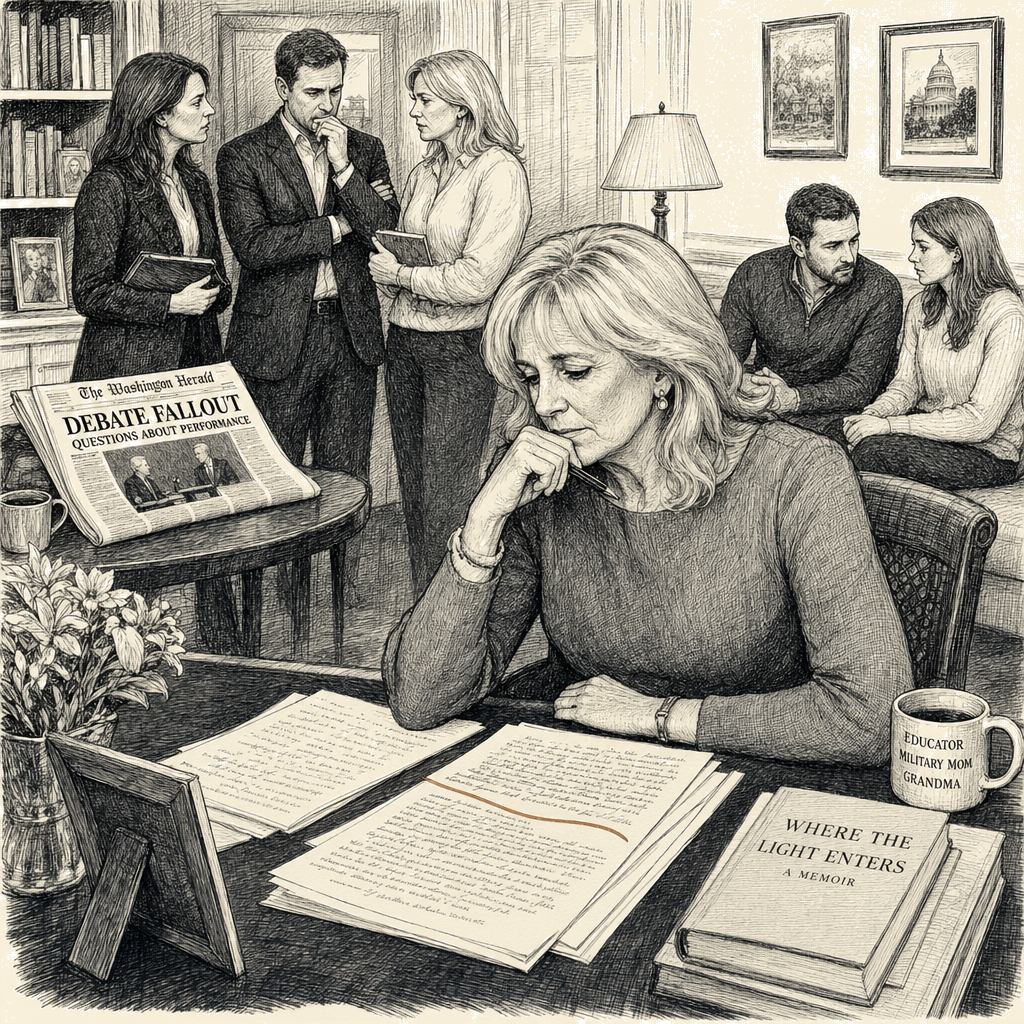
In a 274-page manuscript obtained by The Associated Press, former first lady Jill Biden offers the most personal account yet of the June 2024 debate that derailed her husband’s reelection campaign and opened the door to Donald Trump’s return to the White House. The memoir, “View from the East Wing,” set for release on June 2, includes her first public reflections on the debate and the tumultuous weeks that followed.
Jill Biden writes that she still does not understand why Joe Biden performed so poorly that night. “I still don’t know why he performed so disastrously that day,” she states in the book, according to the AP. The debate, in which Biden appeared halting and at times struggled to complete sentences, instantly triggered panic among Democrats and intensified questions about whether the then-81-year-old could serve a second term.
For the first time, Jill Biden questions the campaign’s response in the immediate aftermath — the effort to reassure supporters and donors that the president was fit to continue. She wonders aloud in the memoir whether acknowledging the gravity of the performance would have been better. The AP reports that she “reflects on former President Joe Biden’s poor debate performance … and wonders whether it would have been better to acknowledge it rather than reassure supporters afterward.”
The debate’s fallout was swift. Within weeks, pressure from Democratic leaders, donors, and elected officials mounted. Biden initially insisted he would stay in the race but ultimately withdrew in July 2024 and endorsed Vice President Kamala Harris. Harris lost the general election to Trump that November, capping a historic reversal.
Jill Biden’s memoir also covers other chapters of her White House years, including her continued teaching career, Hunter Biden’s legal troubles, and the family’s life in the East Wing. But the debate passages are the most closely held — until now. Her reflections add a first-person dimension to a political moment that reshaped the presidency, and her questioning of the campaign’s response suggests lingering uncertainty inside the family about whether a different approach could have changed the outcome.