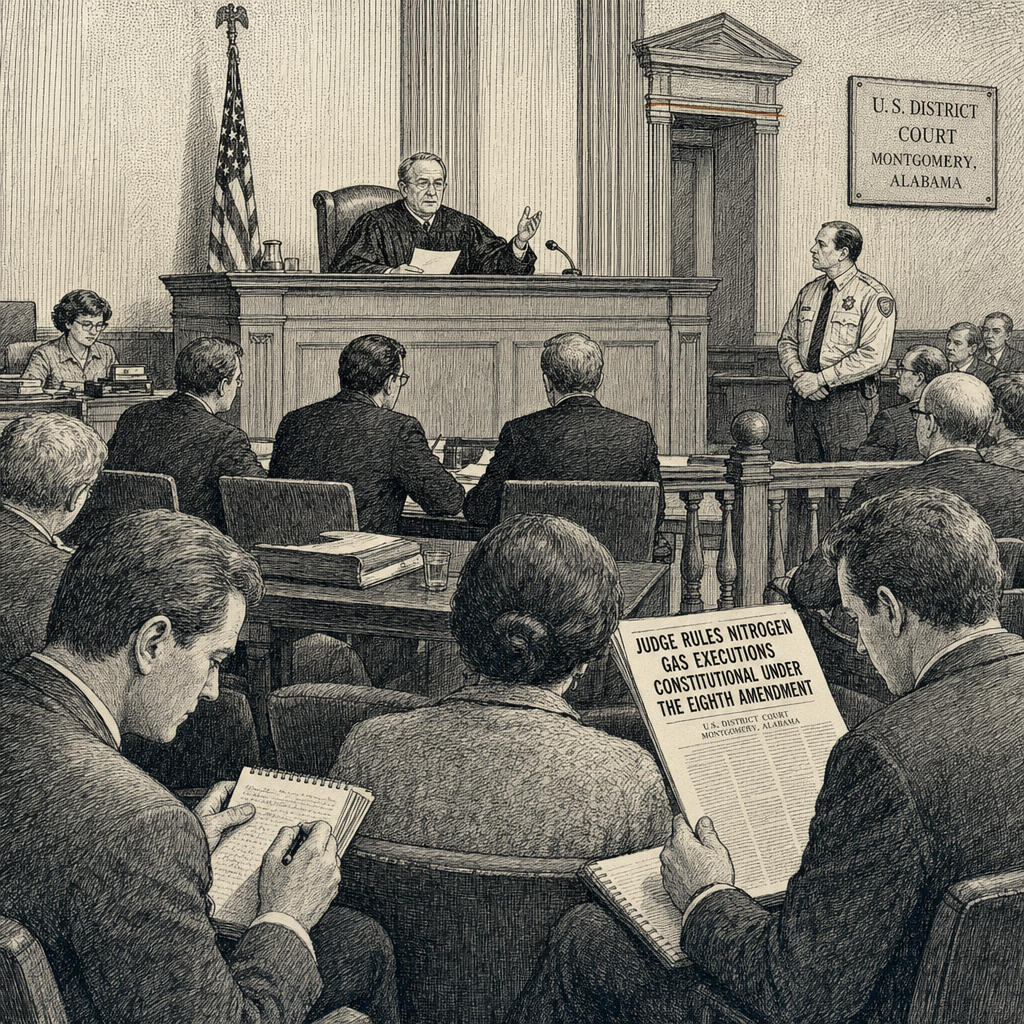
U.S. District Judge Emily C. Marks ruled Thursday in Montgomery that Alabama’s use of nitrogen hypoxia to carry out a death sentence does not violate the Eighth Amendment. The decision, issued after a bench trial — the first of its kind — rejected the claim brought by Jeffery Lee, a 58-year-old death row inmate who said the procedure causes unconstitutional suffering.
The ruling allows Alabama and Louisiana to continue using the method, which both states adopted after lethal injection drugs became difficult to obtain. Nitrogen hypoxia was first used in an execution in 2024, and since then eight men have died by it: seven in Alabama and one in Louisiana. The procedure works by strapping a respirator mask to the inmate’s face and delivering pure nitrogen, displacing oxygen so that death occurs from asphyxiation. Proponents have characterized it as a humane alternative, while critics — including Lee’s attorneys — argued that it causes panic and pain that amount to cruel and unusual punishment.
Lee is scheduled to be executed with nitrogen gas on June 11 at a prison in southern Alabama. His lawsuit was filed last year and marked the first occasion that a court held a full evidentiary hearing on the method’s constitutionality. Judge Marks, after weighing testimony and evidence, determined that the state’s protocol did not violate the Eighth Amendment. The ruling clears the last major legal obstacle for Lee’s execution, though his attorneys may appeal.
The decision is a setback for death penalty opponents who hoped that a deeper examination of the nitrogen hypoxia protocol would halt its use. The ruling is expected to influence other federal courts facing similar challenges as more states consider adopting the method.