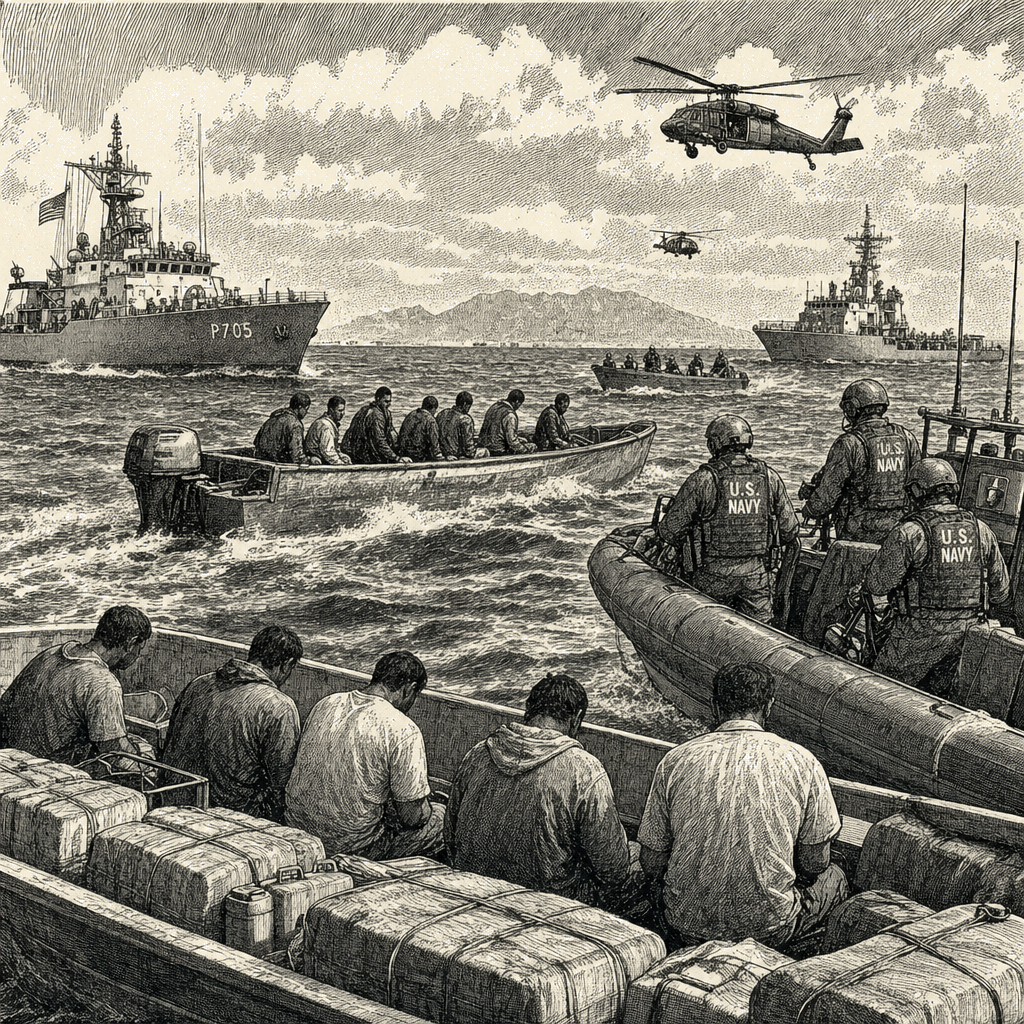
The death toll from the Trump administration’s strikes on suspected drug trafficking vessels in the Caribbean Sea and eastern Pacific Ocean has reached at least 199 people, according to U.S. military records released Wednesday.
The operational campaign began last September and has continued through multiple months of interdiction efforts across international waters. Military data indicates that the casualties include at least 22 individuals who survived an initial strike only to be hit again or perish at sea during subsequent engagements.
Three of those individuals survived two separate strikes in May alone, according to the U.S. military’s accounting. The figure reflects the complex tracking challenges that emerge when damaged vessels remain afloat in open ocean conditions after an interdiction strike.
U.S. Southern Command said it notifies the U.S. Coast Guard whenever survivors are detected following an attack. Those survivor reports are largely passed along to countries geographically closer to the actual strike location, according to military statements. The Coast Guard and regional authorities typically coordinate the subsequent search and rescue response.
The strikes have targeted small boats suspected of carrying narcotics across maritime routes between Latin America and the United States. The administration has framed the naval campaign as a critical component of its broader strategy to disrupt transnational trafficking networks operating in the Western Hemisphere.
Military officials have not publicly detailed the criteria used to identify the targeted vessels or the specific engagement protocols that govern strikes in international waters. The 199-death-toll figure represents the cumulative casualty count tracked by Southern Command since the campaign’s September inception.
Regional governments in Central America and the Caribbean have not issued coordinated statements regarding the rising casualty count or the survivor-handoff procedures described by U.S. military officials.