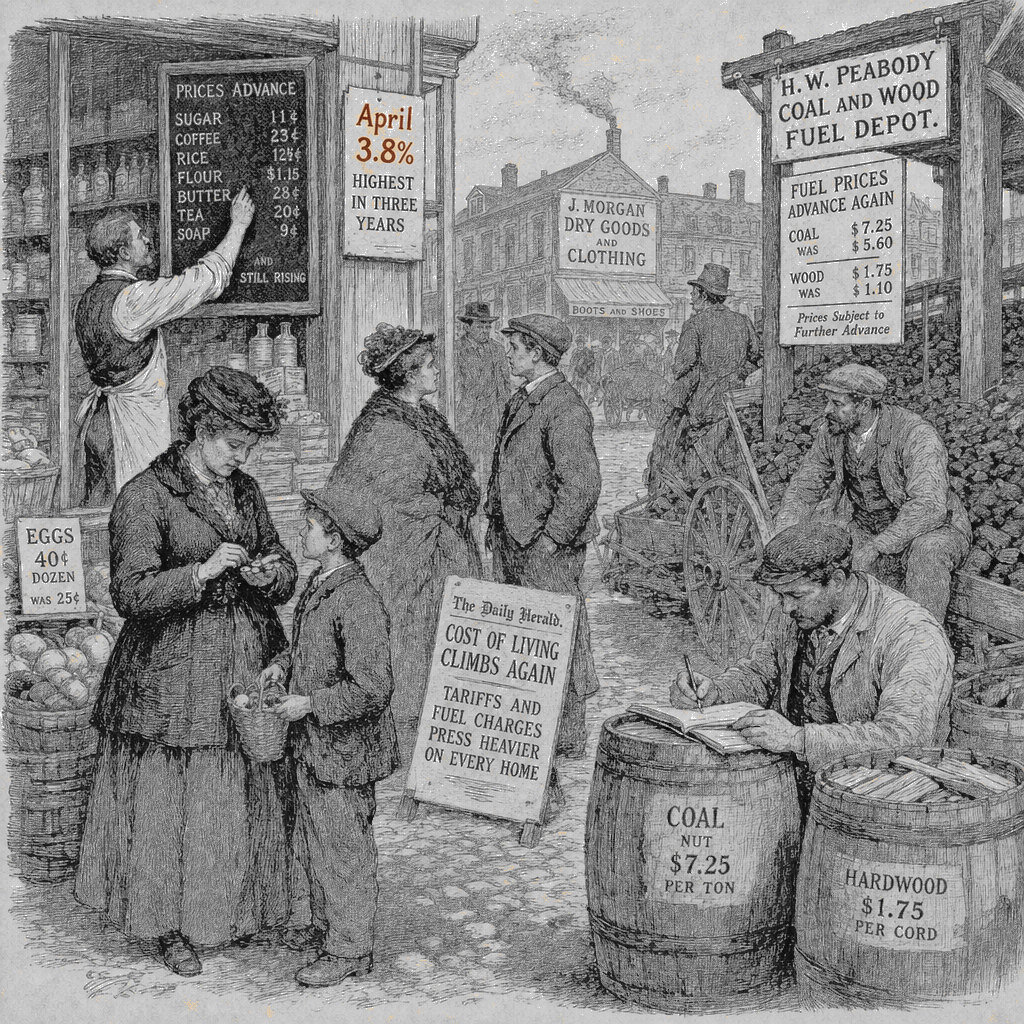
The personal consumption expenditures price index, which the Federal Reserve uses as its primary inflation benchmark, rose 0.4% in April from the prior month and 3.8% from a year earlier, the Commerce Department said Thursday. The year-over-year figure was up from 3.5% in March and marked the highest reading since May 2023, driven largely by a surge in energy costs and the lingering effects of tariffs.
Energy prices jumped 2.8% from March to April and rose 12.8% over the past year, the department reported. Gasoline prices were up 10.8% from a year ago, reflecting both the disruption from the U.S.-Iran conflict and the administration’s tariff actions. The cost of fuel has been a persistent driver of inflation since fighting erupted in the Strait of Hormuz earlier this year, pushing up prices at the pump even as global oil markets adjust to repeated cease-fire extensions.
Separate tariff hikes ordered by President Trump are adding to price pressures across a wide range of goods. A 10% global tariff on most imports took effect in April, along with a 25% levy on automobiles and auto parts. While some economists say the impact is still unfolding, businesses have already started passing higher input costs on to consumers.
The squeeze is showing up in household finances. After adjusting for inflation, consumer spending rose just 0.1% in April, down from a 0.5% gain in March, as Americans pulled back on big-ticket items such as cars and appliances. Meanwhile, after-tax personal income fell 0.3% in April, the second consecutive monthly decline. The personal saving rate dropped to 3.5% from 3.8%, its lowest level since 2022.
Joe Brusuelas, chief economist at RSM, said the economy is in a transition phase as tariffs and the Iran conflict reshape supply chains and prices. Dan North, senior economist at Allianz Trade, said tariffs are acting as a tax on consumers, who are beginning to see the impact in their everyday purchases.
The inflation reading lands with just five months before the midterm elections, where Republican control of Congress is at stake. The Trump administration has pointed to the Iran cease-fire extension and nuclear talks as evidence of progress, but rising household costs threaten to eclipse those achievements for voters.
Federal Reserve policymakers, who aim for 2% annual inflation, have kept interest rates on hold this year. The April data is unlikely to prompt immediate rate changes, but sustained price gains could delay any cuts, adding further strain on consumers and the housing market.