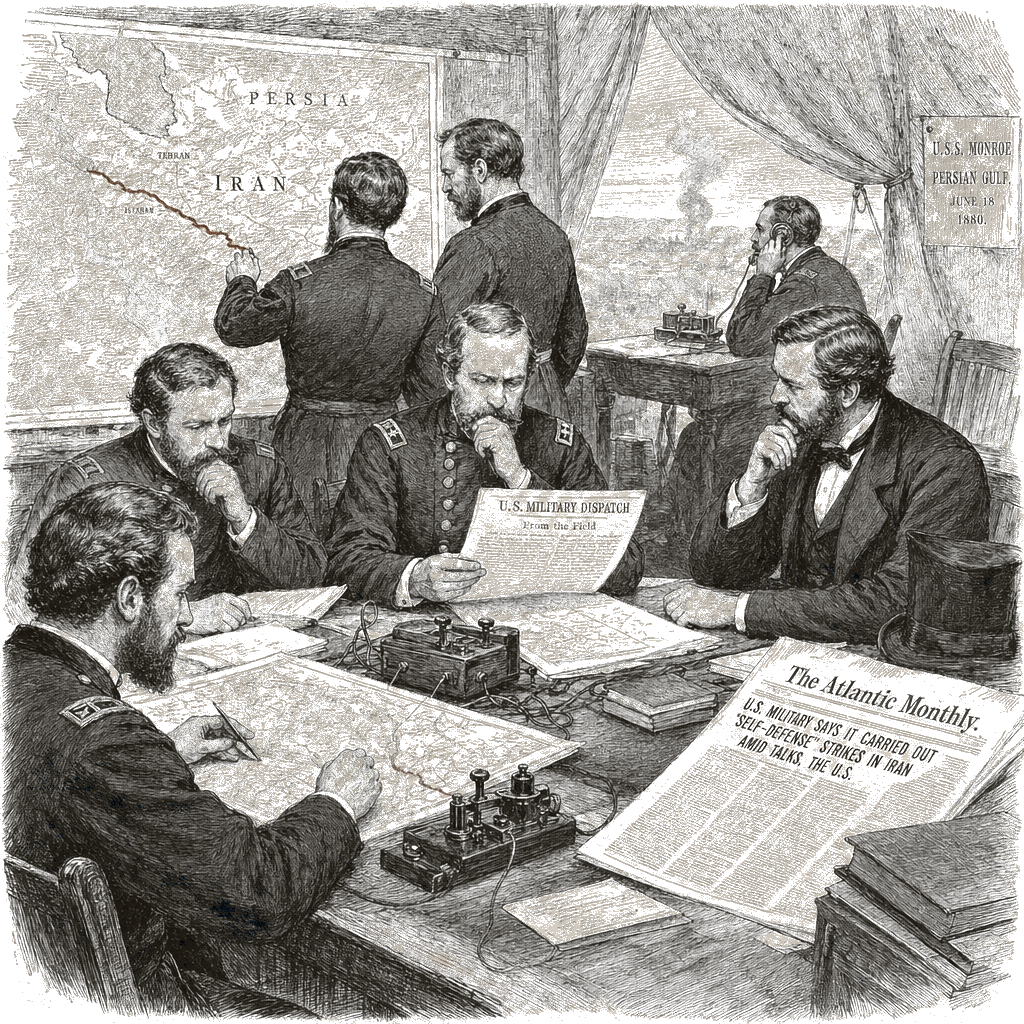
The U.S. military carried out strikes in southern Iran on Monday, targeting missile launch facilities and boats laying mines in accordance with self-defense protocols. The operations were initiated to safeguard American personnel from immediate threats, even as diplomatic channels between Washington and Tehran remained open, according to a statement released by the U.S. military’s Central Command.
Capt. Tim Hawkins, the Central Command’s spokesman, said the action was necessary “to protect our troops from threats posed by Iranian forces.” He noted that the military was “using restraint during the ongoing ceasefire,” though Central Command did not provide immediate specifics on the exact nature of the Iranian threat or the precise tactical footprint of the newly authorized strikes.
The military announcement unfolded against a backdrop of shifting diplomatic signals from the White House. President Donald Trump said on social media that negotiations with Iran were “proceeding nicely.” Trump’s comments did not directly address the timing of the strikes or specify how the use of force might intersect with the current bargaining table.
Further official responses from Tehran regarding the Monday strikes were not immediately available. Iranian parliament speaker Mohammad Bagher Qalibaf had traveled to Qatar to engage in talks concerning a possible deal with the United States, a diplomatic channel Qatar has heavily invested in as a regional mediator.
The Gulf nation holds a critical economic position in the negotiations. Qatar, which faced intense Iranian attacks during the recent conflict, currently holds billions of dollars in frozen Iranian funds. The financial leverage, combined with Qatar’s geographic proximity to both the U.S. and Iranian delegations, positions Doha as a primary conduit as the two powers negotiate the terms of a lasting resolution.