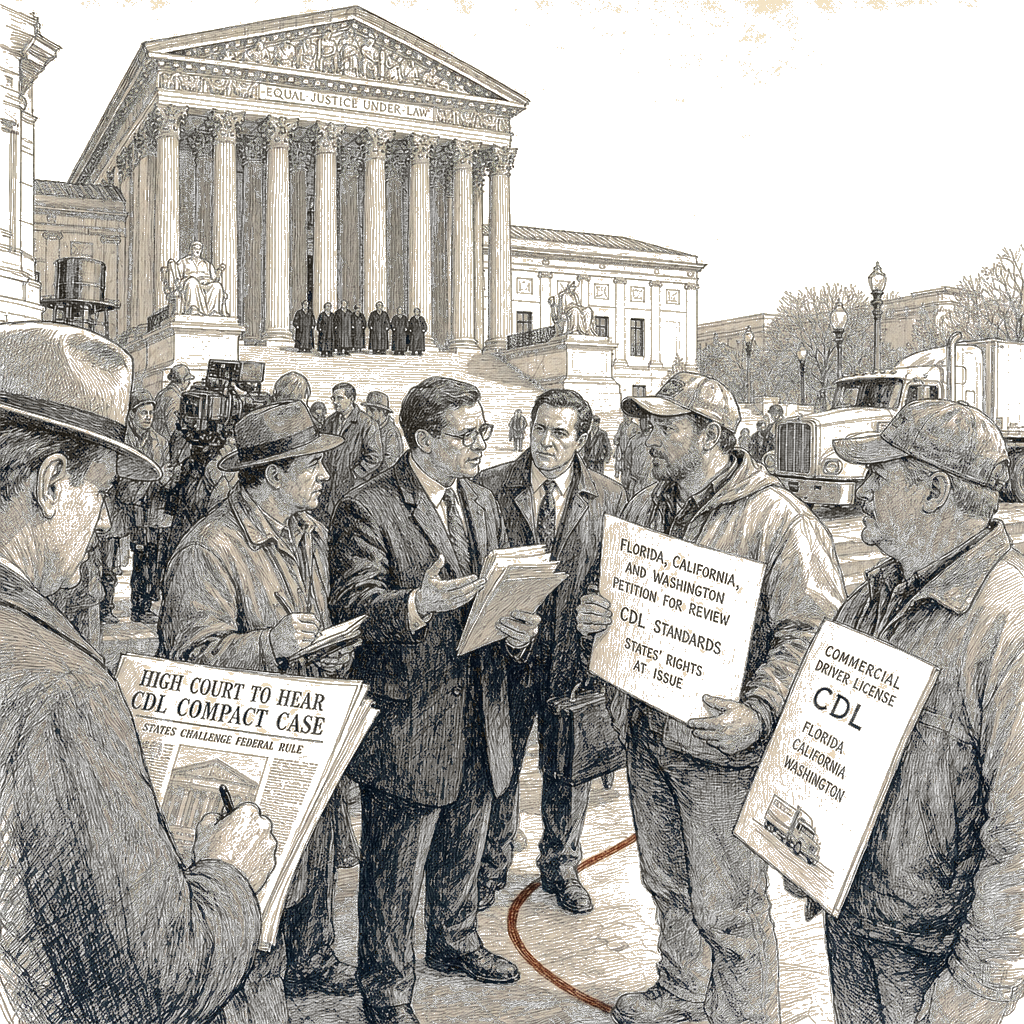
The Supreme Court on Tuesday declined to hear Florida’s direct lawsuit against California and Washington state, turning away a Republican-led challenge to the licensing of immigrant truck drivers. The court’s order, issued without comment, rejected Florida’s request to invoke the high court’s original jurisdiction — the mechanism by which states sue one another directly before the justices. The decision leaves in place the Western states’ ability to continue issuing commercial driver licenses to non-citizens, a practice Florida argued violates federal immigration law.
Florida filed the suit last year after a crash in which a driver the state says was unauthorized to be in the United States caused a collision that killed three people. The driver, Harjinder Singh, a native of India, was driving a tractor-trailer with a valid commercial driver’s license issued by California and had previously held a CDL from Washington state. Florida state officials’ public arguments centered on the claim that California and Washington were defying Congress’s exclusive authority over immigration.
The Supreme Court generally hears appeals from lower courts but does take up a small number of original lawsuits each term. The court declined to take this one, a move that Justices Thomas and Alito — who frequently dissent when the court refuses original cases — argued the court had no choice but to hear.
The rejection lands in a broader legal environment where the federal government is also moving on CDL policy. The Associated Press reported that a federal appeals court has blocked a Trump administration proposal that would introduce new restrictions on which immigrants can obtain commercial driver licenses to operate semitrailer trucks or buses. That case is ongoing.