Body
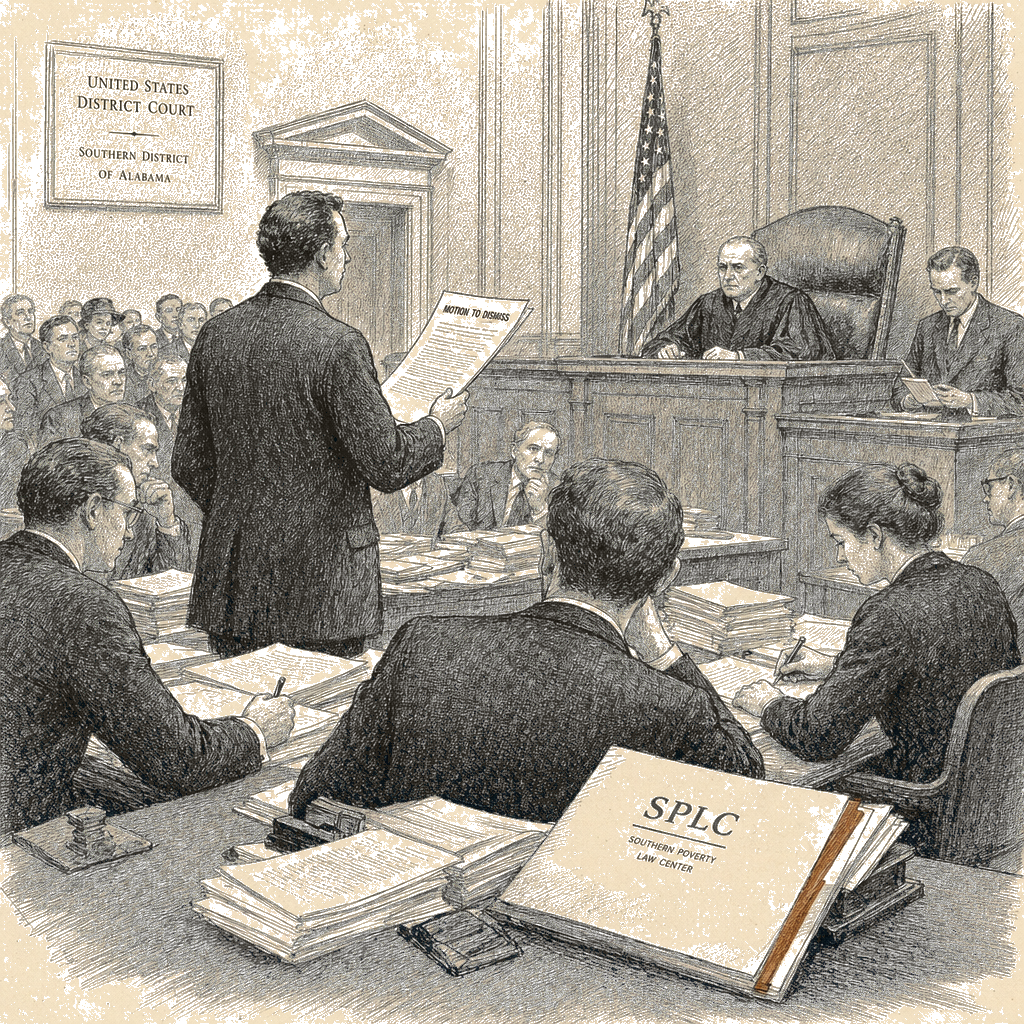
Southern Poverty Law Center asked a judge to toss a federal indictment the nonprofit said is driven by political retaliation rather than a good-faith review of evidence. Lawyers for the Alabama-based civil rights group said the Justice Department’s case reflects a “top-down” campaign of “retribution” aimed at President Donald Trump’s perceived political opponents. (AP reported on the motion filed Tuesday.)
The indictment, issued after Southern Poverty Law Center was charged in April, accuses the group of fraud and money laundering connected to allegations that it misled donors by paying informants embedded in white supremacist and other extremist organizations. Prosecutors’ theory centers on informants providing inside information about those organizations’ activities, according to the description in the Southern Poverty Law Center filings summarized by the Associated Press.
In its motion to dismiss, Southern Poverty Law Center’s lawyers argued that the prosecution is the “culmination of a top-down, retributive campaign,” urging the court to view the case as punishment rather than an evidentiary prosecution. The filing described President Trump as having pushed the Justice Department to go after political enemies, including the nonprofit, and it tied that framing to alleged actions by senior officials.
Lawyers also pointed to statements and later adjustments attributed to acting Attorney General Todd Blanche. Defense attorneys argued Blanche made a false statement at a news conference when he said the organization had not shared with law enforcement information it had learned from informants, and they said Blanche later walked back the claim in a television interview by acknowledging that Southern Poverty Law Center “selectively” shared information with law enforcement over the years.
The defense additionally argued that the Justice Department moved through the case in a way that suggested decisions were made in advance. The motion said prosecutors decided to pursue the indictment without interviewing any current Southern Poverty Law Center employees, and that the department did not seek documents from the group until after it told defense lawyers that criminal charges were coming. In the same vein, the filing said a meeting requested by defense attorneys to try to avert the indictment ended with the Justice Department telling them the decision to proceed had already been made.
To support its “vindictive prosecution” argument, Southern Poverty Law Center’s motion drew a comparison to a different case in which a judge dismissed an indictment described by the Associated Press as involving what the court characterized as an “abuse of prosecuting power.” The filing framed that dismissal as consistent with a pattern of politically motivated prosecutions, and it urged the judge to dismiss the Southern Poverty Law Center charges on similar grounds.
Southern Poverty Law Center has maintained that its now-defunct program of paying informants to infiltrate hate groups was developed to obtain insights about extremist activity for the purpose of protecting potential victims. The defense motion also said an earlier federal investigation into the informant-paying practice was closed without charges, while it argued the new indictment reflected renewed—and rushed—pursuit.
The center’s interim president and CEO, Bryan Fair, said the government cannot prosecute the organization “as payback for its protected speech,” in a statement accompanying the dismissal request. Fair said in the same statement that such prosecution would violate constitutional rights, and he described Southern Poverty Law Center as a nonprofit that has worked for 55 years against white supremacy and other forms of injustice.
The broader dispute also intersects with the way Republicans have portrayed the Southern Poverty Law Center. Founded in 1971, the nonprofit has used litigation to fight white supremacist groups and has also tracked domestic extremist activity, roles the Associated Press noted have made it a target of criticism from some Republicans who have described it as overly leftist and partisan. The Associated Press reported that FBI Director Kash Patel announced in October that the bureau would sever its relationship with the group, and that Patel said the center had become a “partisan smear machine.”
In the motion, Southern Poverty Law Center’s defense argued that “animus” from senior levels of the administration helped shape the indictment, citing references to comments attributed to President Trump and to a news media interview involving Harmeet Dhillon, described by the Associated Press as the Justice Department’s top civil rights official. Dhillon, the report said, told interviewers that the indictment was “personal” because she said she had “a lot of journalist friends” and groups she had represented that she said had been targeted by Southern Poverty Law Center.