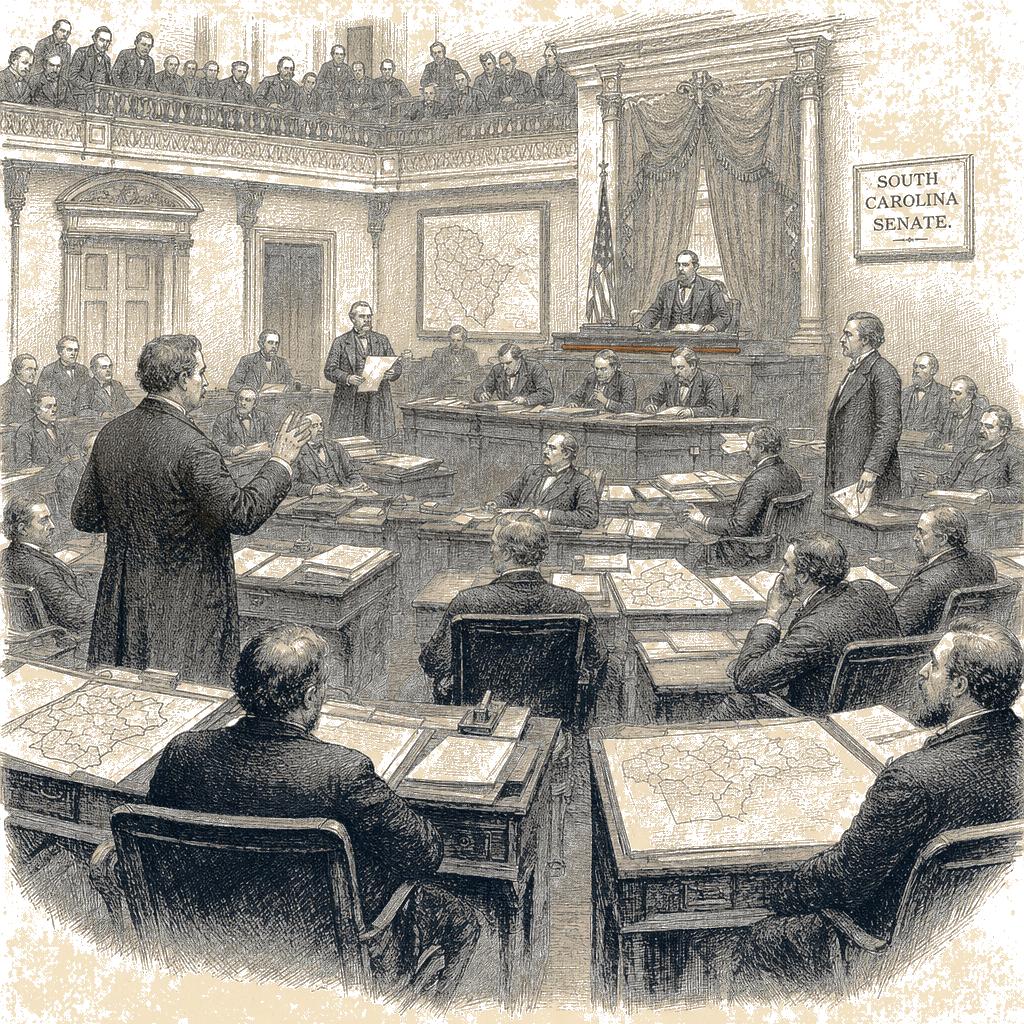
President Donald Trump has been urging Republican‑led states to redraw districts before the November elections in an effort to protect a slim House majority. In South Carolina, the Senate voted on Tuesday to keep the current primary schedule intact, rejecting a proposal that would cancel the primary and hold a new one under revised districts designed to favor GOP candidates. Some senators argued the change was too late because in‑person voting had already started.
“South Carolina citizens are going to the polls today. And neither my conscience or common sense is going to let me stop an election that is already underway,” Republican state Sen. Richard Cash said, underscoring the Senate’s resistance to the push.
In Alabama, a three‑judge federal panel issued a preliminary injunction blocking a Republican‑drawn congressional map, finding that the plan “intentionally discriminated based on race” by offering only one Black‑majority district. The judges ordered the state to continue using a court‑imposed map that contains two districts with a significant proportion of Black residents.
Early voting kicked off Tuesday across South Carolina, with more than 55,000 ballots cast so far. Among the early voters was U.S. Rep. James Clyburn, the Democrat whose district the Republicans hoped to reshape. Clyburn told reporters, “I’m OK if it’s Trump plus 20. I would be running where I live,” signaling his intent to seek re‑election regardless of how the district lines are redrawn.
The South Carolina Senate’s decision adds to a broader pattern of legal setbacks for GOP‑driven redistricting. Federal judges in Florida and Tennessee have also declined to block new maps, while state courts in Louisiana and other Southern states are still considering how to handle district lines after recent Supreme Court rulings on voting‑rights protections. The battles over maps are shaping up to be a pivotal factor in the 2026 midterm contests and in the ongoing fight over minority representation in Congress.