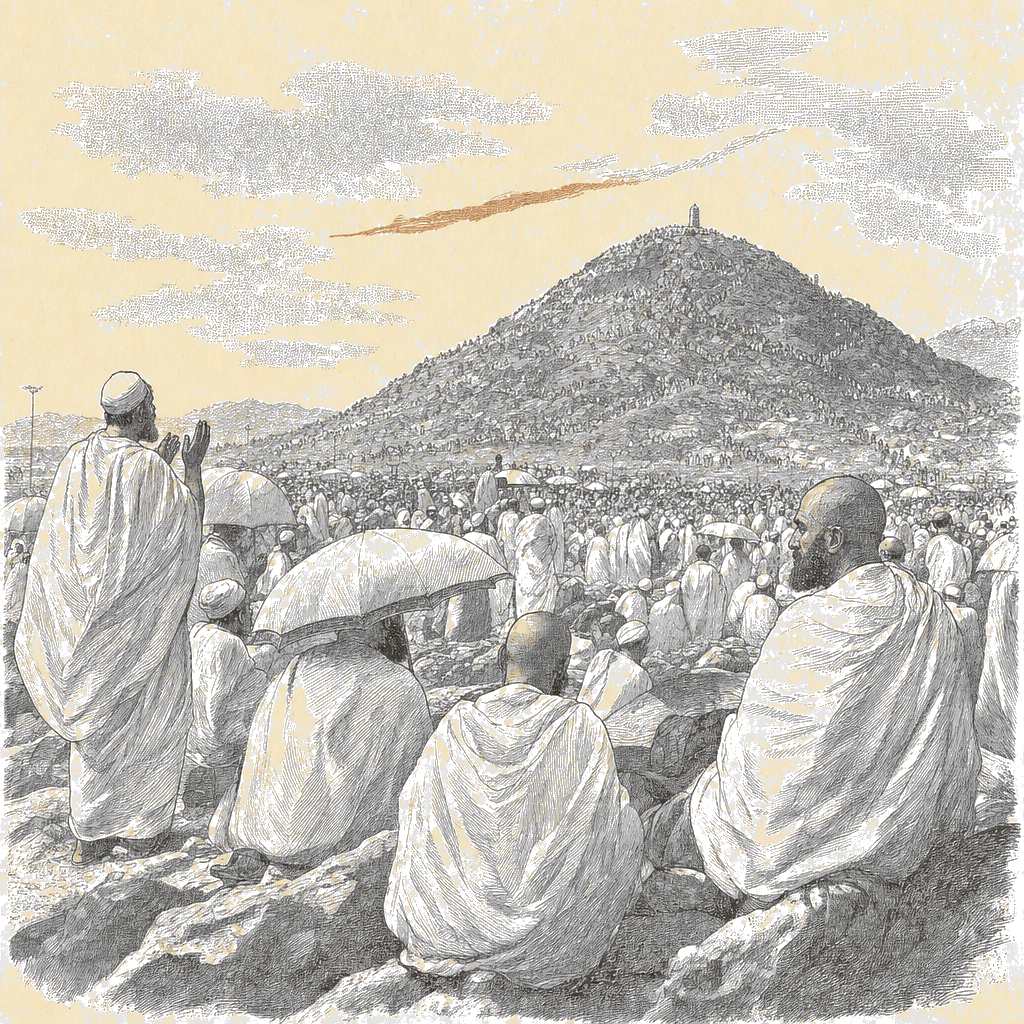
Pilgrims converge on Mount Arafat as the Hajj peaks
On Tuesday, Muslim pilgrims from around the globe converged on Mount Arafat, the second official day and climax of the annual Hajj, despite sweltering temperatures that turned the rocky hill and its surrounding plain into a furnace. Saudi officials said more than 1.5 million pilgrims have arrived from abroad, and many used umbrellas to shield themselves from the heat while performing the rites.
The gathering unfolded against a tense regional backdrop. The U.S. military announced “self‑defense” strikes on missile launch sites and mine‑laying vessels in southern Iran, while President Donald Trump claimed on social media that negotiations with Tehran were “proceeding nicely.” Iran responded by denouncing the attacks as a sign of “bad faith and unreliability,” adding to the uncertainty surrounding the pilgrimage.
Pilgrims expressed a mix of personal devotion and collective spirit. “This happens once in a lifetime,” said Egyptian pilgrim Mohammad Asal. “People here have prepared their prayers, hoping that God will respond to them, because we know that … the most important ritual of the Hajj is being in Arafat.” American pilgrim Ahmed Sufyan, speaking via WhatsApp, remarked, “The unity and peace that we feel is something I’ve never experienced before.” Sudanese pilgrim Mohammad Obaid added, “Our wishes are many,” and said he was praying for Sudan and Muslims everywhere.
The Hajj, one of Islam’s Five Pillars, remains a deeply moving spiritual experience for many—an opportunity to seek forgiveness, mercy and blessings while standing shoulder‑to‑shoulder with fellow believers from diverse races, ethnicities, languages and socioeconomic backgrounds.